
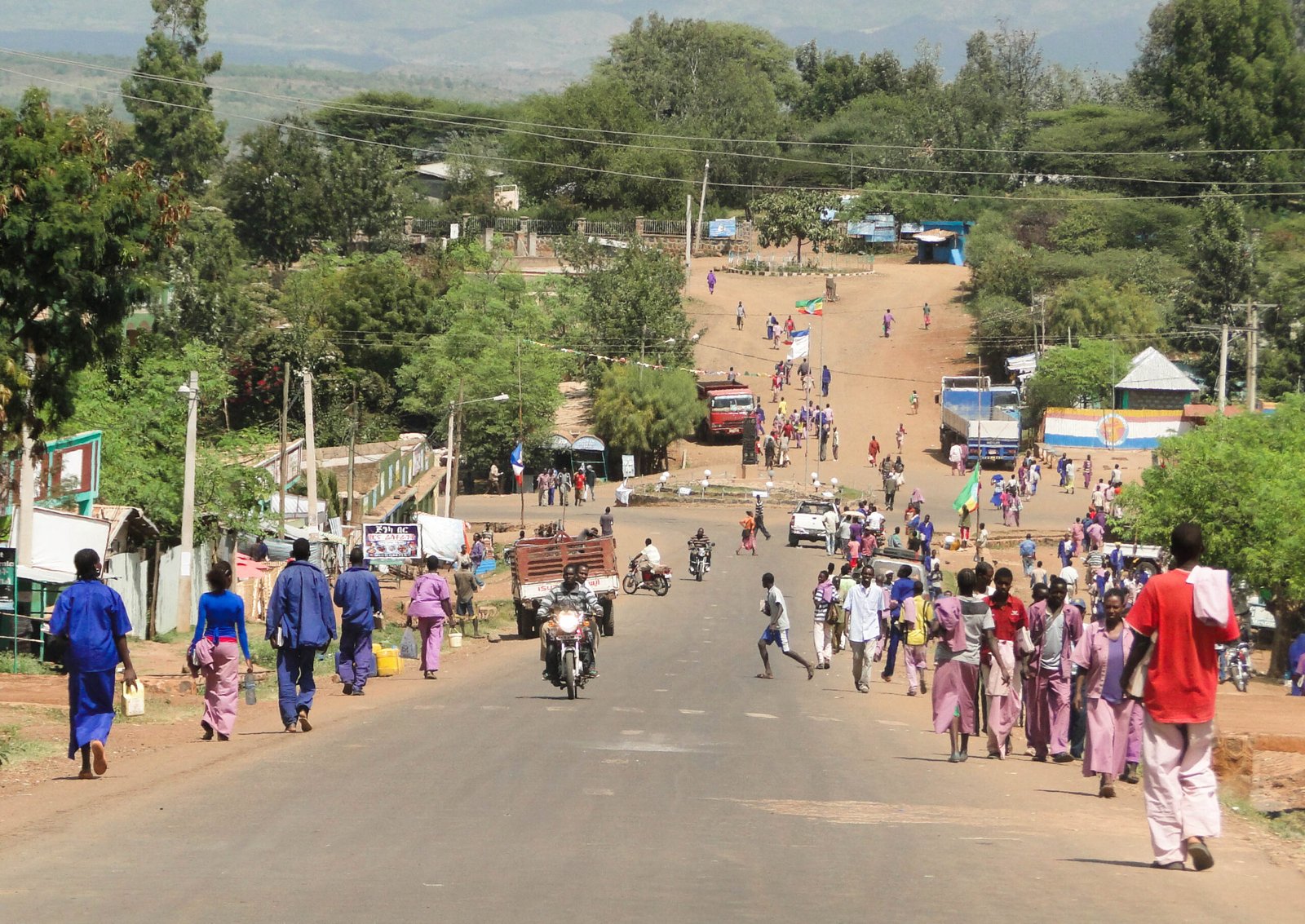
In the dry hills of southern Ethiopia, the Konso people have spent at least four centuries shaping barren slopes into intricate terraced farmland using nothing but flat stones and collective labour — one of the most sustained and elaborate feats of traditional landscape engineering in Africa, still maintained today by the same techniques that built it.
At a glance
The Konso Cultural Landscape, inscribed as a UNESCO World Heritage Site in 2011, encompasses the dry-stone terraced agricultural hillsides and fortified hilltop settlements (Paleta) of the Konso Zone in the Southern Nations, Nationalities, and Peoples’ Region of Ethiopia. The landscape represents 400 years of continuous habitation and intensive land management by the Konso people, who transformed otherwise uncultivable steep terrain into productive farmland using mortar-free dry-stone walls built exclusively from locally gathered flat stones.
Beyond the terraces, the Konso cultural identity is expressed through two other distinctive traditions: the elaborately carved wooden grave markers known as Wagas, unique to the Konso and among the most striking funerary art forms in sub-Saharan Africa; and the concentric rings of dry-stone defensive walls and wooden watchtowers that surround each hilltop town, creating a layered defensive architecture unlike anything else in the region.
Key facts
- UNESCO inscription: 2011
- Location: Konso Zone, SNNPR, southern Ethiopia
- Duration of occupation: At least 400 years (probably longer)
- Terrace construction: Dry-stone, no mortar, traditional techniques maintained continuously
- Distinctive cultural elements: Wagas (carved wooden grave markers), Mora (generation-houses), Paleta (fortified hilltop towns)
- Living heritage: Terraces and settlements remain in active use today
- Coordinates: 5°15′N, 37°29′E
History
The Konso people are a Cushitic-speaking group who have occupied the dry highland zone between the Rift Valley and the Omo River for at least four centuries, and likely much longer. The terrain they inhabit — steep, rocky hillsides with thin soils and unpredictable rainfall — demanded an extraordinary collective response to support a settled agricultural population. The terracing system that resulted is not the work of a single generation or a state-directed project but the cumulative labour of successive communities, each adding to and maintaining what their predecessors built.
The hilltop settlements (Paleta) were built in defensible positions: surrounded by multiple concentric rings of dry-stone walls and wooden watchtowers, they reflect a period of inter-group conflict in the region. The social architecture of these settlements is equally deliberate: the Mora, or generation-house, at the centre of each town served as the meeting and sleeping place for the young men of each age-set, the social units around which Konso political organisation revolves.
The Wagas — carved wooden posts set up to commemorate men of achievement after death — are the most visually striking product of Konso culture. A Waga depicts the deceased standing upright, often surrounded by smaller figures representing enemies defeated in battle, wives, and other markers of social status. The carving tradition is maintained by specialist craftsmen within the community and remains active today, though the pressure of modernity and the conversion of some communities to Christianity or Islam has reduced the frequency of new Wagas being commissioned.
UNESCO inscription in 2011 recognised both the physical landscape — the terraces and settlements — and the living intangible culture of the Konso people that created and continues to maintain it.
What you see
The landscape unfolds in successive horizontal bands of dry-stone terracing, stepping up the hillsides in a pattern that feels both geometric and organic. The walls are low — typically 0.5 to 1.5 metres high — but run continuously for kilometres, creating the effect of contour lines made solid. Sorghum, maize, and a range of legumes grow in the pockets of soil retained behind each wall.
The Paleta towns sit above the terraces, their multiple concentric defensive rings visible from a distance. Inside the outermost wall, the settlement is divided into residential compounds separated by narrow paths; the Mora generation-house in the centre is typically a large thatched structure open on one or more sides. Waga clusters — groups of carved posts honouring the community’s ancestors — stand at specific locations within or near the town, their carved faces and figures weathered to a rich dark patina by decades of sun and rain.
The town of Mecheke is considered one of the finest examples of a intact Konso hilltop settlement and is frequently included in visits. The Konso Cultural Centre near the main town of Konso (Buso) provides good orientation for the landscape and exhibits on Waga carving and traditional social structures.
Practical information
- Entry: A community fee is charged to visit the Paleta towns and Waga sites; guides are available at the Konso Cultural Centre and are strongly recommended
- Guide: Local guides speak Konso and Amharic; English-speaking guides are available through tour operators in Konso town
- Terrain: Steep paths between terraces and up to the hilltop towns; good walking shoes essential
- Photography: Permitted throughout the landscape; ask permission before photographing individuals
- Best time: October to February (dry season); the landscape is most lush in September–October after the rains
- Time needed: A minimum of one full day; two days allows more thorough exploration of multiple Paleta
Getting there
The main town of Konso (officially Buso) is approximately 600 km south of Addis Ababa via the main road through Hawassa and Arba Minch. By road from Addis Ababa: 10–12 hours by bus (buses depart from the Autobus Terra in Addis); 8 hours by car. Arba Minch, 90 km north, is the nearest city with a domestic airport served by Ethiopian Airlines from Addis Ababa; taxis and shared minibuses run the stretch to Konso.
Most visitors approach Konso as part of a circuit through the Lower Omo Valley, combining it with visits to the Mursi, Hamar, and Dorze communities further south. Tour operators in Addis Ababa and Arba Minch organise multi-day packages covering the entire Omo route.
Nearby
- Omo Valley communities — the broader Omo region to the south is home to numerous indigenous groups (Mursi, Hamar, Dorze, Banna) each with distinct visual cultures
- Arba Minch and Lake Chamo — 90 km north; boat trips on Lake Chamo to see Nile crocodiles and hippos, with the Nechisar National Park adjacent
- Jinka — the administrative hub of the South Omo Zone, with a regional museum covering Omo cultures
- Tiya Stelae Field — another UNESCO World Heritage Site in Ethiopia (north of Addis), featuring prehistoric standing stones with carved symbols
Sources
- UNESCO World Heritage Centre — whc.unesco.org/en/list/1333
- Wikipedia — Konso Cultural Landscape
Find it on the map
See this place and what’s around it →📷 Become a Cultural Heritage Online photographer
Share your photos of places: they stay published under your name as the author. The more they're seen, the more you get noticed — and soon a contest will reward the most appreciated photos.
Log in or sign up free to add a photo