

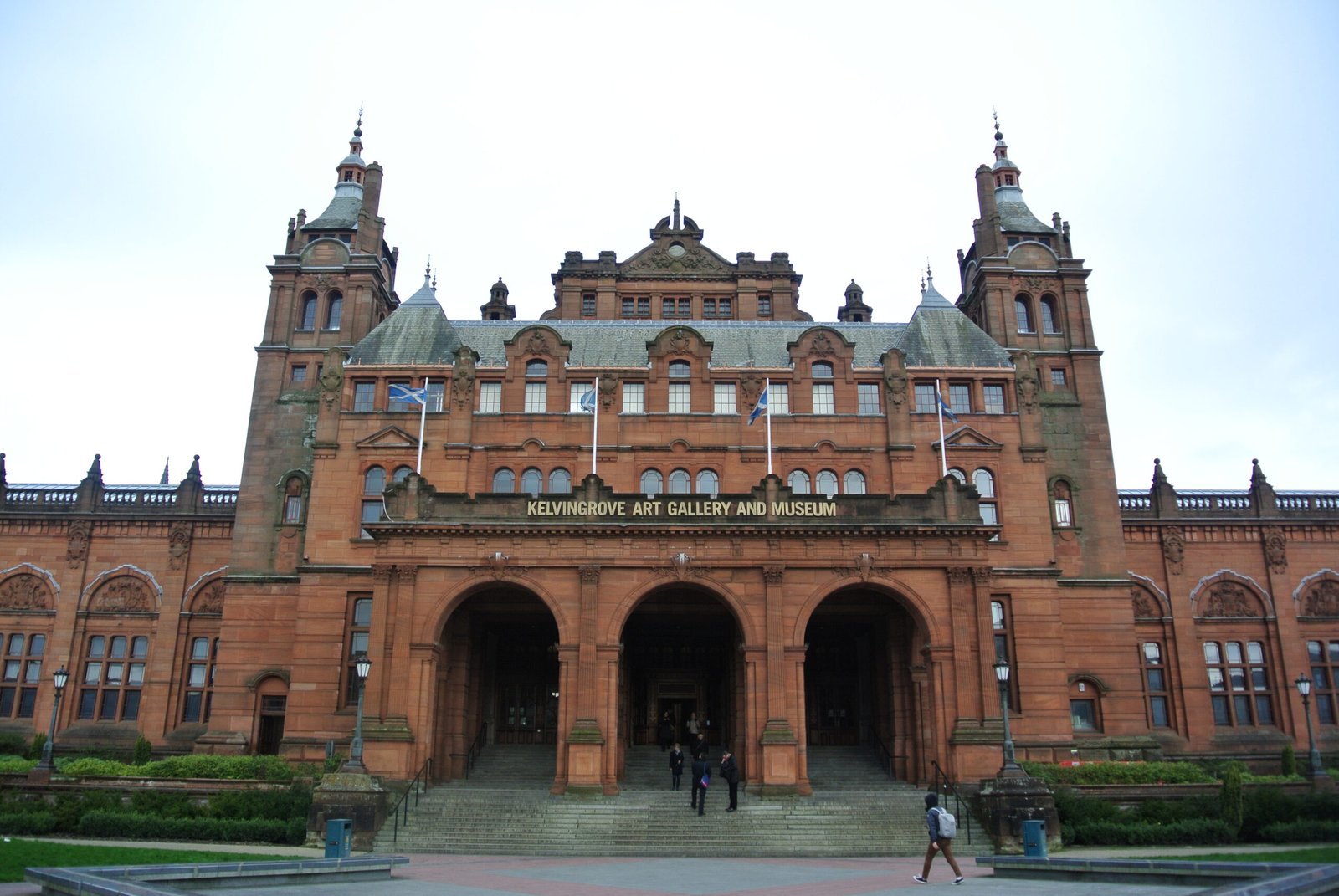
Simpson and Milner Allen opened Kelvingrove in 1901, a red-sandstone palace at the edge of Kelvingrove Park. It now guards the keys to Glasgow’s own Art Nouveau — the Glasgow Style.
- Institution
- Kelvingrove Art Gallery and Museum (managed by Glasgow Life)
- Location
- Glasgow, Scotland, United Kingdom
- Address
- Argyle Street, Glasgow G3 8AG
- Architects
- Sir J. W. Simpson and E. J. Milner Allen — opened 1901
- Classification
- Category A listed building (Historic Environment Scotland, LB33071)
- Style
- Free classical / Baroque; holds a major Glasgow Style & Mackintosh collection
- Admission
- Free entry
- Official site
- glasgowlife.org.uk
Story
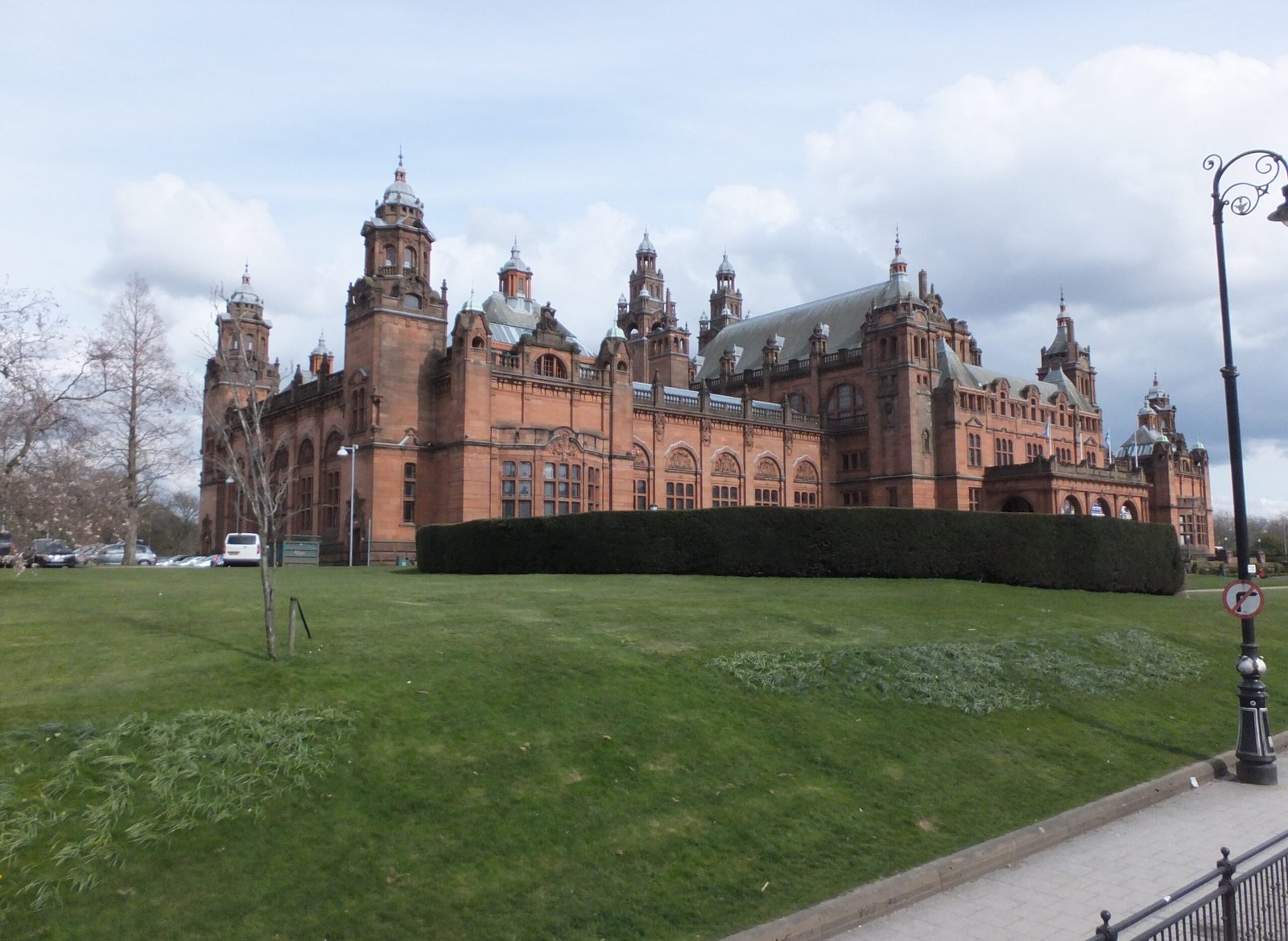
Kelvingrove Art Gallery and Museum stands at the edge of Kelvingrove Park, a long red-sandstone front broken by twin towers and a deep entrance porch. The stone is Locharbriggs, quarried in Dumfriesshire and laid by Glasgow masons in the years either side of 1900. It opened in 1901. Above the central doorway, in an arched niche, sits a figure of St Mungo, the city’s patron saint, watching the approach from the river side.
The design came from a competition held in 1892. London architects Sir John William Simpson and E. J. Milner Allen won it, and Historic Environment Scotland records their building in the “free classical style” — a confident late-Victorian mix of classical order and Baroque drama. The brief was specific. It asked that the main entrance face north into the park, toward the University of Glasgow on the hill opposite. The building did exactly that.
“The brief asked the doors to face the park. They do. The famous story that the museum was built back to front is a myth.”
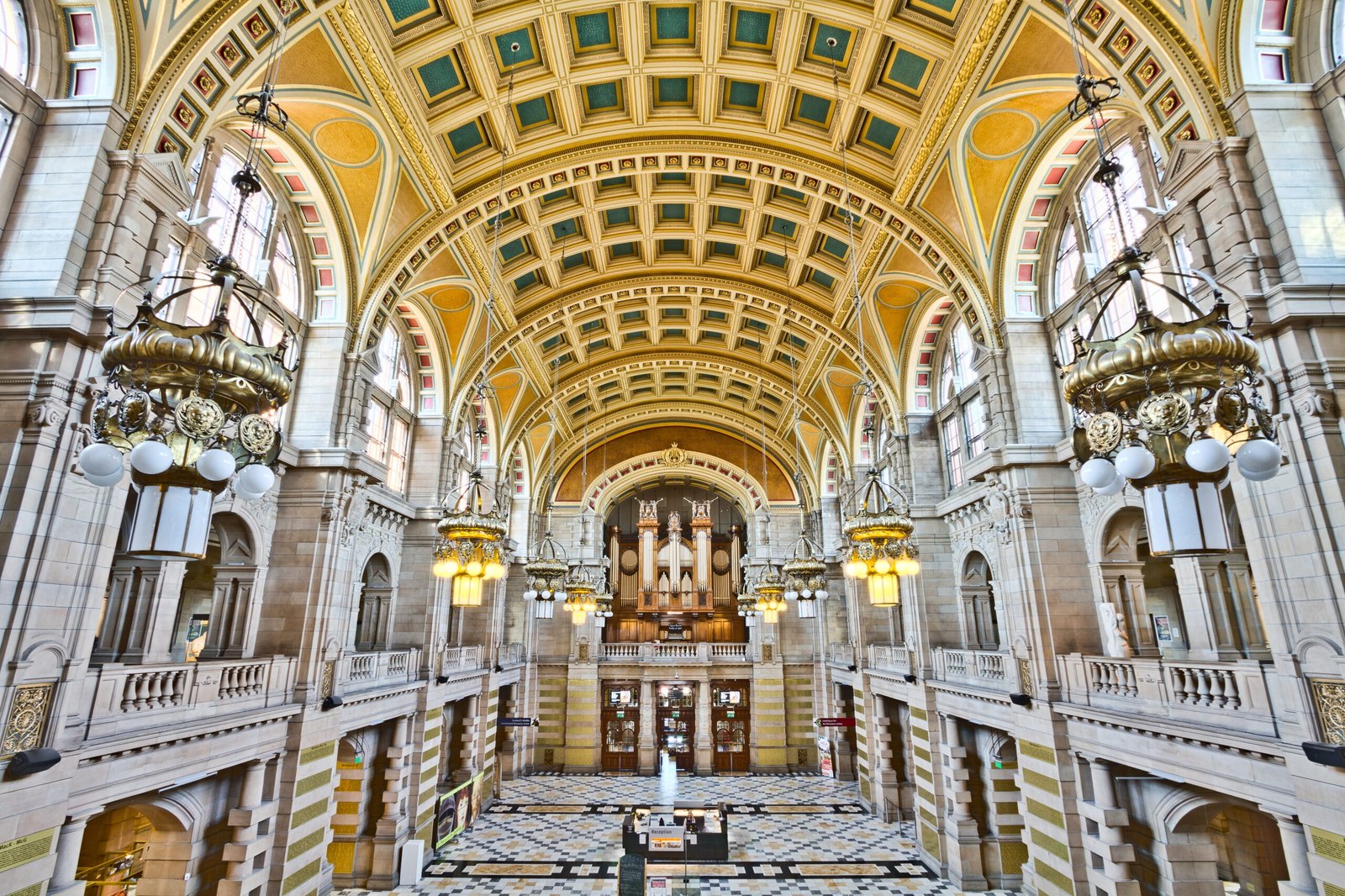
That last point matters, because a long-running tale claims Kelvingrove was built the wrong way round, its rear mistaken for its front. The story is false. The entrance faces north as the competition required, and the persistent legend says more about the building’s two strong faces than about any error. Inside, the scale opens out at once. The central hall rises through two storeys, galleried and lined in pale Giffnock ashlar, its coupled columns marching toward a 1901 Lewis and Co. organ that still sounds in free daily recitals.
The sculpture is part of the architecture, not an afterthought. George Frampton supervised the carved programme, working with a team that included W. Birnie Rhind, E. G. Bramwell and Johann Keller. Their figures crowd the porch and the skyline, and the listing singles out this high quality of sculpture as a reason for the building’s protection. Kelvingrove was the only permanent structure left standing after the 1901 Glasgow International Exhibition, for which it served as the Palace of Fine Arts. More than a century later it draws around a million visitors a year, with twenty-two galleries running from ancient Egypt to natural history.
The Art Nouveau connection lives in the collection rather than the walls. Kelvingrove holds an important body of Charles Rennie Mackintosh and Glasgow Style material, the design movement that made the city a European centre of the new art around 1900. Mackintosh and his circle reworked Celtic line, Japanese restraint and a hard Scottish geometry into something instantly recognisable. The gallery’s own building belongs to an earlier, grander idiom, yet it now houses the furniture, metalwork and graphics of the very movement that would define Glasgow’s name abroad. A Baroque palace of red stone, keeping the keys to the city’s modern design legacy.
Visiting is straightforward and free. The galleries open every day, with shorter Friday and Sunday mornings, and the organ recital is the easiest way to feel the height of the main hall. Conservation and repair work has been underway across parts of the fabric, though the museum has stated it stays open throughout. Argyle Street places it within reach of the West End, the university and the wider Mackintosh trail. Few civic museums carry their century so lightly.
Map & access
GPS 55.8685825, -4.2906278 · Open in Google Maps · OpenStreetMap
On Argyle Street at the edge of Kelvingrove Park; Kelvinhall subway station is a short walk away.
Sources & resources
Partner Ambassador
This is an independent editorial entry, compiled by Cultural Heritage Online from public, openly-licensed sources as part of our Founding Partner pilot. The institution shown has not joined, endorsed, or paid for the programme, and is under no obligation. Kelvingrove Art Gallery and Museum is welcome to claim, expand, correct, or request removal of it at any time. If you represent this institution, write to info@culturalheritageonline.com.
Find it on the map
See this place and what’s around it →📷 Become a Cultural Heritage Online photographer
Share your photos of places: they stay published under your name as the author. The more they're seen, the more you get noticed — and soon a contest will reward the most appreciated photos.
Log in or sign up free to add a photoIs this page about you?
This page is read by travellers and heritage enthusiasts who find it on Google. Tell us how you are connected to this place and we will take it from there.