
The Coal Age Galápagos
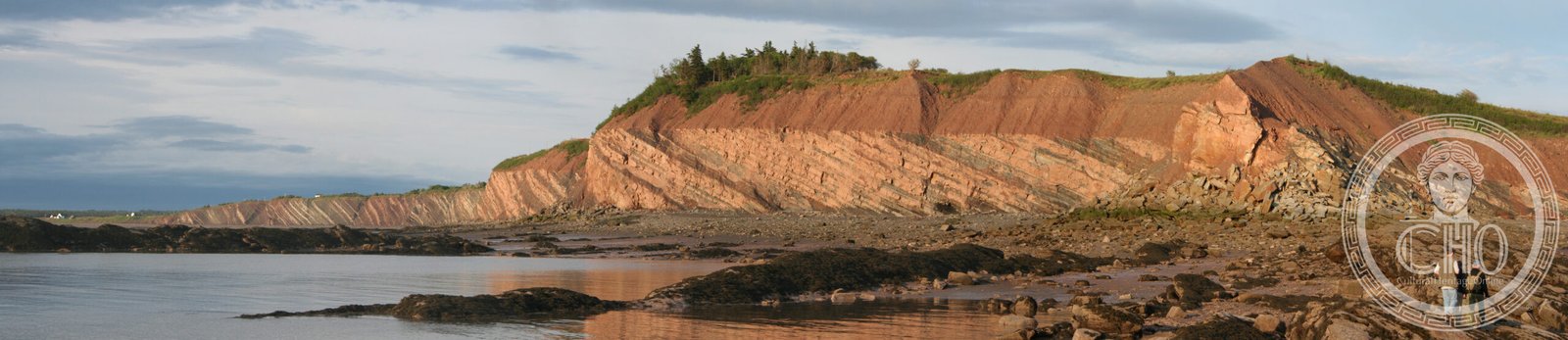
The Joggins Fossil Cliffs on the southern shore of the Bay of Fundy in Nova Scotia, Canada, preserve the world’s finest fossil record of the Carboniferous Period — the 64-million-year interval from 354 to 290 million years ago when the first forests covered the Earth, coal deposits formed, and life made the critical transition from water to fully terrestrial existence. UNESCO inscribed the site in 2008, comparing it to the Galápagos Islands for its role in transforming scientific understanding — in this case, of the origin of terrestrial vertebrate life.
The Bay of Fundy: Highest Tides, Freshest Fossils
The Bay of Fundy has the highest tidal range on Earth — up to 16 metres at certain locations — and at Joggins these extreme tides continuously erode the 15-kilometre cliff face, exposing fresh fossil surfaces with every tidal cycle. This dynamic geological process means that new fossils are constantly being uncovered, making Joggins an inexhaustible source of Carboniferous specimens. The tides also make the cliff base inaccessible at high water, requiring visitors to time their walks carefully with the tidal tables.
Upright Fossil Trees: A Carboniferous Forest Standing in Time
The most dramatic fossils at Joggins are the upright fossilised tree stumps of Sigillaria and Calamites — giant club mosses and horsetails up to 30 metres tall — preserved in their original growth position within the cliff face. These trees died and were buried by rapid sedimentation in the river delta and swamp environment of the Carboniferous coal forest, leaving their upright trunks as three-dimensional monuments in the rock. Walking along the cliff base is walking through the ghosts of a 310-million-year-old forest.
Hylonomus: The World’s Oldest Reptile
Inside the hollow fossilised tree stumps at Joggins, palaeontologists have found the remains of small animals that crawled inside for shelter and were trapped by rising sediment. Among them is Hylonomus lyelli — the world’s oldest known fully terrestrial reptile, named in honour of the geologist Charles Lyell who visited Joggins with Darwin’s friend William Dawson in 1852. Hylonomus, about 20 centimetres long, represents the moment in evolutionary history when vertebrates completed the transition from amphibian semi-aquatic life to the fully terrestrial existence that would ultimately give rise to dinosaurs, mammals, and humans.
Charles Lyell, Charles Darwin, and the Scientific Legacy
The Joggins cliffs were central to the development of 19th-century geology and evolutionary theory. Charles Lyell visited in 1842 and 1852, describing the upright trees and the evidence they provided for slow, continuous geological change (uniformitarianism). He communicated his Joggins findings to Charles Darwin, who cited the upright trees of Joggins in “On the Origin of Species” (1859) as evidence for his theory of geological gradualism. The site thus sits at the intersection of the two great intellectual revolutions of Victorian science.
Coal Measures and the Industrial Revolution
The coal seams interbedded with the fossil-bearing strata at Joggins were mined commercially from the mid-18th century through to the early 20th century, supplying fuel to the settlements of the Bay of Fundy region. The name “Joggins” may derive from the Mi’kmaq word for a place of coal. The remnants of the mining history — including surface seam exposures and spoil heaps — overlay the deeper palaeontological significance of the site, adding an industrial heritage layer to the natural archive.
Mi’kmaq Presence and Indigenous Heritage
The shores of the Bay of Fundy were home to the Mi’kmaq people for thousands of years before European contact. Mi’kmaq oral traditions describe the extreme tides of the Bay of Fundy through the story of Glooscap, a cultural hero who wrestled a giant beaver — the movements of the water corresponding to the beaver’s thrashing. The cliffs and the bay were fishing and gathering grounds. The relationship between the Mi’kmaq and the extraordinary natural phenomena of the Joggins coastline represents an intangible cultural dimension of the World Heritage site.
The Fossil Centre and Guided Tours
The Joggins Fossil Cliffs UNESCO World Heritage Site is managed by the Joggins Fossil Institute, which operates an interpretation centre (the Coal Age Fossils Cliffs Building) at the top of the cliffs above the beach. Guided walks led by trained naturalists are the recommended way to visit, both for safety (the tides) and for fossil identification. The institute runs educational programmes and conducts ongoing fossil monitoring. The site is approximately 40 minutes’ drive from Amherst, Nova Scotia, and can be combined with a visit to the UNESCO-listed Landscape of Grand Pré (ref 1404, inscribed 2012) in the same region.
Find it on the map
See this place and what’s around it →📷 Become a Cultural Heritage Online photographer
Share your photos of places: they stay published under your name as the author. The more they're seen, the more you get noticed — and soon a contest will reward the most appreciated photos.
Log in or sign up free to add a photo