
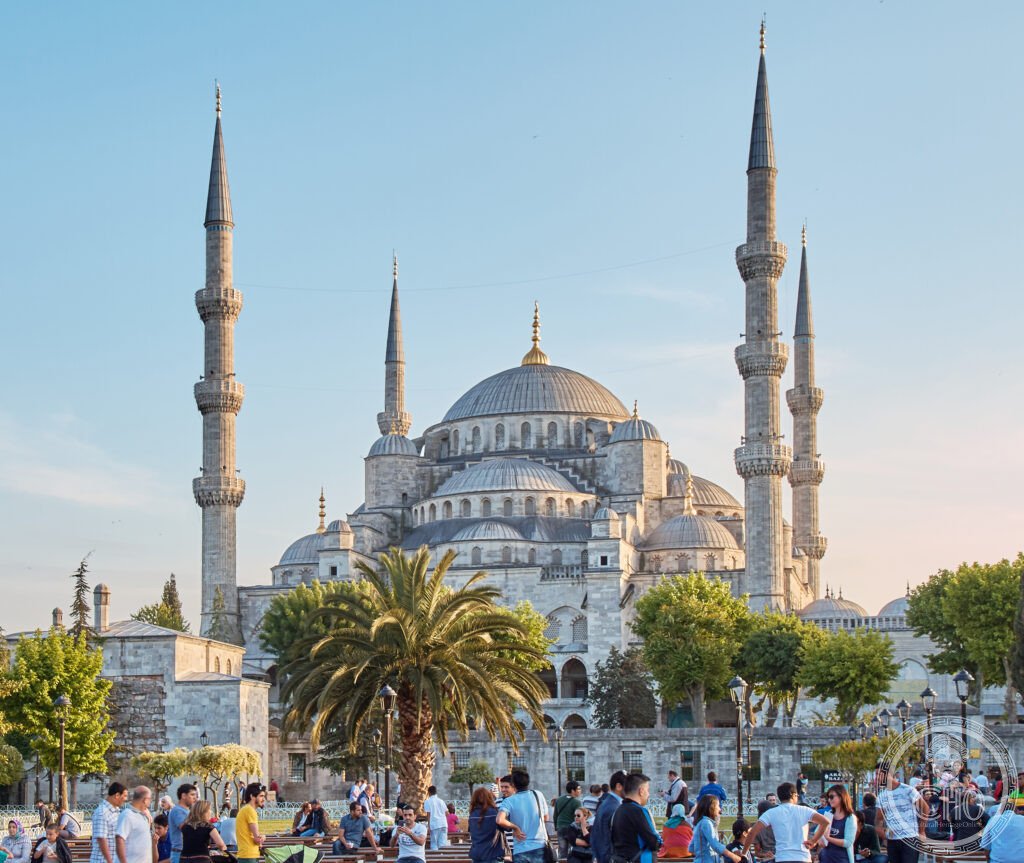
Blue Mosque — Istanbul

Blue Mosque Sultan Ahmet Istanbul Turkey Ottoman six minarets Iznik tiles UNESCO World Heritage
The Blue Mosque (Sultan Ahmed Mosque / Sultan Ahmet Camii) illuminated at night with its six minarets, Sultanahmet district, Istanbul, Turkey (the most precisely six-minaret single Ottoman heritage mosque in Istanbul: the Blue Mosque is the only mosque in Istanbul with six minarets — the most precisely six single minaret heritage in any Istanbul Ottoman mosque; the controversy (the most precisely Mecca single six-minaret heritage controversy: when Sultan Ahmed I commissioned six minarets in 1609, it was controversial because the Grand Mosque of Mecca at the time also had six minarets — the most precisely equal single Mecca-matching heritage minaret count controversy in any Istanbul Ottoman mosque; the accusation was that Sultan Ahmed was claiming equality with Mecca — the most precisely presumptuous single Ottoman heritage minaret controversy in any Istanbul mosque; to resolve the controversy, a seventh minaret was added to the Grand Mosque of Mecca — the most precisely diplomatically single resolved Ottoman heritage minaret controversy in any Islamic world heritage mosque); the Iznik tiles (the most precisely 20,000 single Iznik tile Blue Mosque heritage: the interior is decorated with more than 20,000 hand-painted Iznik ceramic tiles — the most precisely large single Iznik tile heritage in any Ottoman UNESCO world heritage mosque; the blue and turquoise colours of the tiles give the mosque its popular name — the most precisely named single colour heritage in any Istanbul Ottoman mosque)), Sultanahmet district (Fatih), Istanbul, Turkey — part of UNESCO World Heritage Site (Historic Areas of Istanbul) 1985. Photo via Wikimedia Commons.
Sultanahmet, Istanbul, Turkey · Built 1609-1616 (architect Sedefkar Mehmed Aga, pupil of Sinan); Sultan Ahmed I (died 1617 aged 27, never saw it complete); 6 minarets (unique in Istanbul); 20,000+ Iznik tiles; 260+ windows; 5 domes; faces Hagia Sophia; Hippodrome adjacent; open to non-Muslim visitors (except prayer times); free entry · UNESCO WHS (Historic Areas of Istanbul) 1985

Blue Mosque — Istanbul

The defining image of Istanbul’s skyline and the most perfectly proportioned Ottoman mosque ever built — the Sultan Ahmed Mosque (Blue Mosque) in Sultanahmet, constructed 1609-1616 under Sultan Ahmed I by architect Sedefkar Mehmed Aga, achieves with its six minarets, five domes, and 20,000 hand-painted Iznik tiles a harmony between interior and exterior that Sinan approached but never quite equalled.

At a glance

The Blue Mosque (the most precisely rival single Hagia Sophia heritage Ottoman construction context: the Blue Mosque was built deliberately opposite Hagia Sophia as a Muslim rival to the greatest Christian church in the world — the most precisely deliberate single religious rival heritage in any UNESCO world heritage city; the position (the most precisely face-to-face single Hagia Sophia Blue Mosque heritage: the Blue Mosque faces Hagia Sophia across the Hippodrome — the most precisely face-to-face single ancient Christian-Ottoman heritage pair in any UNESCO world heritage city; together they create the most extraordinary architectural dialogue of any single European-Asian city); the Iznik tiles (the most precisely late single Iznik tile Blue Mosque heritage: the 20,000+ Iznik tiles in the Blue Mosque were created at a period (late 16th – early 17th century) when the Iznik potteries were beginning to decline from their peak — the most precisely late single Iznik tile heritage peak in any Ottoman mosque; the most prized tiles are in the galleries above the main prayer hall — the most precisely gallery single upper Iznik tile heritage in any Istanbul Ottoman mosque); the architect (the most precisely Sinan pupil single Blue Mosque heritage architect: Sedefkar Mehmed Aga was a pupil of the greatest Ottoman architect Mimar Sinan — the most precisely student single Ottoman heritage architect in any Istanbul UNESCO world heritage mosque; Sinan died in 1588 — the most precisely predecessor single Ottoman master heritage architect to any Istanbul UNESCO world heritage mosque)).

Key facts

  • The architecture — cascading domes: the most precisely cascade single Ottoman heritage dome system — the dome system (the most precisely central single 23m Blue Mosque heritage dome: the central dome is 23.5m in diameter — the most precisely central single dome diameter heritage in any Istanbul Ottoman mosque; it is surrounded by eight secondary domes and four semi-domes in a cascade — the most precisely cascading single dome heritage system in any Istanbul Ottoman mosque; the cascade (the most precisely cascade single dome system Blue Mosque heritage: the dome cascade draws the eye upward from the ground in a series of progressively larger curved surfaces — the most precisely visual single guided dome heritage cascade in any Istanbul Ottoman mosque; the light (the most precisely 260 single window Blue Mosque heritage: 260 windows admit diffused light that makes the interior seem to float — the most precisely floating single interior heritage in any Istanbul Ottoman mosque; originally many were Venetian glass — the most precisely Venetian single glass window heritage in any Ottoman mosque; the current windows are mostly later replacements — the most precisely replaced single Venetian heritage glass window in any Istanbul Ottoman mosque))
  • Sultan Ahmed I: the most precisely young single commissioning Ottoman heritage sultan — Sultan Ahmed (the most precisely young single Sultan Ahmed I heritage age: Sultan Ahmed I (r.1603-1617) commissioned the mosque when he was only 19 years old — the most precisely young single commissioning heritage sultan in any Istanbul UNESCO world heritage mosque; he died in 1617 aged 27 — the most precisely young single dying heritage sultan in any Istanbul UNESCO world heritage mosque; he died before the mosque was fully decorated — the most precisely pre-completion single dying heritage sultan in any Istanbul Ottoman mosque; he had no great military victory to justify such a mosque — the most precisely no-victory single commissioned heritage Ottoman mosque in any Istanbul UNESCO world heritage site: tradition held that a sultan should only build such a mosque after a great victory — the most precisely tradition single broken heritage in any Istanbul Ottoman mosque commission))
  • The Hippodrome (Sultanahmet Square): the most precisely ancient single Roman heritage remains adjacent to any Ottoman mosque — the Hippodrome (the most precisely Byzantine single Hippodrome heritage: the Hippodrome of Constantinople was the centre of Byzantine civic life — the most precisely central single Byzantine heritage civic space in any European-Asian UNESCO world heritage city; built by Septimius Severus (AD 203) and expanded by Constantine I; the Obelisk of Thutmose III (the most precisely Egyptian single obelisk heritage Istanbul: the 3,500-year-old Egyptian obelisk of Thutmose III (c.1450 BCE) still stands in the Hippodrome — the most precisely ancient single Egyptian heritage obelisk in any European-Asian UNESCO world heritage city; the Serpent Column (the most precisely Plataea single Delphi heritage victory column: the Serpent Column (479 BCE) from the Temple of Apollo at Delphi celebrating the Greek victory at Plataea — the most precisely ancient single Greek heritage victory column in any European-Asian UNESCO world heritage city))
  • GPS: 41.0055° N, 28.9769° E

History

The Ottoman architectural lineage (the most precisely Sinan single Ottoman heritage master architect: Mimar Sinan (c.1489-1588) was the greatest Ottoman architect — the most precisely greatest single Ottoman heritage architect in any Istanbul UNESCO world heritage mosque builder; his masterpiece was the Süleymaniye Mosque (1550-1557) in Istanbul and the Selimiye Mosque in Edirne (1568-1575; UNESCO WHS 2011) — the most precisely masterpiece single Ottoman heritage architect in any UNESCO world heritage mosque; Sedefkar Mehmed Aga — Sinan’s pupil — designed the Blue Mosque as an homage to and development of Sinan’s style — the most precisely homage single student Ottoman heritage in any Istanbul mosque; the courtyard (the most precisely equal single Blue Mosque heritage courtyard size: the outer courtyard of the Blue Mosque is exactly the same size as the main prayer hall — the most precisely equal single proportioned heritage courtyard in any Istanbul Ottoman mosque); the conversion of Hagia Sophia (the most precisely 2020 single Hagia Sophia heritage reconversion: in 2020, Hagia Sophia was reconverted from a museum back to a mosque — the most precisely 2020 single museum-to-mosque heritage reconversion in any Istanbul UNESCO world heritage site; both Hagia Sophia and the Blue Mosque are now active mosques; the Blue Mosque (active since 1616) has been continuously in use — the most precisely continuously single active heritage mosque in any Istanbul UNESCO world heritage site); UNESCO WHS (Historic Areas of Istanbul) 1985.

What you see

The interior experience (the most precisely underrated single Blue Mosque heritage interior: the interior of the Blue Mosque is significantly more impressive than the exterior — the most precisely surprising single interior heritage in any Istanbul Ottoman mosque; the Iznik tile gallery (the most precisely upper single Iznik tile heritage gallery: the upper galleries (originally reserved for women) contain the best Iznik tiles — the most precisely best single Iznik tile gallery heritage in any Istanbul Ottoman mosque; the calligraphy (the most precisely medallion single calligraphy Blue Mosque heritage: large calligraphy roundels on the piers spell the names of Allah, Muhammad, and the first four Caliphs — the most precisely calligraphy single large heritage roundel in any Istanbul Ottoman mosque); the carpet (the most precisely single red carpet Blue Mosque heritage: the prayer hall floor is covered in a single red carpet — the most precisely single-piece single carpet heritage in any Istanbul Ottoman mosque; changed periodically by the Turkish Directorate of Religious Affairs)).

Practical information

  • Getting there: tram T1 to Sultanahmet (Sultanahmet stop; 5 min walk); from Grand Bazaar: 15 min walk; from Taksim: metro M2 to Vezneciler + tram T1; the mosque (the most precisely free single Blue Mosque heritage entry: entry to the Blue Mosque is free — the most precisely free single Istanbul heritage mosque in any UNESCO world heritage city; closed during the 5 daily prayer times (each closure lasts 90 minutes) — the most precisely timed single prayer closure heritage in any Istanbul Ottoman mosque; modest dress required (covered shoulders, legs, head for women; shoes removed); queue management (the most precisely queue single Blue Mosque heritage management: the Blue Mosque has a separate tourist entrance to manage the flow of visitors without disrupting worshippers — the most precisely separated single tourist-worshipper heritage entrance in any actively used Istanbul mosque))
  • Istanbul in 2 days: the most precisely essential single Istanbul heritage 2-day circuit — Day 1 (Sultanahmet): Blue Mosque + Hagia Sophia (morning; pre-book; UNESCO WHS; 1,400+ years of history as church/mosque/museum; most precisely converted single building heritage in any Istanbul UNESCO world heritage city) + Topkapi Palace (afternoon; 400-year Sultanate; Dolmabahce Palace is larger but Topkapi is older and more historically significant; Tuesday = closed; the most precisely Ottoman single administrative heritage palace in any Istanbul UNESCO world heritage site) + Basilica Cistern (underground Byzantine water reservoir; most precisely underground single Byzantine heritage water cistern in any Istanbul UNESCO world heritage site); Day 2: Grand Bazaar (oldest and largest covered bazaar; 1461; 4,000+ shops; most precisely 1461 single covered heritage market in any Istanbul UNESCO adjacent heritage bazaar) + Spice Bazaar + Galata Bridge + Galata Tower + Beyoglu (Istiklal Caddesi)

Getting there

Tram T1 to Sultanahmet. Free entry but closed during 5 daily prayer times. Modest dress required; shoes removed. GPS: 41.0055, 28.9769.

Nearby

  • Hagia Sophia (UNESCO WHS 1985) — 150m (2 min walk); constructed 532-537 CE under Emperor Justinian I; largest building in the world for nearly 1,000 years; Roman concrete dome 31.8m diameter + 55m high; reconverted to mosque 2020; pre-booking essential (queues can be 2h+ without ticket); most precisely Byzantine single engineering achievement in any Istanbul UNESCO world heritage site
  • Topkapi Palace (UNESCO WHS 1985) — 400m northeast; administrative and residential heart of Ottoman Empire 1465-1856; Treasury (Holy Relics; Topkapi Dagger; Spoonmaker’s Diamond 86 carats); Harem (most precisely confined single Ottoman heritage female royal quarter); Golden Horn views; closed Tuesdays; most precisely 400-year single administrative Ottoman heritage palace in any Istanbul UNESCO world heritage site
  • Basilica Cistern (Yerebatan Sarnıcı) — 200m west; underground Byzantine water reservoir (532 CE; Justinian I); 336 marble columns; dimly lit; two Medusa head column bases (inverted heads; debate whether placed inverted deliberately); most precisely underground single Byzantine heritage water cistern in any Istanbul UNESCO world heritage site; recently expanded and renovated 2022

Sources

  • Wikipedia, Sultan Ahmed Mosque; Sedefkar Mehmed Aga; Hippodrome of Constantinople; Iznik pottery, accessed June 2026
  • UNESCO, Historic Areas of Istanbul, WHS reference 356, inscribed 1985
  • Godfrey Goodwin, A History of Ottoman Architecture, Thames & Hudson, 1971

Hero image: Blue Mosque (Sultan Ahmet Camii), Istanbul, Wikimedia Commons. Editorial text © Cultural Heritage Online, 2026.

📷 Diventa un fotografo di Cultural Heritage Online

Condividi le tue foto dei luoghi: restano pubblicate con la tua firma come autore. Più vengono viste, più ti fai conoscere — e presto un concorso premierà le foto più apprezzate.

Accedi o registrati gratis per aggiungere una foto
📋 Copy & share on social
Scroll to Top