

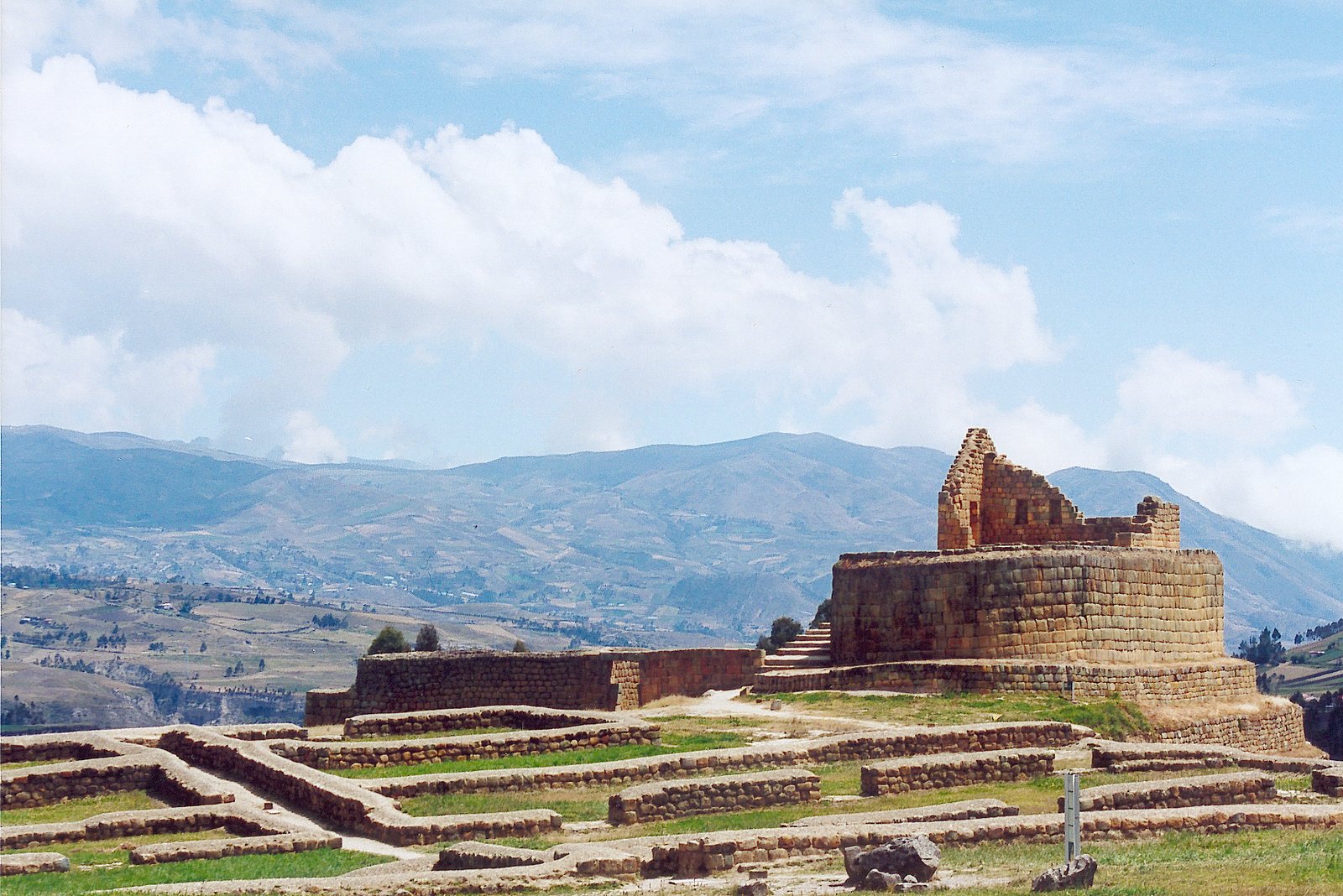
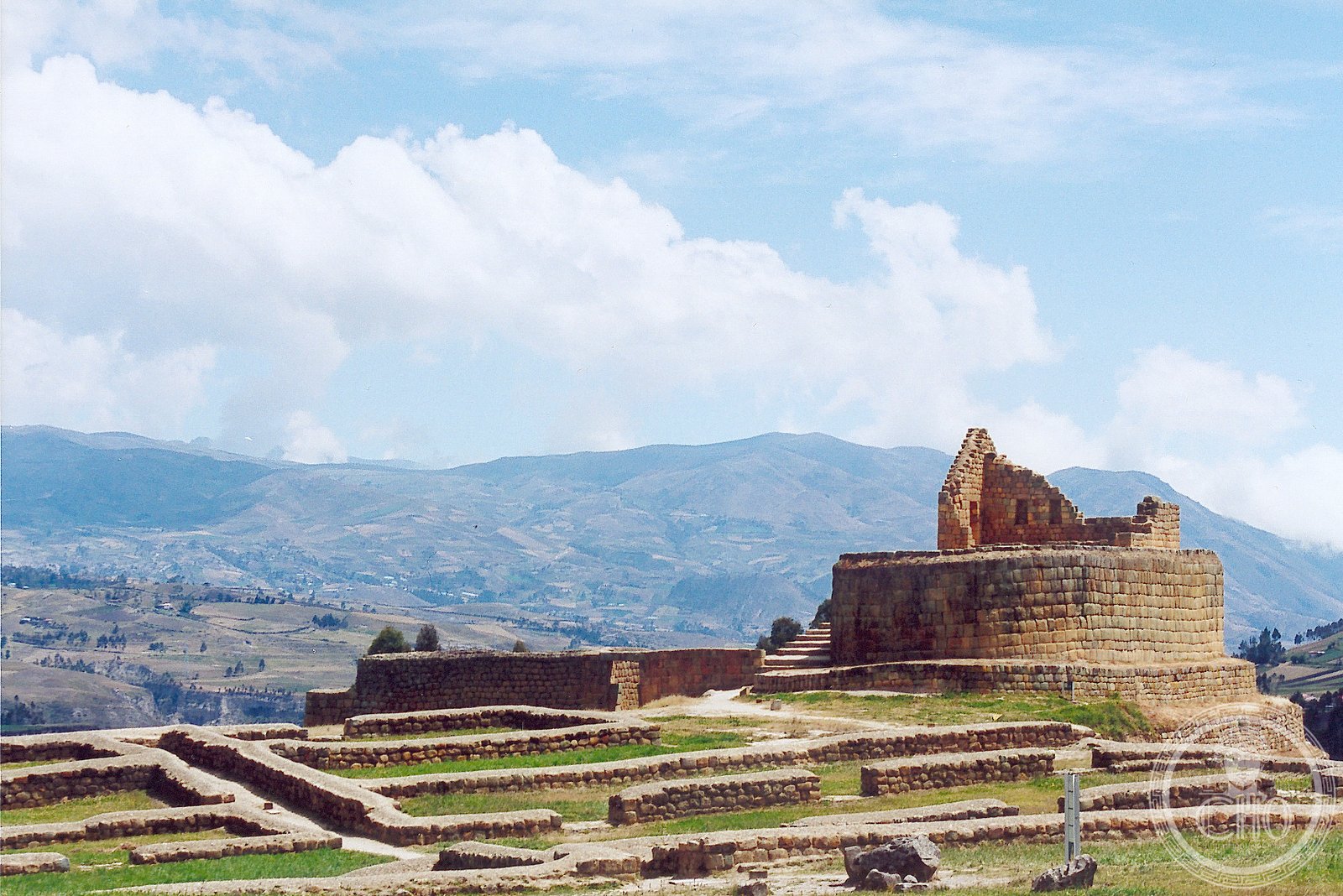
The most important Inca archaeological site in Ecuador — a sun temple in dressed andesite, built on a pre-existing Cañari sacred site at 3,160 metres altitude, that illustrates the Inca Empire’s strategy of absorbing and overwriting local religious authority.
At a glance
In the high páramo of Cañar province in southern Ecuador, at an altitude of approximately 3,160 metres, Ingapirca (Kichwa: Inca wall) is the best-preserved Inca monumental complex in Ecuador and among the finest examples of Inca ashlar masonry in the northern Andes. Built approximately 1450 AD by the expanding Inca Empire on the site of an earlier Cañari ceremonial centre, the complex represents the characteristic Inca strategy of superimposing imperial ritual architecture over pre-existing local sacred landscapes. Its centrepiece — an elliptical sun temple in perfectly fitted andesite blocks — stands as one of the most distinctive architectural forms in Inca construction, its curved walls still rising to considerable height after five centuries of exposure.
Key facts
- Period: c. 1450–1532 AD (Inca Empire, Tawantinsuyu)
- Altitude: approximately 3,160 metres above sea level
- Elliptical Temple: approximately 37 × 12 metres, dressed andesite ashlar without mortar
- Earlier culture: Cañari people — pre-Inca mountain culture with centuries of presence on the site
- Features: Temple of the Sun, Cañari burials, qollqa (storage), ceremonial plaza, intihuatana, carved rocks and water channels
- Location: Cañar Province, southern Ecuador, 2 hours south of Cuenca
- UNESCO: within the Qhapaq Ñan Andean Road System inscription (2014)
History
Long before the Inca arrived, the Cañari people — a highland culture who had occupied the Cañar region for centuries — had established the site of Ingapirca as a sacred landscape. The oval form of Cañari ceremonial structures was already present when the Inca expanded northward into what is now Ecuador in the mid-15th century under Topa Inca Yupanqui. Following the standard Inca policy of incorporating conquered peoples by absorbing their sacred sites and overlaying them with imperial Inca ritual architecture, they built a sun temple and administrative complex here, superimposing Inca order on the Cañari foundation. Cañari-period burials have been excavated beneath the Inca structures, confirming the stratigraphic layering.
After the Spanish conquest of the Inca Empire in 1532, the site fell gradually into ruin. The Spanish colonial period saw some stone removed for other construction, as was common across former Inca territories. Systematic archaeological investigation began in the 20th century, revealing the full extent of both the Inca and Cañari components of the site. Today Ingapirca is Ecuador’s primary pre-Columbian monument and the country’s most visited archaeological site.
What you see
The Elliptical Temple — sometimes called the Castle (Castillo) or the Temple of the Sun — is the dominant structure: an oval platform approximately 37 × 12 metres in the finest Inca masonry style, its andesite blocks dressed and fitted together in the characteristic Inca coursed ashlar technique with no mortar. The trapezoidal niches, windows, and doorways are in canonical Inca proportions — wider at the base than the top — and are concentrated on the walls of the temple structure that rises on the platform’s summit. The elliptical plan, unusual in Inca architecture (which typically uses rectangles), may reflect either Cañari oval house traditions or solar symbolism.
Beyond the temple, the site preserves a ceremonial plaza aligned with the rising sun, an intihuatana (a carved rock used as a solar calendar and for ritual libations), a complex of carved rocks and water channels directing water through the site in the ritual patterns characteristic of Inca sacred geography, and remains of qollqa (storage buildings) that held redistribution goods. A small on-site museum displays ceramics and artefacts from both the Inca and Cañari periods.
Practical information
- Opening hours: daily approximately 09:00–17:00
- Tickets: entry fee payable at the site; on-site museum included
- Weather: altitude means cool temperatures and frequent cloud; bring layers regardless of season
- Guides: licensed local guides available at the entrance
- On site: small café and craft market near the entrance
Getting there
Ingapirca is approximately 80 km north of Cuenca (2 hours by road) and 60 km south of Riobamba. Buses from Cuenca’s Terminal Terrestre run to the town of Cañar (1.5 hours), from which a connecting service or taxi reaches the site. From Quito, day tours operate through the city of Cuenca. The nearest base for independent visitors is Cuenca, Ecuador’s most important colonial city and a World Heritage Site in its own right — an ideal pairing with Ingapirca.
Nearby
- Cuenca: 80 km south — UNESCO World Heritage colonial city, the base for most visitors
- Pumapungo (Cuenca): Inca palace ruins and archaeological museum within the city of Cuenca
- El Tambo: small town near Ingapirca with accommodation; Inca road connections
- Cañar: nearest large town — indigenous Cañari community capital with traditional textiles
Sources
- Reinhard, J. & Ceruti, C. Inca Rituals and Sacred Mountains. Cotsen Institute, 2010.
- D’Altroy, T.N. The Incas. Blackwell, 2002.
- Salomon, F. Native Lords of Quito in the Age of the Incas. Cambridge University Press, 1986.
- Wikipedia: Ingapirca
- UNESCO Qhapaq Ñan: whc.unesco.org
Find it on the map
See this place and what’s around it →
📷 Become a Cultural Heritage Online photographer
Share your photos of places: they stay published under your name as the author. The more they're seen, the more you get noticed — and soon a contest will reward the most appreciated photos.
Log in or sign up free to add a photo