
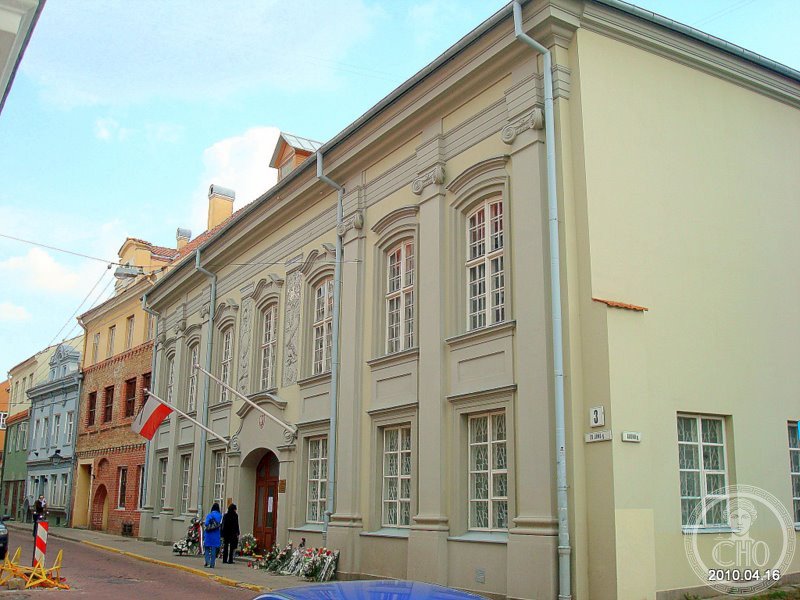
A 17th-century Baroque palace built by the Grand Chancellor of Lithuania — one of the most powerful men in the Polish-Lithuanian Commonwealth — converted into Vilnius’s most celebrated hotel within the UNESCO-listed old town.
At a glance
The palace that houses Hotel Pacai was built between 1628 and 1685 for the Pac family — one of the most powerful dynasties of the Polish-Lithuanian Commonwealth, which controlled a state that stretched from the Baltic to the Black Sea. Kristupas Zigmantas Pacas commissioned the original building; it was completed and decorated in its current form by Mykolas Kazimieras Pacas, Grand Chancellor of Lithuania, who brought Italian and Dutch craftsmen to Vilnius to execute the stucco interiors. The palace stands on Didžioji Street in the heart of the UNESCO-listed old town, within metres of the Cathedral and the Royal Palace.
Key facts
- Built: 1628–1685; primary patron Mykolas Kazimieras Pacas, Grand Chancellor of Lithuania
- Style: Early Baroque — Italian craftsmen, Dutch-influenced stucco interiors
- Address: Didžioji g. 7, 01128 Vilnius, Lithuania
- GPS: 54.6824, 25.2830
- Status: Design Hotels member; five-star; heritage-protected within UNESCO Old Town
- Location: Within the UNESCO World Heritage Site of Vilnius Historic Centre (inscribed 1994)
History
The Polish-Lithuanian Commonwealth at its 17th-century height was the largest state in Europe by territory and one of the most sophisticated culturally. The magnate families who administered its Grand Duchy of Lithuania competed in building palaces, churches, and gardens that matched the ambitions of European capitals: the Pacas family were among the most prolific patrons, commissioning churches and civic buildings throughout Lithuania and Poland.
The palace in Vilnius was the primary urban residence of the Pac family, used during the sessions of the Lithuanian Grand Tribunal and for diplomatic receptions. The stucco decoration of the chapel, attributed to Italian craftsmen working in Vilnius, is among the finest Baroque interior work in the Baltic states. The palace passed through multiple owners during the Russian Imperial period, was used as government offices during the Soviet era, and underwent an extensive restoration from 2016 to 2018 that converted it into a hotel while preserving the historic fabric.
What you see
The palace complex is arranged around two courtyard levels on a sloping site — a characteristic Baroque spatial strategy that creates a theatrical sequence of arrival. The street facade on Didžioji is in a restrained Baroque idiom; the chapel interior, accessible from the courtyard, is the architecturally significant space: its vault is covered in plaster relief stucco of extraordinary delicacy, depicting religious scenes within an elaborate cartouche and garland framework attributed to the Italian stuccatori Giambattista Frediani and Pietro Pertii.
Practical information
The hotel’s position on Didžioji Street places it 50 metres from Vilnius Cathedral and the Gediminas Tower — the key monuments of the old town. The Pilies Street market, the main tourist promenade, runs parallel. The Gate of Dawn (Aušros Vartai), the principal sacred monument of Lithuanian Catholicism, is a 10-minute walk south through the old town.
Find it on the map
See this place and what’s around it →📷 Become a Cultural Heritage Online photographer
Share your photos of places: they stay published under your name as the author. The more they're seen, the more you get noticed — and soon a contest will reward the most appreciated photos.
Log in or sign up free to add a photoIs this page about you?
This page is read by travellers and heritage enthusiasts who find it on Google. Tell us how you are connected to this place and we will take it from there.