

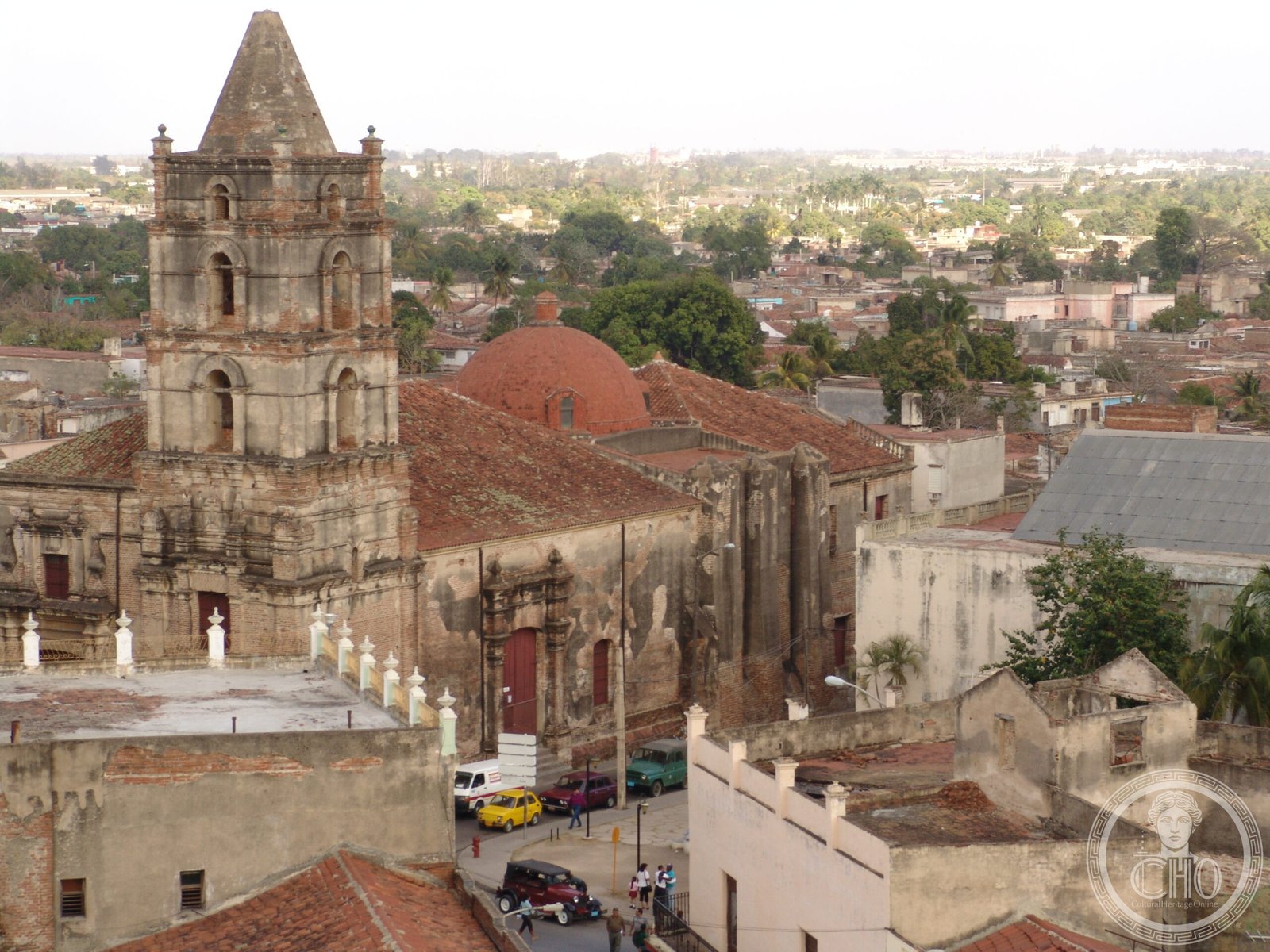
Camagüey is a Cuban colonial city like no other: founded in 1515, it has a historic centre of narrow, winding streets, irregular squares and lanes that cross one another with no apparent logic — an impossible map born of the need to keep pirates out. Capital of the province of the same name in the Cuban interior, its centre is the largest UNESCO site on the island, with 54 protected buildings and the famous tinajones, the great earthenware jars that still decorate courtyards and squares.
At a glance
The Historic Centre of Camagüey is Cuba’s largest UNESCO World Heritage site (inscribed 2008), a colonial town of remarkable urban singularity. Founded in 1515 as one of Cuba’s seven original villas, the city was relocated twice before settling inland, away from pirate raids on the coast. Its distinctive irregular street plan — unique among Cuba’s colonial cities — developed organically over centuries, creating a labyrinthine network of alleys, dead-ends and asymmetric plazas. The centre contains 54 protected heritage buildings, 25 squares and the iconic tinajones, enormous clay water jars that became a symbol of the city.
Key facts
- UNESCO: World Heritage since 2008 (Historic Centre of Camagüey)
- Founded: 1515, one of Cuba’s original seven villas
- Largest: biggest UNESCO historic centre in Cuba
- Street plan: irregular, labyrinthine — unlike any other Cuban colonial city
- Tinajones: giant clay water jars, symbol of the city
- 54 protected buildings and 25 urban plazas within the zone
History
Camagüey was founded in 1515 as Nuestra Señora del Puerto del Príncipe, one of Cuba’s first seven settlements established by the Spanish. Twice relocated to escape flooding and pirate attacks on the coast, the city eventually settled inland by 1528. Isolated from Cuba’s coastal trade, Camagüey developed a distinctive cattle-ranching economy and an urban fabric that grew organically, without the orderly grid plan typical of most Spanish colonial cities — a peculiarity that became its most distinctive feature.
Through the 17th and 18th centuries the city prospered, and its churches, convents and civic buildings accumulated. The tinajones — large terracotta jars originally imported from Spain and later made locally — became essential for collecting rainwater in a city without a river and were adopted as the city’s emblem. The city was renamed Camagüey after independence (the indigenous name for the area). Its historic centre was inscribed by UNESCO in 2008 for its exceptional urban integrity and unique street plan.
What you see
Walking the centre of Camagüey is genuinely disorienting: narrow streets angle off at unexpected directions, plazas appear suddenly, and the city refuses to reveal its logic. Churches and convents punctuate the skyline — the Cathedral of Our Lady of Candelaria, the churches of La Merced and San Juan de Dios, and many others. Brightly painted facades in terracotta, ochre and turquoise line the streets.
Courtyards filled with tinajones (some holding up to 1,000 litres) are hidden behind Colonial doorways. The Plázuela de San Juan de Dios, with its colonial hospital-museum, is among the most perfectly preserved squares in the Caribbean.
Practical information
- Access: the historic centre is walkable; horse-drawn carriages also available
- Best time: November to April (dry season)
- Time needed: at least half a day; ideally one full day
- Setting: inland central Cuba, capital of Camagüey Province
Getting there
Camagüey has an international airport (CMW) with connections from Havana (ca. 550 km west) by air or bus. The historic centre is walkable from the city centre. GPS: 21.38° N, 77.91° W.
Nearby
- Playa Santa Lucía — Cuba’s longest reef barrier, 110 km north, a major diving destination
- Trinidad — another UNESCO colonial Cuban city, 200 km west
- Cayo Coco — resort island and flamingo habitat in the Jardines del Rey archipelago
Sources
- UNESCO World Heritage Centre — “Historic Centre of Camagüey” (ref. 1270)
- Encyclopaedia Britannica — Camagüey city
- Cuba’s National Council for Cultural Heritage — official designation documentation
Find it on the map
See this place and what’s around it →📷 Become a Cultural Heritage Online photographer
Share your photos of places: they stay published under your name as the author. The more they're seen, the more you get noticed — and soon a contest will reward the most appreciated photos.
Log in or sign up free to add a photo