
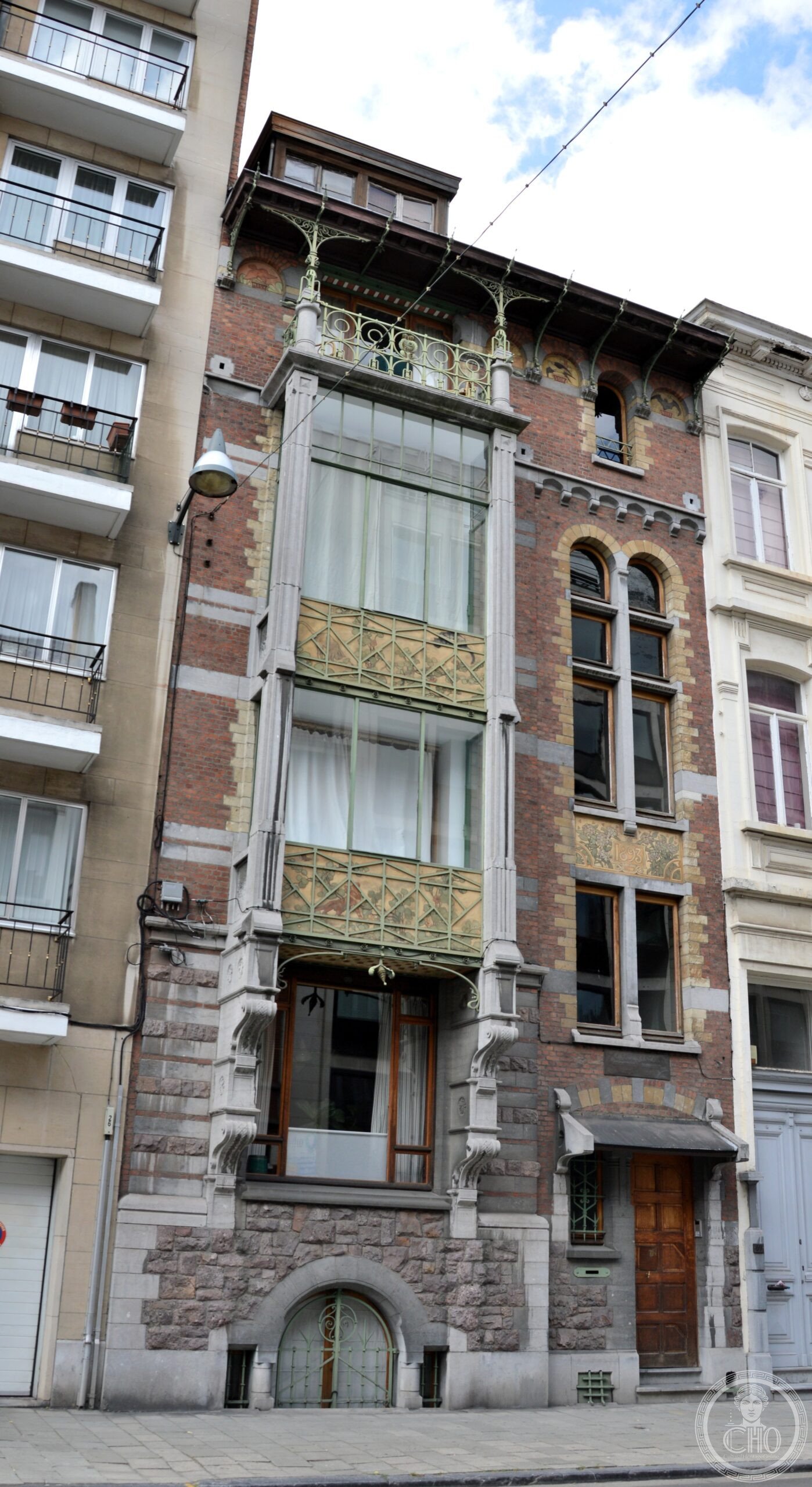
In the same year, on neighbouring streets, two architects opened Brussels Art Nouveau. One was Horta. The other built this.
At a glance
The Hankar House is the personal home that the architect Paul Hankar built for himself in 1893, at 71 rue Defacqz in Saint-Gilles, Brussels. Hankar was, with Victor Horta, one of the founders of Belgian Art Nouveau, and his house went up in the very year Horta raised the Hôtel Tassel a few streets away. Where Horta reinvented the plan, Hankar kept a traditional layout and concentrated his innovation in the facade — its sgraffito panels, wrought iron and contrasting stone making it a landmark of the new style. It has been a protected monument since 1975.
Key facts
- Architect: Paul Hankar (for himself)
- Built: 1893
- Address: 71 rue Defacqz, Saint-Gilles, Brussels
- Facade: sgraffiti, wrought iron, polychrome stone and brick
- Materials: red brick, blue stone and contrasting pale stone
- Protection: listed monument since 1975
History
Paul Hankar built his own house in 1893, the same year Victor Horta completed the Hôtel Tassel in the nearby rue Paul-Émile Janson. The two buildings are usually counted together as the opening works of Brussels Art Nouveau, though the architects took different paths.
Hankar was the less radical planner. The interior arrangement of his house stayed close to tradition, and the new spirit appears above all in the decoration. He used his own facade as a showcase, an advertisement in stone and colour for what an architect of the new school could offer.
The street he chose became a gallery of Art Nouveau: Hankar would build the Hôtel Ciamberlani on the same rue Defacqz in 1897, and Horta’s Hôtel Solvay and Hôtel Tassel stand close by. The house has been a listed monument since 1975.
What you see
The facade is built on contrast: red brick set against blue stone and pale contrasting stone, with bands of sgraffito — coloured plaster drawing scratched into the surface — running across the upper storeys. Wrought-iron balconies complete the composition.
Critics have read the front as Art Nouveau touched with eclecticism, with hints of neo-Gothic, Flemish Renaissance and Japanese design. It is a quieter statement than Horta’s flowing interiors, but a deliberate one: ornament, colour and craft carrying the whole argument.
Practical information
- The house is a private building; only the facade can be seen from the street.
- It stands on rue Defacqz, visible at any time.
- Walk the street for Hankar’s and Horta’s nearby works.
- Time needed: 10 minutes for the exterior.
Getting there
The house is on rue Defacqz in Saint-Gilles, a short walk from the Louise/Louiza area and reachable by tram and the Louise metro station in central Brussels.
Nearby
- The Hôtel Ciamberlani, also by Hankar, on the same street.
- Horta’s Hôtel Tassel and Hôtel Solvay.
- The Horta Museum in Saint-Gilles.
Sources
- Wikipedia (FR), “Maison Hankar”.
- Brussels regional heritage inventory (irismonument / urban.brussels).
- Belgian monument listing (1975).
Find it on the map
See this place and what’s around it →Record researched and written by Luigi De Marchi for Cultural Heritage Online, 2026.
📷 Become a Cultural Heritage Online photographer
Share your photos of places: they stay published under your name as the author. The more they're seen, the more you get noticed — and soon a contest will reward the most appreciated photos.
Log in or sign up free to add a photoIs this page about you?
This page is read by travellers and heritage enthusiasts who find it on Google. Tell us how you are connected to this place and we will take it from there.