

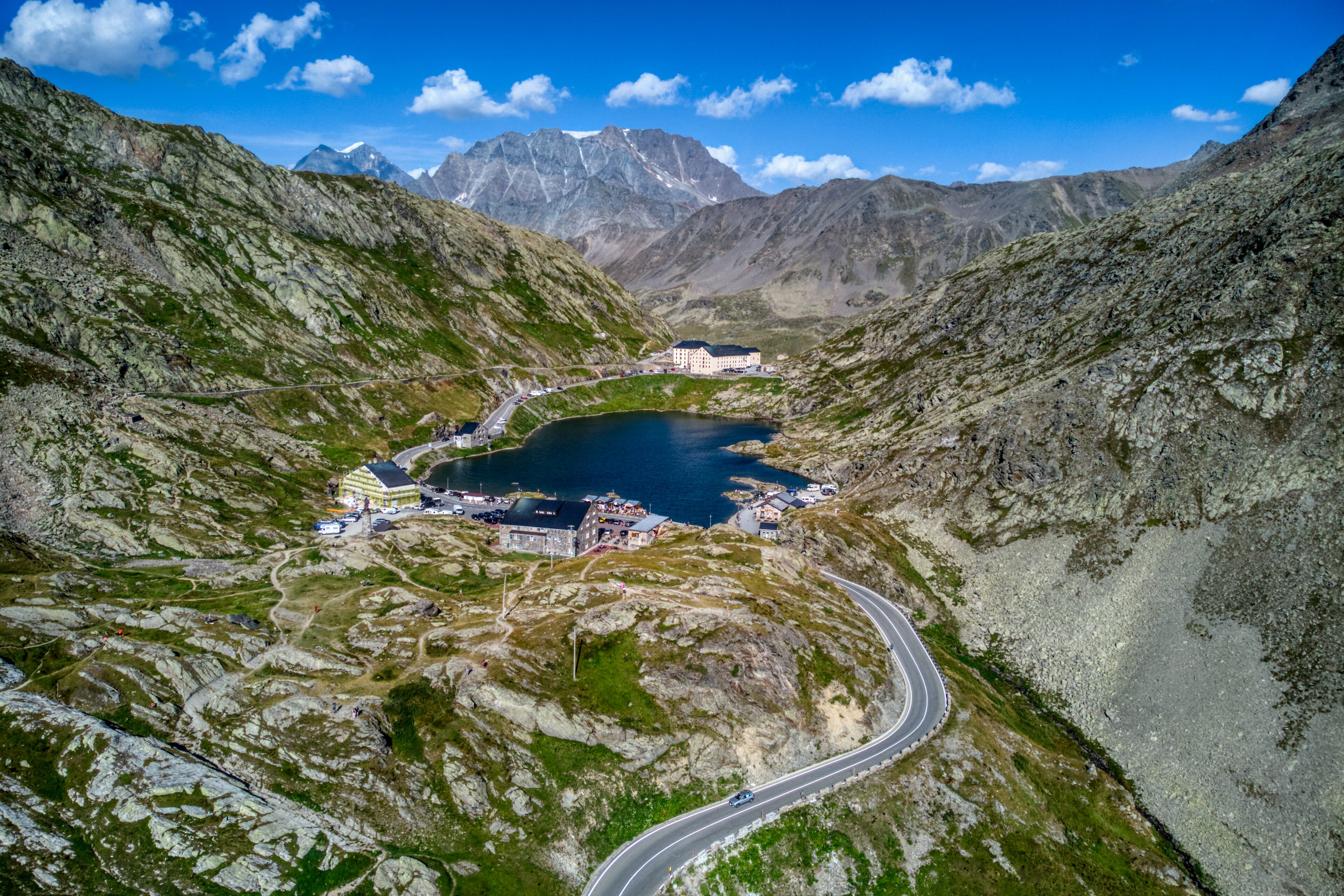
One of the Alps’ most ancient crossings, this 2,469-metre pass has channelled travellers between Switzerland and Italy since the Bronze Age, and witnessed Napoleon’s daring 1800 crossing immortalised in masterpieces by David and Delaroche.
At a glance
The third-highest road pass in Switzerland connects Martigny in Valais with Aosta in Italy’s Aosta Valley. It is the lowest pass to traverse the ridge between the Alps’ two highest mountains, Mont Blanc and Monte Rosa, and sits on the watershed dividing the Rhône and Po basins.
History
The Great St Bernard counts among the Western Alps’ most ancient routes, with evidence of Bronze Age passage and surviving traces of Roman engineering. Its strategic importance reached an apex in 1800 when Napoleon’s army crossed the pass to invade Italy—a pivotal moment captured in Jacques-Louis David’s Napoleon at the Saint-Bernard Pass and Paul Delaroche’s Bonaparte Crossing the Alps, both landmark oil paintings. The opening of the Great St Bernard Tunnel in 1964 rendered the pass less essential for through-traffic, though it remains valued for history and recreation.
What you see
Straddling the pass’s highest point stands the Great St Bernard Hospice, established in 1049. The hospice earned renown for its use of St. Bernard dogs in mountain rescue operations. The small Great St Bernard Lake lies between the Swiss and Italian facilities that serve the crossing today.
Cultural significance
The pass embodies centuries of Alpine transit and human endurance. Its role in Napoleon’s Italian campaign made it a subject for major Romantic painters, cementing its place in European cultural memory. The hospice tradition—linking monastic refuge with animal-assisted rescue—remains iconic in Alpine lore.
Key facts
- Elevation: 2,469 m (8,100 ft)
- Route: Martigny (Valais, Switzerland) to Aosta (Aosta Valley, Italy)
- Founded: Great St Bernard Hospice, 1049
- Coordinates: 45.87°N, 7.17°E
- Tunnel opened: 1964
Practical information & getting there
The pass is accessible seasonally; winter closures are common due to snow. A modern road tunnel provides a year-round alternative. The hospice and surrounding facilities offer amenities. For current conditions and visiting hours, contact local tourism offices in Martigny or Aosta before travel.
Sources & resources
Find it on the map
See this place and what’s around it →
📷 Become a Cultural Heritage Online photographer
Share your photos of places: they stay published under your name as the author. The more they're seen, the more you get noticed — and soon a contest will reward the most appreciated photos.
Log in or sign up free to add a photo