

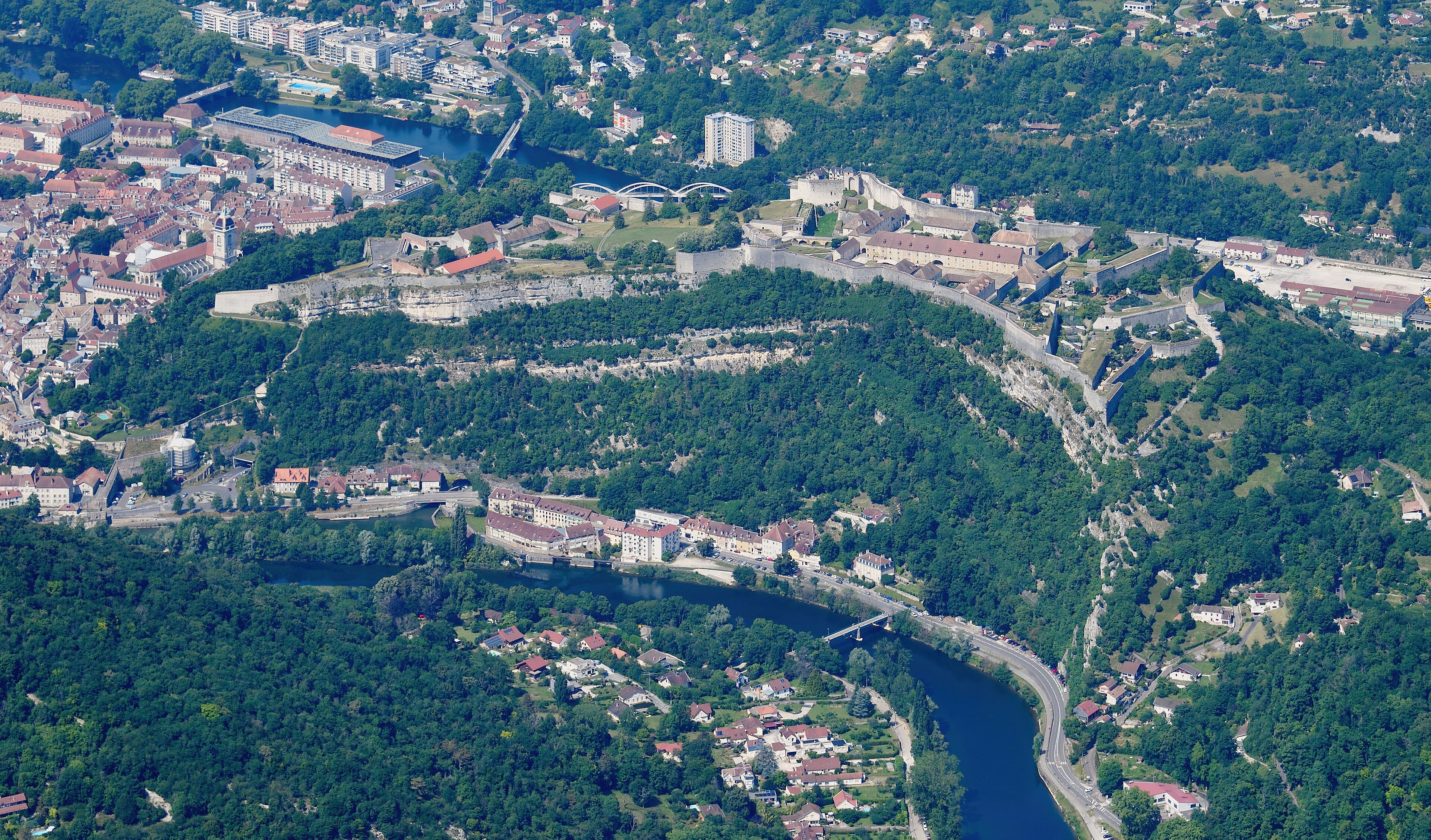
A masterwork of military engineering by Vauban, this 17th-century fortress commands the strategic heights of Besançon, transforming a Roman stronghold into one of France’s finest fortifications.
At a glance
The Citadel occupies 11 hectares on Mount Saint-Etienne, one of seven hills surrounding Besançon. Its position crowns the neck of an oxbow formed by the river Doubs—terrain Julius Caesar identified as militarily vital in 58 BC. Today it draws between 200,000 and 300,000 visitors annually, ranking among the region’s top paying monuments.
History
Sébastien Le Prestre de Vauban designed this 17th-century fortress to exploit ground that had held strategic value since antiquity. The location’s natural defences—the Doubs oxbow and elevation—made it ideal for Vauban’s geometric, star-shaped fortification principles. In 1942, the French Ministry of Culture designated the Citadel a Monument historique. UNESCO recognised it as a World Heritage Site in 2008, citing its testimony to Vauban’s revolutionary influence on military design from the 17th to 20th centuries.
What you see
The fortress remains well preserved, demonstrating Vauban’s sophisticated approach to defensive geometry. Its ramparts overlook Besançon’s old quarter, which lies within the Doubs oxbow below, and command views across the city and surrounding landscape. The site’s architectural integrity reflects the engineering standards that would shape European military fortifications for generations.
Cultural significance
The Citadel stands as a symbol of Besançon itself and exemplifies Vauban’s transformative impact on fortification design. UNESCO’s World Heritage designation specifically honours how this fortress and Fort Griffon together document military strategy and architecture across three centuries. Beyond its fortress role, the site now functions as a cultural institution anchoring the region’s heritage tourism.
Key facts
- Country: France
- City: Besançon
- Coordinates: 47.2294°N, 6.0346°E
- Area: 11 hectares (27 acres)
- Architect: Sébastien Le Prestre de Vauban
- Period: 17th century
- UNESCO World Heritage Site: Listed 7 July 2008
- Monument historique: Designated 1942
- Annual visitors: 200,000–300,000
Practical information & getting there
The Citadel houses multiple museums: exhibits on the Resistance and deportation, traditional Franche-Comté life and regional archaeology, and natural history featuring a zoo, insectarium, aquarium, vivariums, noctarium, climatorium, botanical gardens, and children’s farm. A restaurant and shops are available on-site. For visitor hours, admission fees, and access details, consult the official website or regional tourism office.
Sources & resources
Find it on the map
See this place and what’s around it →
📷 Become a Cultural Heritage Online photographer
Share your photos of places: they stay published under your name as the author. The more they're seen, the more you get noticed — and soon a contest will reward the most appreciated photos.
Log in or sign up free to add a photoIs this page about you?
This page is read by travellers and heritage enthusiasts who find it on Google. Tell us how you are connected to this place and we will take it from there.