
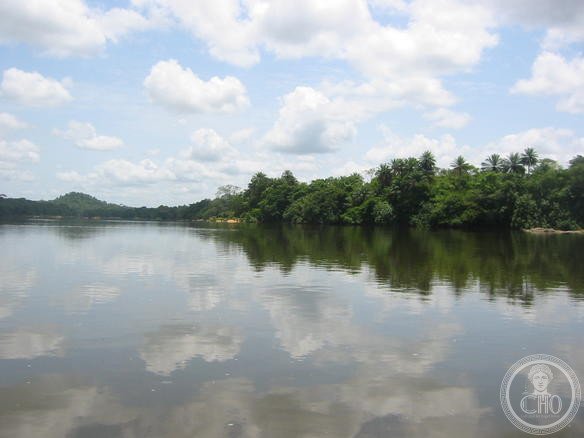
Quando la foresta pluviale della Guinea Superiore — che un tempo copriva tutta la fascia costiera dell’Africa occidentale da Guinea Bissau a Ghana, 2.000 km di foresta continua — è stata ridotta al 15% della sua estensione originale da secoli di agricoltura e guerra, i frammenti superstiti sono diventati di un’importanza biologica incalcolabile. Il complesso Gola-Tiwai — 150.000 ettari di foresta densa, fiumi e zone umide divisi equamente tra Sierra Leone e Liberia — è uno dei più grandi e meglio conservati di questi frammenti. Qui vivono gli scimpanzé dell’Africa occidentale, l’ippopotamo pigmeo, le scimmie Diana e lo straordinario Picathartes dal collo bianco, uno degli uccelli più rari del pianeta. Patrimonio UNESCO dal 2023, sito transfrontaliero.
At a glance
The Gola-Tiwai complex is a transboundary World Heritage site spanning the Sierra Leone-Liberia border, inscribed by UNESCO in 2023 (ref. 1746). It comprises the Gola Rainforest National Park (Sierra Leone side; 71,000 ha) and the Gola National Park (Liberia side; approximately 88,000 ha), together with the Tiwai Island Wildlife Sanctuary on the Moa River. The complex is one of the most important protected areas in the Upper Guinea Forest Ecoregion — a biodiversity hotspot that was, until the 20th century, one of the most species-rich tropical forest ecosystems in Africa.
Key facts
- UNESCO: World Heritage since 2023 (Gola-Tiwai complex, ref. 1746); transboundary Sierra Leone + Liberia
- Area: approximately 159,000 ha total; Sierra Leone GRNP (71,000 ha) + Liberia GNP (88,000 ha)
- Upper Guinea Forest: the ecoregion once covered 420,000 km²; now reduced to approximately 15% of original extent
- Birds: white-necked picathartes (Picathartes gymnocephalus; one of the rarest in West Africa); yellow-casqued hornbill; Liberian mongoose — not a bird, but a mammal discovered only in 1958
- Mammals: western chimpanzee, pygmy hippopotamus, African forest elephant, Diana monkey, bongo, leopard
- Tiwai Island: 12 primate species on a single river island — the highest primate density ever recorded
History
The Upper Guinea Forest was inhabited by diverse ethnic groups — Mende, Temne, Kissi, Kpelle — who practiced swidden (shifting) cultivation, hunting and gathering. Their impact on the forest was significant but reversible. The colonial period (British in Sierra Leone, American-Liberian in Liberia) intensified agricultural clearance and logging, reducing forest cover dramatically. The two civil wars in Sierra Leone (1991–2002) and Liberia (1989–2003) caused massive displacement and economic collapse, which paradoxically reduced agricultural pressure on the forest during the conflict years while creating governance challenges for conservation afterwards.
Tiwai Island was established as a wildlife sanctuary in 1987 after primate research in the 1970s–80s revealed its extraordinary biodiversity. The Gola Forest was first gazetted as a reserve in Sierra Leone in 1926. International conservation NGOs (RSPB, ZSL, Fauna & Flora International) have been working in the area since the 2000s, supporting the creation of the Gola Rainforest National Park (Sierra Leone, 2011) and eventually the transboundary UNESCO nomination (2023).
What you see
The forest interior is an overwhelming experience of sound and shadow: huge emergent trees with buttressed roots 4–5 m high, a canopy so dense it blocks the sky, the constant dripping of moisture from leaves, the calls of hornbills and the hoots of chimpanzees in the distance. The Moa River at Tiwai Island is navigable by canoe and offers the best wildlife watching: troops of Diana monkeys and black-and-white colobus crossing the river on overhanging branches, pygmy hippos leaving the water at dusk.
The white-necked picathartes — a prehistoric-looking, almost bald bird that nests on bare rock surfaces in caves — can be found near the rock outcrops on the Liberian side with the help of a local guide.
Practical information
- Tiwai Island: 290 km from Freetown; drive to Potoru (Sierra Leone), then canoe to the island; research station accommodation; guided forest walks
- Gola RNPS (Sierra Leone side): visitor centre at Lalehun; accommodation at forest camps; guided walks for primates, birds
- Best time: November–March (dry season; trails passable; wildlife more visible at water sources)
- Security: post-war Sierra Leone is generally safe; check current conditions for the Liberian border area
Getting there
Fly to Freetown (Lungi International Airport). Drive south-east via Bo (250 km, 5 hrs) to Potoru; then canoe to Tiwai Island. GPS: 7.37° N, 11.20° W.
Nearby
- Freetown — the Sierra Leone capital; Cotton Tree; National Museum; the only city in the world named after freed slaves
- Loma Mountains (UNESCO tentative) — the highest peak in Sierra Leone (1,945 m); endemic species of cloud forest
- Monrovia — the Liberian capital, 250 km south-east; gateway to the Liberian side of the complex
Sources
- UNESCO World Heritage Centre — “Gola-Tiwai Complex” (ref. 1746)
- RSPB — Gola Rainforest Programme, Sierra Leone
- Encyclopaedia Britannica — Upper Guinea forest; Sierra Leone
Find it on the map
See this place and what’s around it →📷 Become a Cultural Heritage Online photographer
Share your photos of places: they stay published under your name as the author. The more they're seen, the more you get noticed — and soon a contest will reward the most appreciated photos.
Log in or sign up free to add a photo