

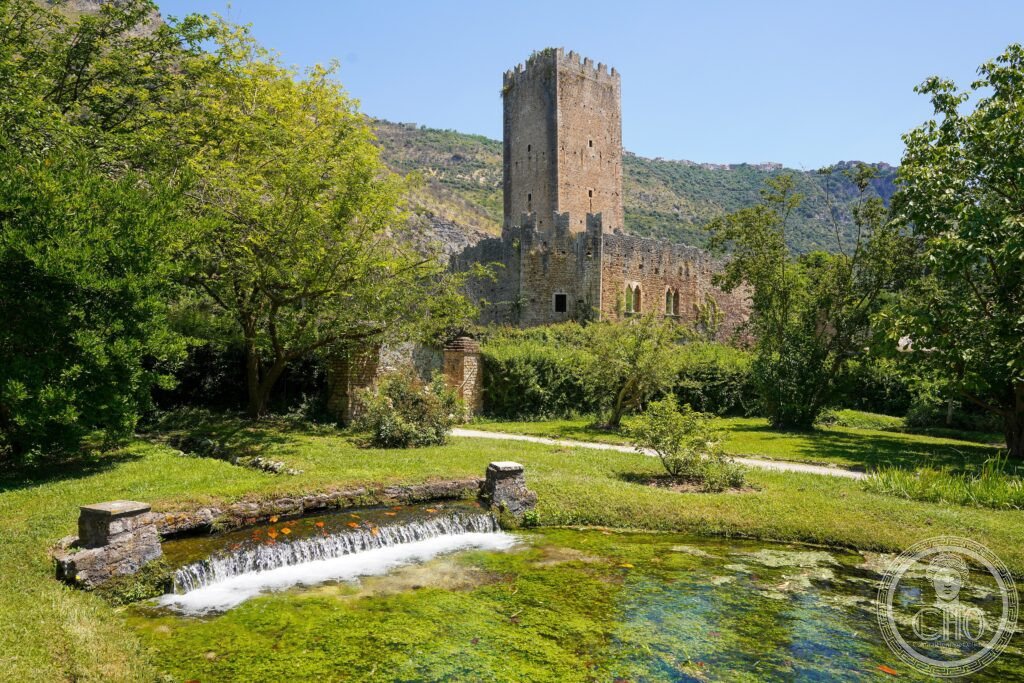
A garden grown inside the ruins of a medieval town, where climbing roses cover the walls of Norman churches and a spring-fed stream runs clear beneath weeping willows. Ninfa was created from 1921 by Gelasio Caetani, who chose to build among the ruins rather than clear them.
At a glance
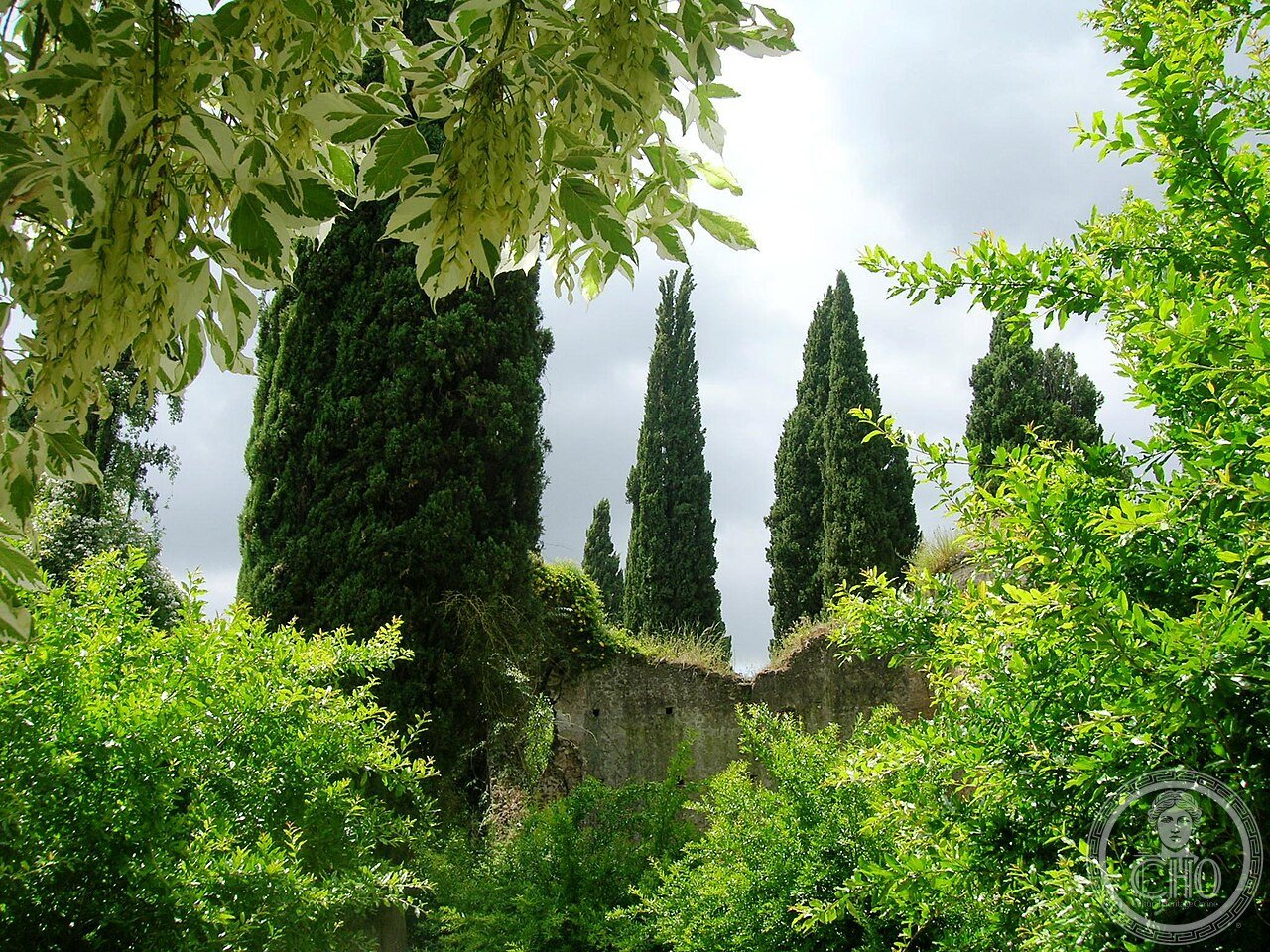
The Giardino di Ninfa occupies the ruins of the medieval borough of Ninfa, itself set within a larger protected nature reserve. Stone walls, towers, six ruined churches and a former town hall stand among roses, cypresses and weeping willows, all threaded by the Torrente Ninfa, a stream fed by karst springs that keeps a constant temperature through the year.
The site is administered by the Fondazione Roffredo Caetani, in cooperation with FAI, the Fondo Ambiente Italiano, and access is limited to guided visits on selected days rather than open daily entry.
Key facts
- Location: Cisterna di Latina, province of Latina, Lazio
- Garden founded: 1921, by Gelasio Caetani (1877–1934)
- Medieval town destroyed: November 1382, on the orders of Pope Urban VI
- Managed by: Fondazione Roffredo Caetani, with FAI (Fondo Ambiente Italiano)
- Rose collection: over 2,000 varieties, begun by Ada Wilbraham from 1886
- Access: guided visits only, on a limited number of open days a year
History
Ninfa began as a Roman pagus near a complex of karst springs, its name derived from the nymph regarded in Roman times as the presiding spirit of the water source. Under the Benedictine monks of the nearby Abbazia di Fossanova, it grew into a fortified medieval borough from the ninth century, with its first stone churches raised in the twelfth. The Caetani family, one of medieval Rome’s most powerful noble houses and the family of Pope Boniface VIII, bought Ninfa from the papal treasury in 1298.
The town’s destruction came in November 1382, when Pope Urban VI sent troops under the Breton captain Albanese di Baux to punish the Caetani for their alliance with the antipope Clement VII during the Western Schism. The soldiers entered through the north gate, expelled the population, and burned the wooden structures, but left the stone walls, towers and churches standing. Ninfa was never resettled, and the Caetani prevented the ruins from being quarried for building material, allowing them to survive largely intact for over six centuries.
The garden itself is a twentieth-century creation, made in three phases. Gelasio Caetani began planting roses and trees among the ruins from 1921, using the walls as supports and the stream as the garden’s organising line. His successors, Marguerite Chapin Caetani and Roffredo Caetani, extended the planting from the 1930s to 1960 with a magnolia avenue, a Japanese cherry grove and an iris meadow. Lelia Caetani then expanded the rose collection to its present size and founded the Fondazione Roffredo Caetani in 1977, which has run the garden since, with FAI co-managing visitor access from 1999.
What you see
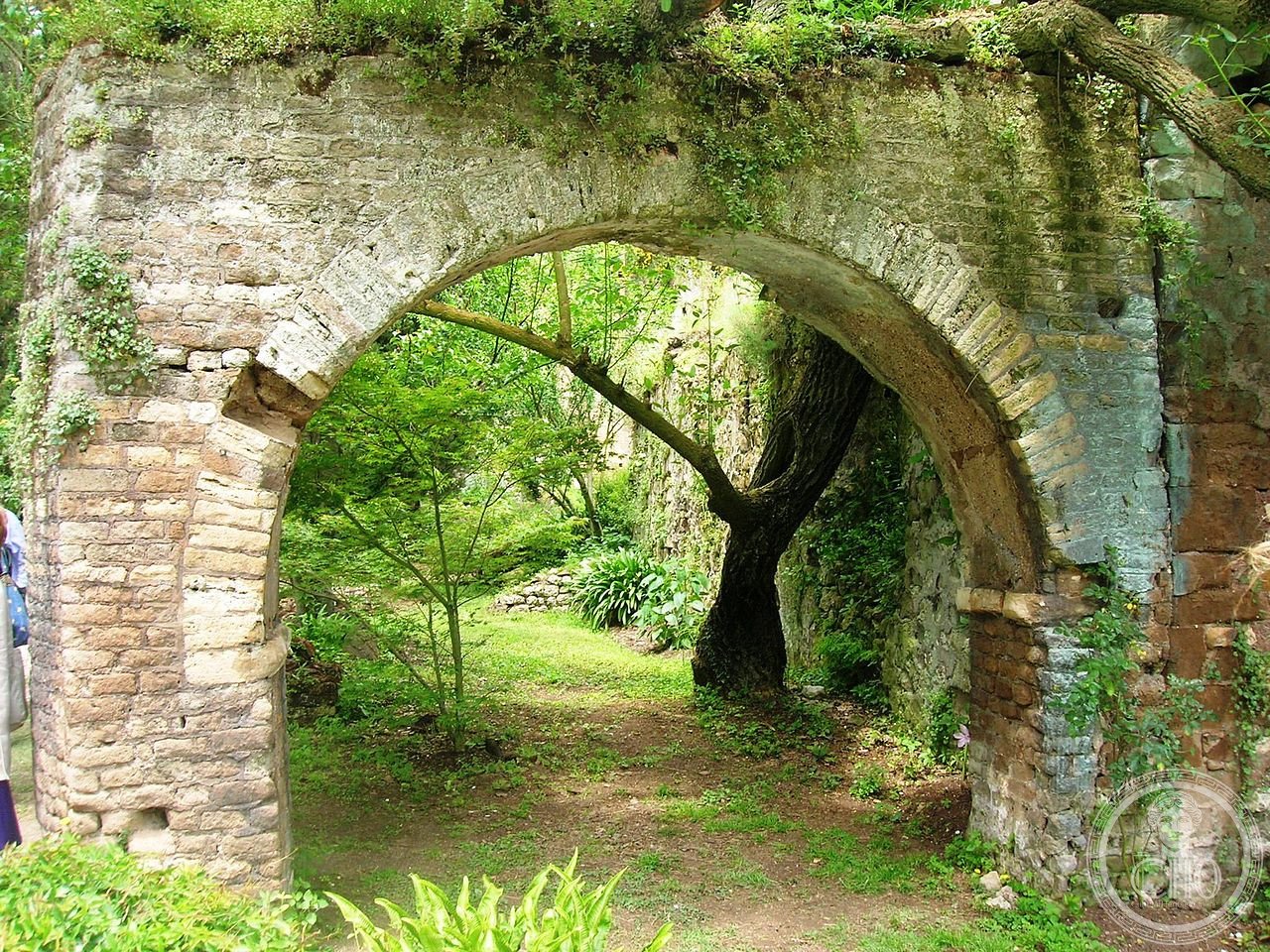
Visits are guided throughout, and enter through the medieval Porta Nord, a thirteenth-century stone archway whose slightly horseshoe-shaped arch reflects Arab-Norman influence carried north from Sicily. The best-known sight is the Rosa sinica Anemone, a single-flowered pale pink climbing rose that covers the standing apse wall of San Salvatore, the oldest structure on the site, dating from 1120.
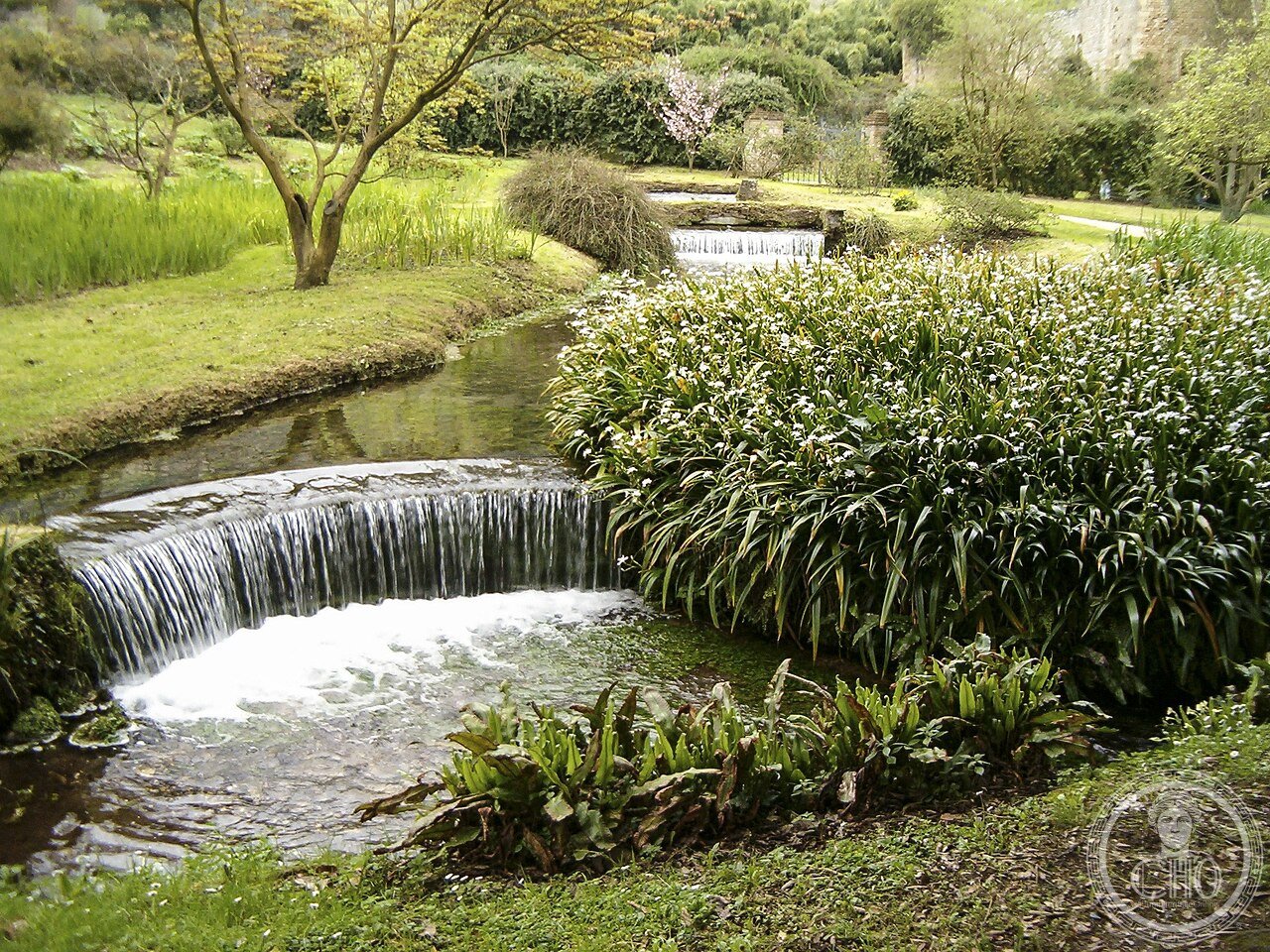
A path follows the Torrente Ninfa for some 800 metres from the springs at the northern end of the garden to its exit in the south. Weeping willows planted between the 1930s and 1950s now stand fifteen to eighteen metres tall and form a long green canopy over parts of the stream, with primulas and irises along the banks reflected in the clear water.
The Torre Caetani, a fifteenth-century watchtower added by the family after the destruction of 1382, is the only medieval structure to survive complete. Visitors can climb its spiral stair for a view over the whole garden and ruins, with the reclaimed Pontine Marshes visible beyond.
Practical information
- Access: by guided visit only, on a restricted number of days each year, usually between April and November
- Booking: reservation is required in advance through the Fondazione Roffredo Caetani’s official channels; dates in May are in high demand
- Note: unaccompanied visits are not permitted
Getting there
The garden lies near Cisterna di Latina, in the province of Latina, south of Rome. Visitors should check the official Fondazione Roffredo Caetani channels for current access arrangements and directions before travelling.
Nearby
- Abbazia di Fossanova — around 12 km away, the Benedictine abbey under whose monks Ninfa grew into a fortified town
- Monti Lepini — visible to the south, the hills whose karst springs feed the Torrente Ninfa
- Agro Pontino — the reclaimed former Pontine Marshes, visible from the Torre Caetani
Sources
- FAI – Fondo Ambiente Italiano
- Fondazione Roffredo Caetani
Gallery
Find it on the map
See this place and what’s around it →📷 Become a Cultural Heritage Online photographer
Share your photos of places: they stay published under your name as the author. The more they're seen, the more you get noticed — and soon a contest will reward the most appreciated photos.
Log in or sign up free to add a photoIs this page about you?
This page is read by travellers and heritage enthusiasts who find it on Google. Tell us how you are connected to this place and we will take it from there.