
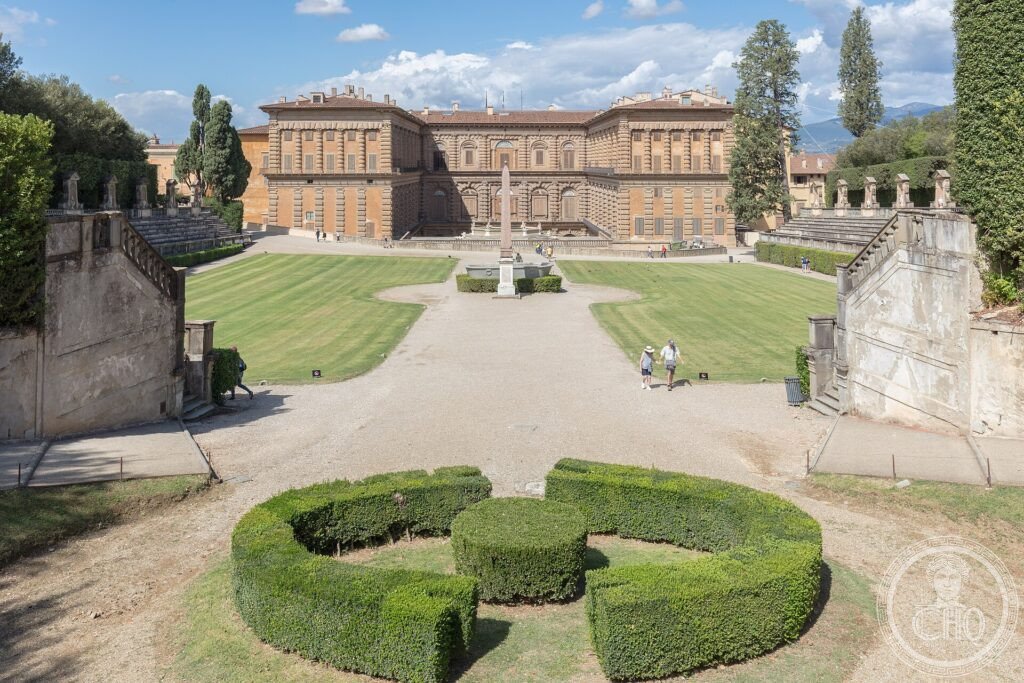
Dietro Palazzo Pitti si distende su 45 ettari il laboratorio botanico e scultoreo dei Medici — il modello che ogni giardino formale europeo del XVII e XVIII secolo ha cercato di imitare.
At a glance
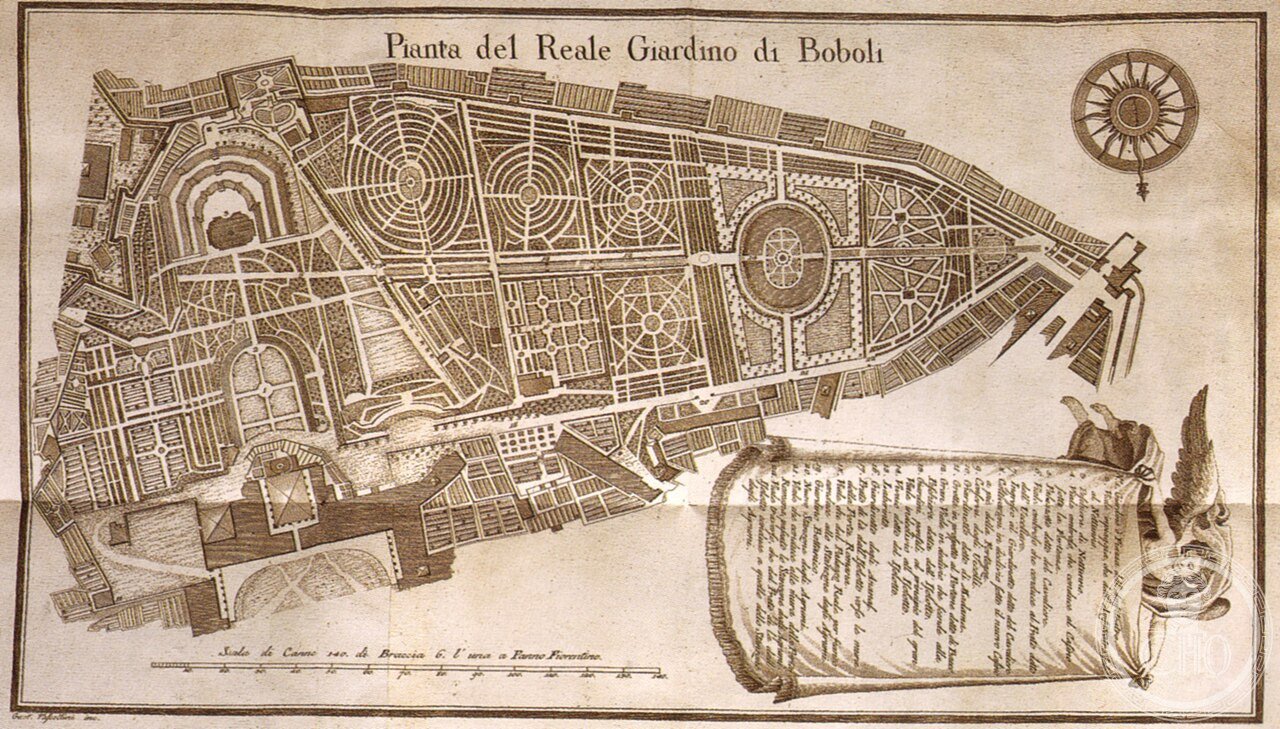
Boboli Gardens occupy 45 hectares on the Oltrarno hillside immediately behind Palazzo Pitti, rising from the palace forecourt to the old city walls at the top of the Belvedere hill. Commissioned by Eleonora di Toledo, wife of Cosimo I de’ Medici, in 1549 and designed by Niccolò Tribolo, the gardens were the first in Europe to implement the Italian formal garden on a monumental scale: terraced axes, perspectives terminated by sculpture, bosco intersected by allées, and an outdoor theatre used for Medici spectacles. Today they hold one of Europe’s most important collections of antique and Renaissance sculpture in an outdoor setting. The gardens are part of the UNESCO World Heritage “Historic Centre of Florence” (1982).
Key facts
- UNESCO inscription: Part of “Historic Centre of Florence” 1982 (ref. 174); integral to Pitti complex
- Area: 45,000 m² (45 hectares); one of the largest urban gardens in Italy
- Founded: 1549 by Eleonora di Toledo, wife of Cosimo I; designed by Niccolò Tribolo; later contributions by Bartolomeo Ammannati, Bernardo Buontalenti, Alfonso Parigi the Elder
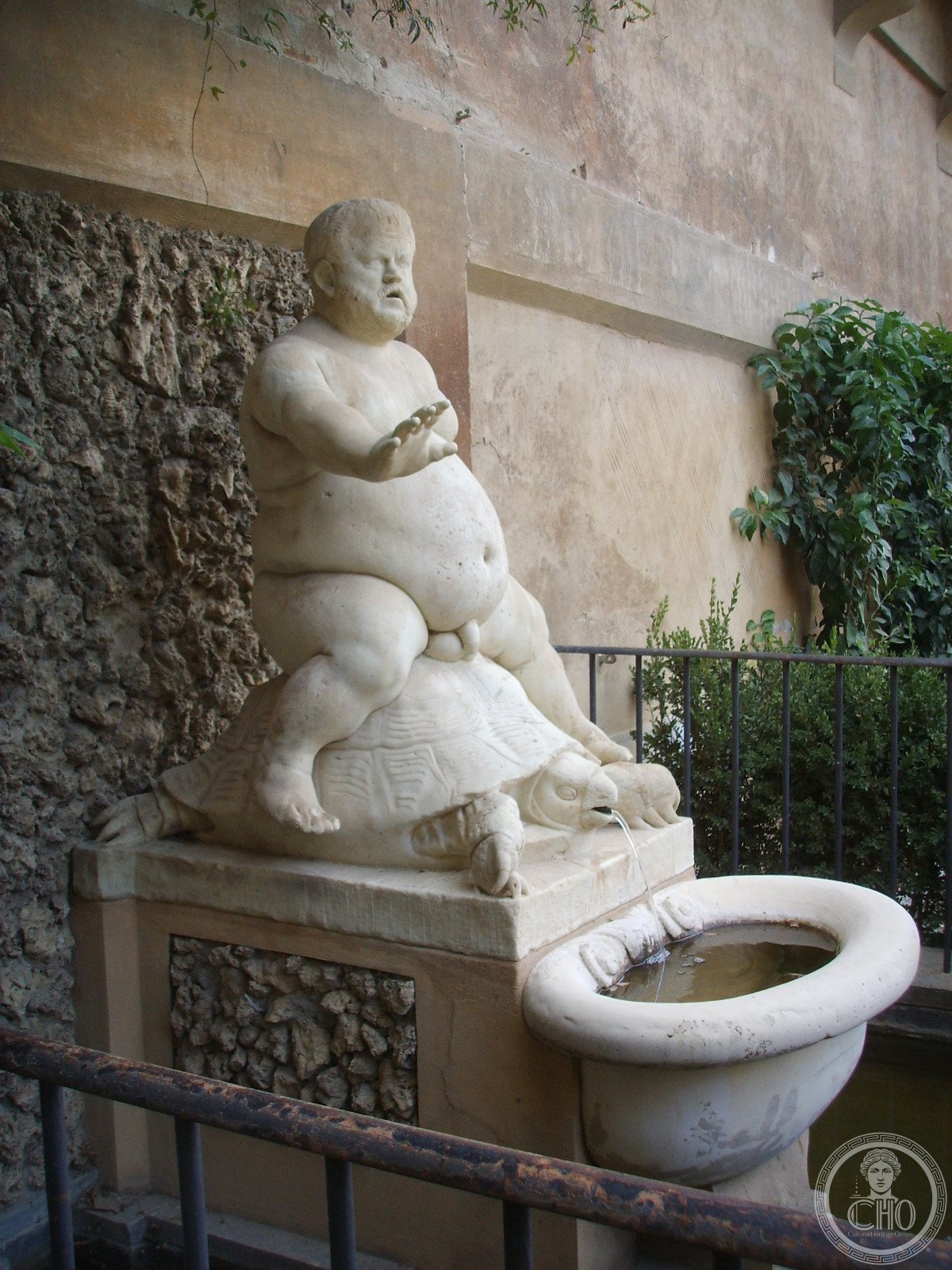
- Highlights: Amphitheatre, Isolotto (island fountain), Viottolone (cypress alley), Grotta del Buontalenti (1583–1593), Fontana del Nettuno, Fontana dell’Oceano (Giambologna)
- Sculptures: 170+ antique and Renaissance sculptures; Egyptian obelisk from Luxor
- Opening: daily (except first and last Monday of month); admission fee
History
The Boboli hill was originally quarried (buca — a pit) for the pietraforte stone used to build medieval Florence; the name “Boboli” derives from a local family, the Bogoli, who owned adjacent land. When Eleonora di Toledo purchased Palazzo Pitti in 1549, the hill behind it became the canvas for the most ambitious garden project in Renaissance Florence. Niccolò Tribolo drew the original plan, with an amphitheatre at its core intended for outdoor theatre and Medici celebrations — a conscious reference to Roman theatre and to the dynasty’s claim to imperium.
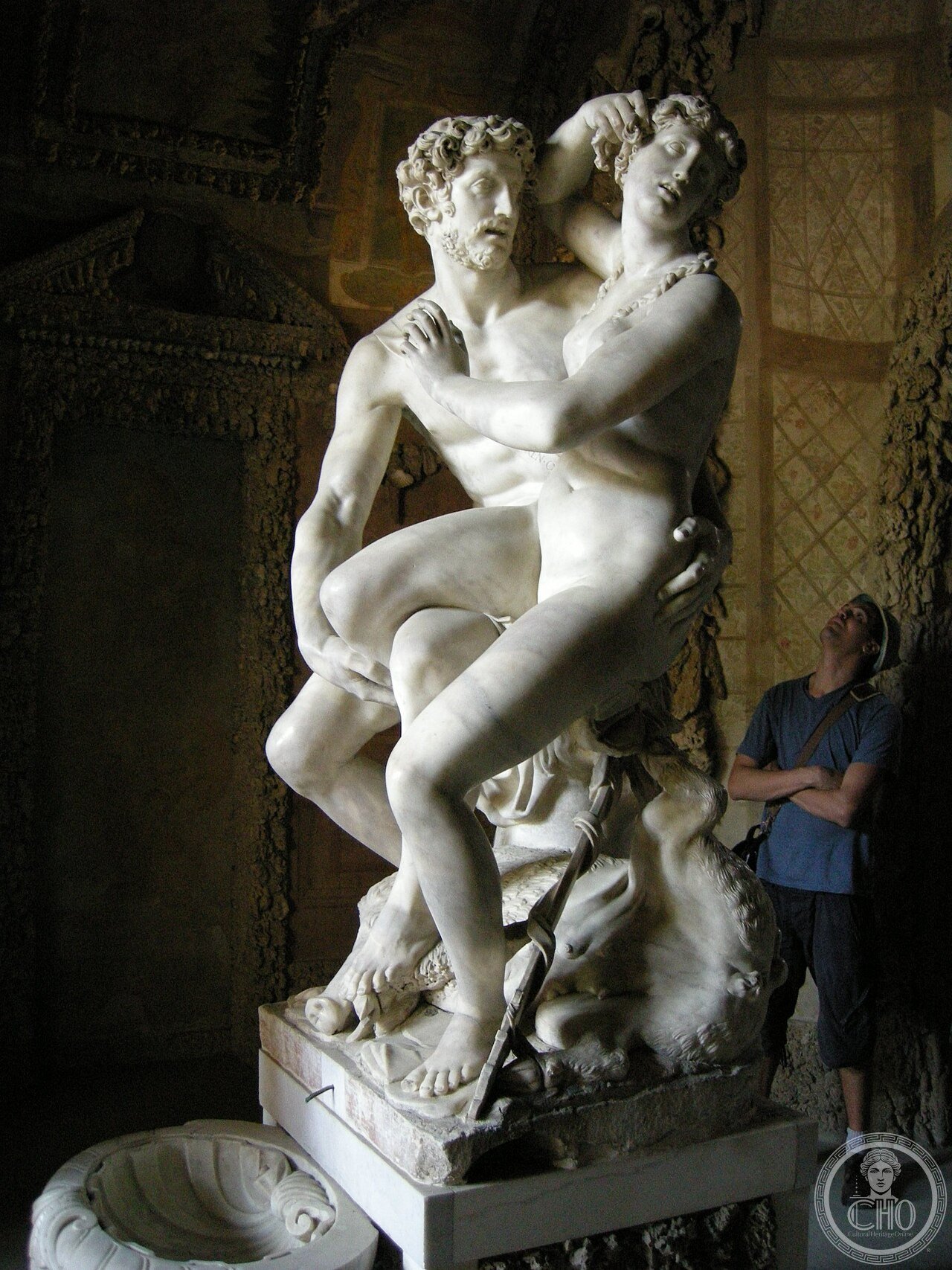
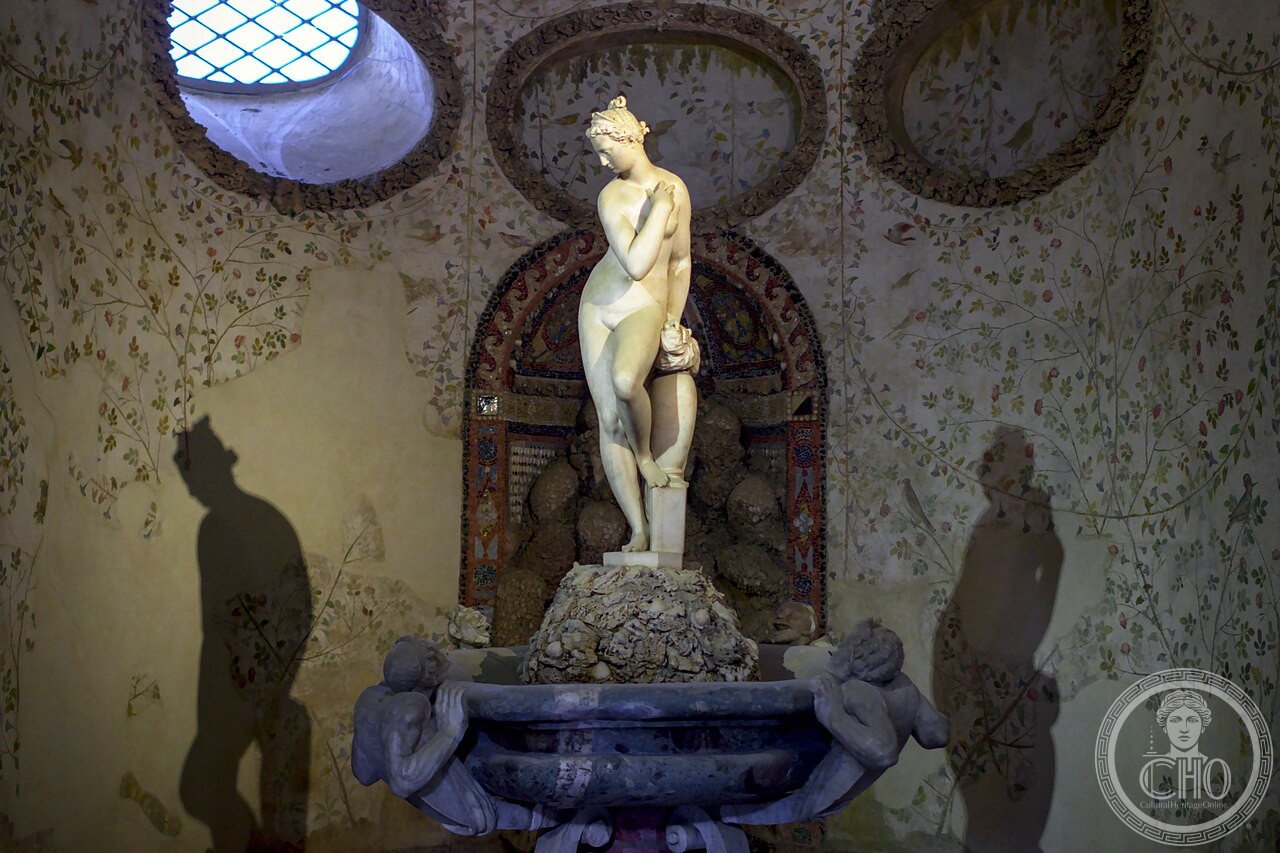
Tribolo died in 1550 and the work continued under Bartolomeo Ammannati, who redesigned the palace courtyard to integrate it with the ascending garden. Bernardo Buontalenti, the Medici’s versatile court engineer, added the intricate mannerist Grotta between 1583 and 1593 — a stalactite-encrusted cave with Michelangelo’s captive Slaves embedded in its first chamber (now replaced by casts; originals in the Accademia). Giambologna contributed the Fontana dell’Oceano for the Isolotto in 1576.
Under the Lorraine grand dukes (18th–19th century), the garden acquired its coffeehouses, the English-style landscape section in the upper Vivaio, and the Egyptian obelisk. After Italian Unification, it opened to the public. Today it is managed by the Polo Museale della Toscana alongside Palazzo Pitti and the Galleria Palatina.
What you see
The garden unfolds along two main axes from Palazzo Pitti: the central amphitheatre axis rising steeply to the Fontana del Nettuno and the Belvedere wall, and the lateral Viottolone — a 500-metre cypress alley descending southwest to the Isolotto, a circular island garden centred on Giambologna’s triton fountain. The amphitheatre itself, grass-terraced and oval, still feels like an outdoor room: the Medici used it for horse ballets, theatrical interludes, and the first ever opera performance, Jacopo Peri’s Dafne, in 1598. At the garden’s highest point, the Kaffeehaus pavilion (1776) looks out over the entire city — the Duomo, the Bargello tower, and the Arno bend visible in a single sweep.
Buontalenti’s Grotta (1583–1593) is the garden’s most surprising space: three interconnected rooms whose walls are encrusted with porous limestone, stalactites and artificial coral, with sheep, goats and deer modelled in stucco emerging from the rock — a mannerist fantasy of the boundary between art and nature.
Practical information
- Opening hours: daily 08:15 to dusk (varies by season, 18:30–19:30); closed first and last Monday of the month
- Admission: combined ticket with Palazzo Pitti museums available; standalone garden ticket also sold
- Best season: April–May (roses and wisteria in bloom) and October (autumn colour on the cypress alley)
- Time needed: minimum 1.5 hours for main axis; full garden 3 hours
- Access: entrance from Piazza de’ Pitti 1; partially accessible with wheelchairs on the main paths
Getting there
Cross the Arno via Ponte Vecchio or Ponte Santa Trinita and walk 5 minutes south-west to Piazza de’ Pitti. Bus lines D, 11 and 36/37 stop at Pitti. From Florence Santa Maria Novella station, the walk takes 20 minutes. GPS: 43.7640° N, 11.2501° E.
Nearby
- Palazzo Pitti — the Medici-Lorraine palace housing the Galleria Palatina (Raphael, Titian, Caravaggio), adjacent
- Forte di Belvedere — 16th-century Buontalenti fortress at the top of the garden, open seasonally for contemporary art exhibitions
- Villa Medicea di Castello — companion Medici garden 5 km north-west, UNESCO 2013 Medici Villas inscription
Sources
- UNESCO World Heritage List — “Historic Centre of Florence,” ref. 174 (whc.unesco.org)
- Polo Museale della Toscana — Boboli Gardens (polomuseale.firenze.it)
- Wikipedia — “Boboli Gardens” (en.wikipedia.org/wiki/Boboli_Gardens)
- Luke Syson, et al., Renaissance Florence: the Art of the 1470s, National Gallery, 1999
Find it on the map
See this place and what’s around it →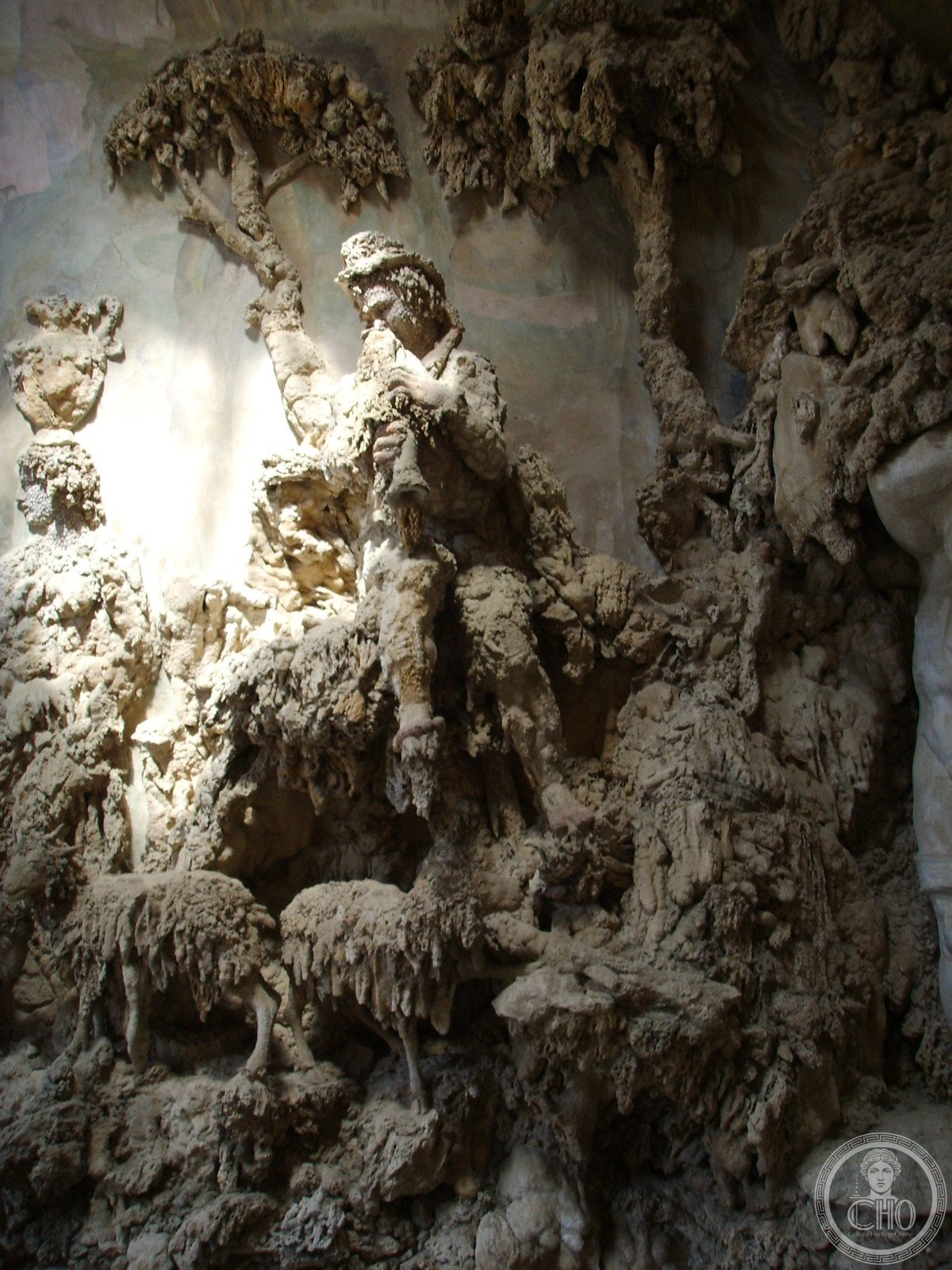
📷 Become a Cultural Heritage Online photographer
Share your photos of places: they stay published under your name as the author. The more they're seen, the more you get noticed — and soon a contest will reward the most appreciated photos.
Log in or sign up free to add a photo