

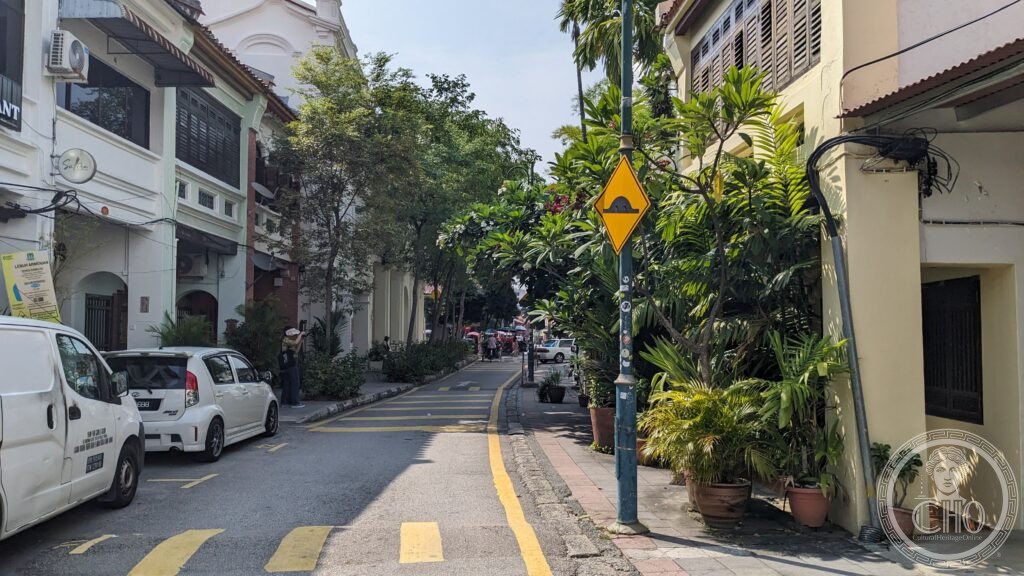
The most culturally complex heritage city in South-East Asia. Founded in 1786 as the British East India Company’s first foothold in the Malay Peninsula, George Town’s historic core preserves the distinct living heritage of Malay, Chinese (Hokkien, Cantonese, Hakka, and Teochew), British colonial, Indian Tamil, and Peranakan (Straits Chinese) communities in a continuous fabric of shophouses, clan temples, mosques, Hindu temples, Anglican and Protestant churches, and colonial administrative buildings. Inscribed as a UNESCO World Heritage Site in 2008 jointly with Melaka (Malacca).
At a glance
George Town (Chinese: 檳城, Pinang; Malay: Bandar George Town) is the capital of Penang State, Malaysia, on the north-eastern coast of Penang Island. The city was founded in 1786 by Francis Light of the British East India Company, who signed a treaty with the Sultan of Kedah leasing the island. It became the first British settlement in South-East Asia and developed as a free port and entrepôt trading centre on the Strait of Malacca route between India, China, and the Spice Islands. The UNESCO World Heritage zone covers approximately 109 ha of the city’s historic core, encompassing the commercial and residential quarters of the various ethnic communities that settled the city over the colonial period. UNESCO inscribed George Town jointly with Melaka in 2008.
Key facts
- Shophouse architecture: the definitive building type of the Straits Settlements. A 2–3 storey mixed-use building with a ground-floor shop and workshop opening directly onto the covered five-foot walkway (kaki lima, the colonnade mandated by Stamford Raffles and later formalised in the 1833 Streets and Buildings Ordinance) and residential accommodation on the upper floors. The façade styles evolved through the colonial period from Early Penang Style (pre-1840, sparse plasterwork, limited openings) through the South Chinese Baroque (1840–1900, elaborate moulded plaster, ceramic tile, painted wood shutters) to the Late Style Eclectic (1900–1940, art nouveau ornament, ironwork balconies). The George Town core contains approximately 4,000 pre-war shophouses in varying states of conservation, the largest collection in Malaysia.
- Lebuh Armenian and the Khoo Kongsi: the most celebrated street in George Town. A 200-metre cobblestone lane that concentrates the three most important clan temple compounds (kongsi) in the city: the Khoo Kongsi (the most elaborate, built 1906 with a double-storey granite pavilion, Teochew opera stage, and clan rows of shophouses forming a self-enclosed compound), the Yap Kongsi, and the Seh Tek Tong Cheah Kongsi. The kongsi (clan associations, organised by surname and dialect group) were the principal social institutions of the Chinese immigrant communities and built their kongsi compounds as miniature replicas of imperial Chinese palace architecture. The Khoo Kongsi (open daily, admission approximately RM10) is the finest single example of this building type outside mainland China.
- The Peranakan (Straits Chinese) culture: the Peranakan (Nyonya-Baba) community of George Town. The descendants of Chinese immigrants who settled in the Straits Settlements in the 15th–19th centuries and adopted Malay language, dress, and cuisine while maintaining Chinese religion, ancestor veneration, and community structure. Produced the most distinctive syncretic culture in South-East Asia. The Peranakan Mansion museum (Cheong Fatt Tze Mansion, the “Blue Mansion,” an 1897 Hokkien-Chinese mansion with 220 stained glass windows, Cantonese moulded plaster ceilings, and Scottish cast-iron balustrades) is the best single building for understanding Peranakan aesthetic culture. The Nyonya cuisine (a fusion of Chinese and Malay cooking techniques using indigenous spices and coconut milk) is centred on George Town and is among the most complex fusion cuisines in the world.
- Fort Cornwallis: the largest remaining British fort in Malaysia. Built 1786 by Francis Light in wood, replaced in stone 1805–10. The star-shaped bastion fort on the north-east tip of Penang Island controlled the approach to the harbour. The interior contains the original cannon Seri Rambai (a Portuguese bronze cannon captured from the Dutch, now thought to have fertility associations and decorated with offerings by local women) and the restored barracks, magazine, and chapel. The fort is now a public park within the heritage zone.
- Street art and living heritage: since 2012, George Town has developed a globally recognised street art tradition initiated by Lithuanian artist Ernest Zacharevic, who painted a series of murals on the walls of heritage buildings in the core zone (the most famous: “Boy on Motorcycle,” “Boy and Girl on Swing,” “Children on Bicycle”). The murals were integrated with real objects (a real motorcycle, a real iron swing) attached to the wall. The murals became one of the most photographed subjects in Malaysia and triggered a proliferation of street art throughout the heritage zone. The combination of the colonial heritage architecture and the contemporary street art layers is distinctive to George Town’s heritage identity.
- Heritage: UNESCO World Heritage Site, Historic Cities of the Straits of Malacca: Melaka and George Town, inscribed 2008.
- GPS: 5.4141° N, 100.3288° E.
History
Penang Island was ceded to the East India Company by the Sultan of Kedah in 1786 under pressure from Francis Light. Light renamed the island Prince of Wales Island (Penang is derived from the Malay for betel nut palm, pinang) and declared it a free port. No duties on trade, open to all nationalities. Which rapidly attracted traders and settlers from the regional commercial networks. By 1800 the population had grown from zero to approximately 10,000, comprising Chinese, Malay, Indian, and Eurasian communities. The city was named George Town in honour of the Prince of Wales (the future King George IV). The East India Company transferred its Straits Settlements headquarters to Singapore in 1819 (after Raffles founded Singapore), which reduced George Town’s administrative importance. But the free-port policy, the growing Peranakan community, and the development of tin and rubber exports in the Malay interior sustained the city’s commercial importance through the 19th century.
Japanese occupation (1941–45) was severe. Approximately 6,000 Chinese residents were executed in the Sook Ching massacre during the first weeks of occupation. The Chinese clan associations and the Peranakan community bore the heaviest losses. British reoccupation (1945) restored the colonial administration. Malayan independence (1957) and Malaysian independence (1963) ended the Straits Settlements framework. George Town was temporarily declassified as a city (1974–2015) as part of a federal administrative reorganisation before regaining city status. The UNESCO inscription in 2008 triggered significant conservation investment and the development of heritage tourism as an economic sector.
What you see
The UNESCO heritage zone is compact and walkable (approximately 3 km across). The standard exploration covers the civic district (Fort Cornwallis, Padang Kota Lama, the Penang State Museum in the old Supreme Court, and St. George’s Church — the oldest Anglican church in South-East Asia, 1818), the Chinese commercial quarter (Lebuh Armenian, the kongsi compounds, and the Khoo Kongsi temple), the Little India district (Jalan Masjid Kapitan Keling, with the Sri Mahamariamman Temple and the Kapitan Keling Mosque side by side on the same street), and the Peranakan quarter (Cheong Fatt Tze Mansion on Leith Street, and the Straits Collection museum). The Penang street food scene is one of the most celebrated in Asia. The hawker centres (Gurney Drive, Esplanade Food Court, Kimberley Street, and the New Lane night market) serve char kway teow (flat rice noodles stir-fried in charred wok), Penang laksa (a spicy fish-based noodle soup with tamarind and shrimp paste), cendol (shaved ice with coconut milk and palm sugar), and Nyonya cuisine.
Practical information
- Admission: all streets and most temples free to enter. Khoo Kongsi clan temple approximately RM10 (about €2). Cheong Fatt Tze Mansion (Blue Mansion) RM25 for guided tour (morning tours at 11 am and 1:30 pm, book in advance). Fort Cornwallis RM20 (about €4). Most of the heritage zone is best explored on foot with a street map (available free from hotels). Cycling is a popular option (many hire shops in the heritage zone, approximately RM15–20 per day).
- Getting there: Penang International Airport (PEN) receives direct flights from Kuala Lumpur (45 min, frequent), Singapore (1h), Bangkok (1.5h), Hong Kong (3h), and a small number of European charter services. From the airport to George Town by taxi (approximately 30 min, RM35–50) or rapid transit bus (approximately 50 min, RM5). The Penang-Butterworth Ferry (10 minutes, RM1.20 for passengers, from Weld Quay in the heritage zone) and the two Penang Bridges (both toll) connect Penang Island to mainland Malaysia. From Kuala Lumpur (330 km south) by bus (4.5 hours) or express train to Butterworth then ferry.
- Melaka (Malacca) combination: George Town is UNESCO-inscribed jointly with Melaka (340 km south by road, 4.5 hours by bus or express bus). The combination covers the full arc of Straits Settlements heritage. George Town for the Chinese and Peranakan culture, Melaka for the Portuguese and Dutch colonial layers. A 4-day circuit (2 days George Town, 2 days Melaka) with a flight in and out of Kuala Lumpur International Airport (KLIA) or Singapore Changi Airport is the standard itinerary.
Getting there
Penang International Airport (PEN): 45 min from KL, 1h from Singapore. Taxi to George Town ~30 min. GPS: 5.4141, 100.3288.
Nearby
- Penang Hill (Bukit Bendera). 6 km south-west of George Town. A 821-metre hill accessible by the world’s steepest funicular railway (Penang Hill Railway, rebuilt 2010, 2km long, ascent time 5 minutes). The summit has a colonial-era hotel (Bellevue Hotel, built 1912), a mosque, a Hindu temple, a colonial-era rest house, and a 360-degree view over Penang Island, the mainland, and on clear days Sumatra. The forest on the hill is a protected nature reserve (Penang Hill Biosphere Reserve) with canopy walkway and bird-watching trails.
- Kek Lok Si Temple. 8 km south of George Town in Air Itam. The largest Buddhist temple in South-East Asia. A hillside complex of seven-storey pagoda (Ban Po Tower, “Tower of Ten Thousand Buddhas,” combining Burmese, Chinese, and Thai architectural styles), a 36-metre bronze Kuan Yin statue (added 2002), and multiple temple halls, all reached via a covered shopping arcade ascending 1 km up the hillside. The construction has been continuous since 1890. The most visited single sight in Penang.
- Langkawi Island. 110 km north of Penang. A duty-free island archipelago on the Malaysia-Thailand border, with white-sand beaches, the Langkawi Geopark (UNESCO Global Geopark), and the Langkawi Sky Bridge (suspended cable bridge at 700 metres altitude). Accessible from Penang by express catamaran (2.5 hours from Penang Ferry Terminal) or by flight (45 min from Penang International Airport).
Sources
- Wikipedia, George Town, Penang. Khoo Kongsi. Cheong Fatt Tze Mansion, accessed June 2026.
- UNESCO, Historic Cities of the Straits of Malacca: Melaka and George Town, WHS reference 1223, inscribed 2008.
- Khoo Salma Nasution, Streets of George Town, Penang, Areca Books, 2007.
- Penang Heritage Trust, George Town World Heritage Site Management Plan, 2015.
Find it on the map
See this place and what’s around it →📷 Become a Cultural Heritage Online photographer
Share your photos of places: they stay published under your name as the author. The more they're seen, the more you get noticed — and soon a contest will reward the most appreciated photos.
Log in or sign up free to add a photo