
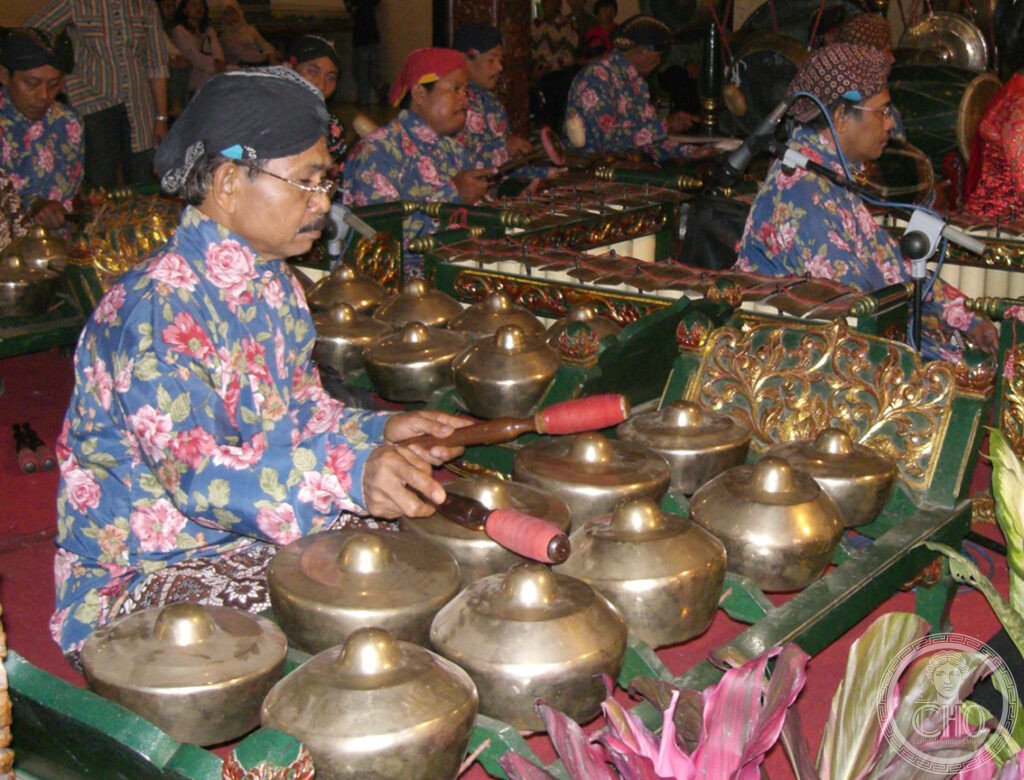
The traditional ensemble music of Indonesia’s Javanese, Sundanese, and Balinese peoples, gamelan is a predominantly percussive art form central to ceremonies, theater, and national identity across the archipelago.
At a glance
Gamelan is the umbrella term for numerous regional ensemble traditions spanning Indonesia, each with distinct instrumentation, repertoire, and cultural role. The practice unites performers and audiences in ritual, celebration, and artistic expression across Java, Bali, Sumatra, and beyond. Though modern popular music has slightly diminished its everyday presence, gamelan remains widely respected and actively performed at traditional ceremonies, cultural events, and educational institutions.
Origins & history
Gamelan traditions have deep roots in Indonesian culture, with archaeological connections to the Borobudur temple complex suggesting ancient lineage. Related courtly traditions such as Gamelan melayu, associated with the Johor–Riau cultural sphere, have been documented since at least the eighteenth century and continue in Malaysia. In 2014, gamelan traditions were formally recognized as part of Indonesia’s National Intangible Cultural Heritage.
The practice
Gamelan ensembles combine metallophones played with mallets, hand-drums called kendang that mark the beat, and a range of secondary instruments tailored to regional tradition. In Bali, performers use the kemanak (a banana-shaped idiophone) and gangsa (another metallophone). Javanese gamelan incorporates xylophones, bamboo flutes resembling the Indian bansuri, the rebab (a bowed string instrument), and the siter (a zither-like instrument). Male vocalists, called gerong, and female singers, called sindhen, often feature prominently.
The ensemble is arranged and performed to accompany religious rituals, ceremonies, dance theater, wayang puppet performances, and festivals. Musicians coordinate complex rhythmic and melodic patterns through collective attention and deep familiarity with repertoire—a discipline that develops interpersonal skills and fosters mutual respect among performers.
Cultural significance
Gamelan is considered integral to Indonesian culture, serving as both an artistic expression and a vehicle for national identity and pride. The practice strengthens community bonds, supports mental well-being, and embodies a cosmology grounded in ethics of mutual respect and care. Its role in accompanying sacred rituals, traditional theater, and state ceremonies affirms its continuing importance in contemporary Indonesian life.
Key facts
- Inscribed on the UNESCO Representative List of the Intangible Cultural Heritage of Humanity in 2021 (Reference: 01607)
- Encompasses regional traditions: Javanese gamelan (Central Java and Yogyakarta), Balinese gamelan (Bali), Sundanese gamelan (West Java), Madurese gamelan, Banyuwangian gamelan (East Java), Gendang beleq (West Nusa Tenggara), Banjarese gamelan (South Kalimantan), Gamelan peking (Lampung), and Talempong (West Sumatra)
- Related traditions exist in Malaysia and elsewhere in Maritime Southeast Asia
- Principal instruments: metallophones, kendang (hand-drums), kemanak, gangsa, xylophones, bamboo flutes, rebab, siter, and vocals
Where to experience it
Yogyakarta and its surrounding region in Central Java remain the cultural heartland of Javanese gamelan. The practice thrives across Indonesia—in Bali, West Java, East Java, and Sumatra—where it is performed at temples, community celebrations, and cultural institutions. The Gamelan Goes to School program brings the practice to educational settings nationwide. International and provincial festivals regularly feature gamelan performances, and cultural diplomacy efforts have established gamelan programs at universities globally.
Sources & resources
Find it on the map
See this place and what’s around it →📷 Become a Cultural Heritage Online photographer
Share your photos of places: they stay published under your name as the author. The more they're seen, the more you get noticed — and soon a contest will reward the most appreciated photos.
Log in or sign up free to add a photo