
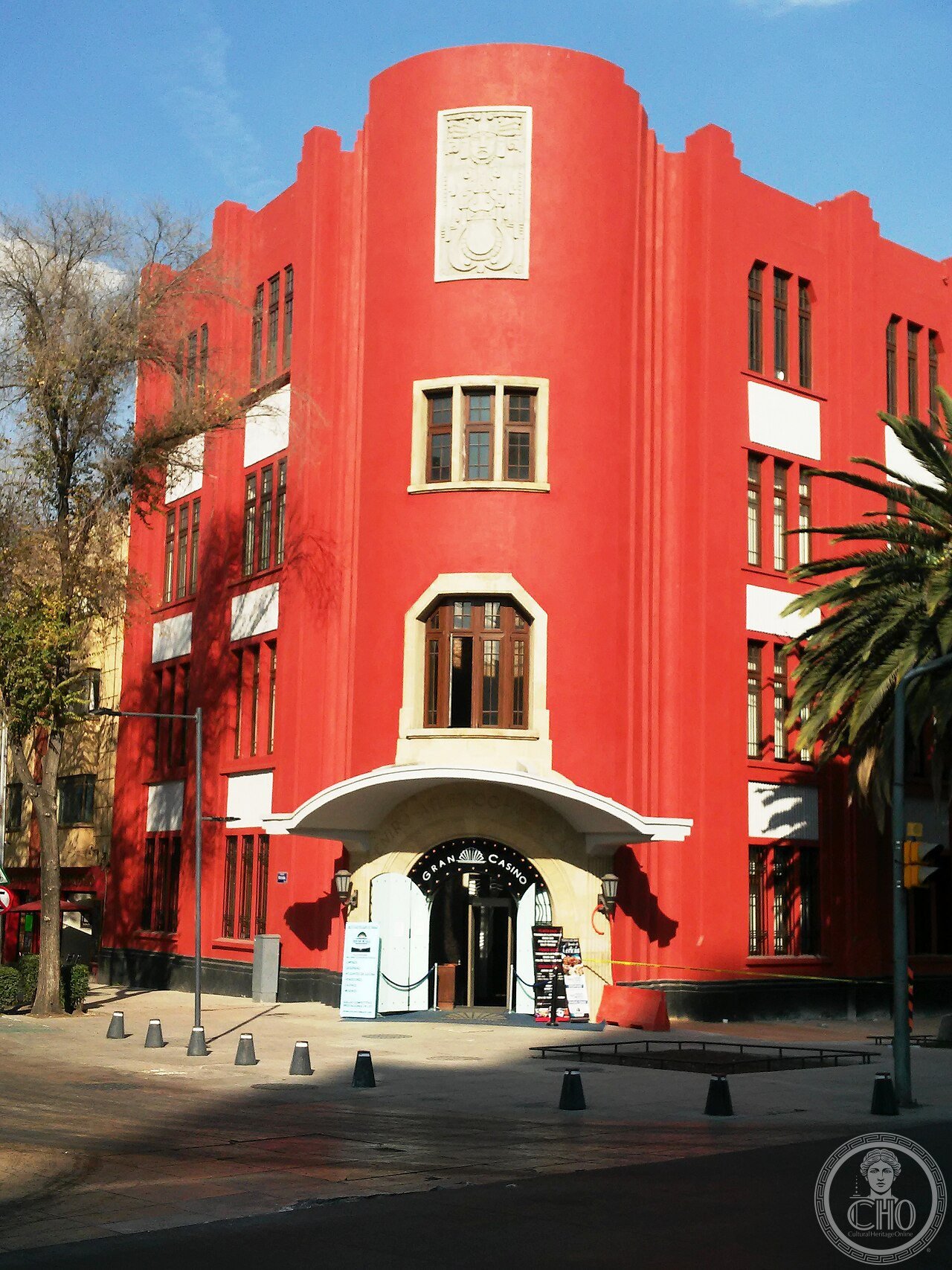
The Deco cathedral of jai alai – the pelota palace facing the Revolution Monument, dark for two decades and relit as the capital’s entertainment landmark.
At a glance
- Type
- Jai alai arena and entertainment hall
- Period
- 1928-1929
- Style
- Art Deco
- Location
- Plaza de la Republica, Mexico City
- Coordinates
- 19.4419, -99.1539
- Architects
- Joaquin Capilla and Teodoro Kunhardt
Overview
The Fronton Mexico opened in 1929 on the Plaza de la Republica as the temple of jai alai – the Basque pelota that gambling-age Mexico adored – its stone Deco facade of pelotari reliefs facing the Revolution Monument’s colossal dome. Bets, tuxedos, and the world’s fastest ball filled its court for seven decades.
History
World championships and celebrity nights – from presidents to Sinatra-era visitors – made the Fronton the capital’s sporting salon; a 1996 labour conflict closed it, and the palace sat dark beside the plaza’s renewals for twenty years. The 2017 restoration returned pelota professionals, a casino, and event halls to the relit interior, completing the Republica quarter’s revival.
Architecture and Design
The symmetrical front carries fluted piers and bas-reliefs of players mid-volley; the 55-metre court within – the cancha’s green wall – retains its tiered seating and the heavens of riveted trusses. Deco lettering and lamps were recovered to pattern in the restoration.
Cultural significance
The Fronton preserves the Basque-Mexican sporting world the 20th century built and nearly lost; with the Monument’s art-deco-ized dome (completed 1938 over Porfirian iron), the plaza pairs two Deco rescues into the city’s best revival story.
Visiting today
Evening pelota functions and events open the hall; the Monument’s observation deck opposite overlooks the composition. The Museo Nacional de la Revolucion lies beneath the plaza.
Getting there
Revolucion metro station exits at the plaza; the Reforma corridor is three blocks north.
Sources and resources
Find it on the map
See this place and what’s around it →📷 Become a Cultural Heritage Online photographer
Share your photos of places: they stay published under your name as the author. The more they're seen, the more you get noticed — and soon a contest will reward the most appreciated photos.
Log in or sign up free to add a photoIs this page about you?
This page is read by travellers and heritage enthusiasts who find it on Google. Tell us how you are connected to this place and we will take it from there.