
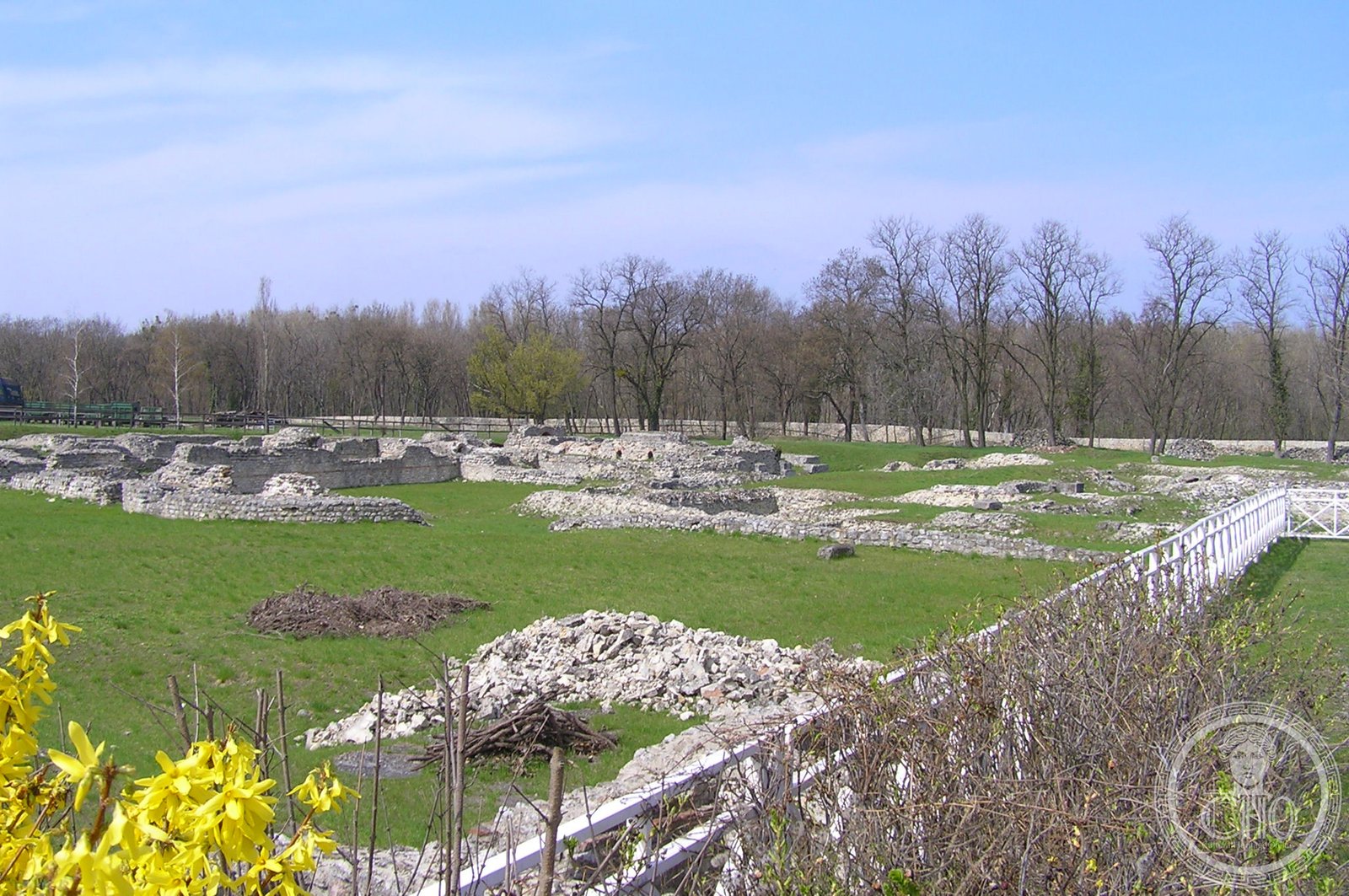
The longest frontier of the Roman Empire — four centuries of legionary fortresses, watchtowers, and river fleets defending the Danube line, inscribed as a UNESCO World Heritage Site in 2021.
At a glance
The Danube Limes (Limes Danubius) was the northeastern frontier of the Roman Empire for nearly four hundred years, stretching from Kelheim in Bavaria where the Altmühl joins the Danube, eastward through Austria, Slovakia, Hungary, Serbia, Bulgaria, and Romania to the Black Sea delta — a continuous defended line of legionary fortresses, auxiliary forts, watchtowers, and naval installations. The 2021 UNESCO inscription of the Central Danube Region (Germany, Austria, Slovakia) extended a heritage zone already including the UK/German Hadrian’s Wall and the Upper Germanic-Raetian Limes. Modern capitals built on Roman foundations along this frontier include Vienna (Vindobona), Budapest (Aquincum), and Belgrade (Singidunum).
Key facts
- UNESCO inscription: 2021, extension of serial WHS Frontiers of the Roman Empire (ID 430bis)
- Extent: Germany, Austria, Slovakia — Central Danube segment; broader Danube Limes extends to Romania/Black Sea
- Roman period: 1st–4th century CE (Augustan frontier establishment to late antique withdrawal)
- Key sites: Carnuntum (Austria), Brigetio (Slovakia/Hungary), Vindobona (Vienna), Aquincum (Budapest)
- Legions stationed: XIV Gemina (Carnuntum), X Gemina (Vindobona), I Adiutrix (Brigetio), among others
- Famous connection: Marcus Aurelius wrote parts of his Meditations at Carnuntum while campaigning against Germanic tribes
History
The Romans reached the Danube under Augustus around 15 BCE and quickly recognised it as the natural boundary of empire in central and eastern Europe. The river was wide, fast, and defensible; beyond it lay the Germanic and Sarmatian tribes of the Barbaricum. Over the 1st century CE, a permanent frontier system took shape: legionary fortresses (castra legionis) capable of holding 5,000–6,000 troops every 200–300 km, with smaller auxiliary forts between them and a fleet of patrol vessels on the river itself.
Carnuntum, in what is now Lower Austria, became the capital of the province of Pannonia Superior. Three legions rotated through its fortress over three centuries; the civilian town that grew up around it eventually held 50,000 inhabitants, complete with two amphitheatres, public baths, temples, and a triumphal arch. It was at Carnuntum, between campaigns against the Marcomanni and Quadi tribes, that Marcus Aurelius wrote parts of his Meditations — the stoic philosophical diary of a philosopher-emperor on the furthest edge of civilisation.
The frontier held for centuries but was never static. Under Diocletian (r. 284–305 CE), a massive rebuilding programme strengthened the line. Diocletian himself retired to a palace on the Dalmatian coast (modern Split, Croatia) built in explicit imitation of a Roman frontier fort. The western Danube Limes finally broke in the 5th century CE under successive waves of migration — Visigoths, Huns, Ostrogoths — but the towns it protected became the nuclei of medieval and modern European cities.
What you see
Carnuntum is the flagship site: the archaeological park displays the civilian town’s excavated streets, the reconstructed governor’s palace, a working Roman bathhouse (the largest reconstructed Roman thermal baths north of the Alps), and the Museum Carnuntinum’s collection of sculpture and artefacts. The legionary fortress footprint is marked in the landscape. Heidentor (Pagan Gate) — the remains of a 4th-century triumphal arch — stands in open fields, one of the most atmospheric Roman monuments in central Europe. Along the Danube between Carnuntum and Vienna, military watchtower foundations and civilian settlement traces appear regularly in the agricultural landscape. At Petronell-Carnuntum village, the amphitheatre has been partially restored.
Practical information
- Archaeological Park Carnuntum: Open year-round; key exhibits include reconstructed Roman buildings with period-authentic interiors and a heated bathhouse visitors can enter
- Museum Carnuntinum: Bad Deutsch-Altenburg, adjacent to the park; houses the main sculpture and artefact collection
- Carnuntum address: Archäologischer Park Carnuntum, Hauptstrasse 1A, 2404 Petronell-Carnuntum, Austria
- Combined ticket: Park + museum + amphitheatre; check carnuntum.at for prices and seasonal hours
- Language: German primarily; audio guides in English available
Getting there
Carnuntum is 40 km east of Vienna, easily reachable as a day trip. By train: S-Bahn S7 from Wien Mitte/Landstrasse to Petronell-Carnuntum (journey ~50 min), then short walk or local bus to the archaeological park. By car: Autobahn A4 (Ostautobahn) east from Vienna to Carnuntum exit. The site sits between Bad Deutsch-Altenburg and Petronell-Carnuntum villages, both on the south bank of the Danube.
Nearby
- Vienna (Vindobona) — 40 km west; the Römermuseum in the city centre and the Michaelerplatz excavations beneath the Hofburg display the legionary fortress that became Austria’s capital
- Bratislava — 60 km east; Slovakia’s capital straddles the Danube at the edge of the Roman frontier; Roman finds displayed in the City Museum
- Hainburg an der Donau — 20 km east; medieval walled town at the narrowest point of the Danube valley, with Roman fort remains visible in the town fabric
Sources
- UNESCO World Heritage List, Frontiers of the Roman Empire — The Danube Limes (Central Danube Region) (ID 430bis), whc.unesco.org
- Archäologischer Park Carnuntum, carnuntum.at
- Stiglitz, Herwig and Kandler, Manfred, Carnuntum, in Aufstieg und Niedergang der römischen Welt, Band II.6, De Gruyter, 1977
- Breeze, David J. and Jilek, Sonja, eds., Frontiers of the Roman Empire, Historic Scotland, 2008
Find it on the map
See this place and what’s around it →📷 Become a Cultural Heritage Online photographer
Share your photos of places: they stay published under your name as the author. The more they're seen, the more you get noticed — and soon a contest will reward the most appreciated photos.
Log in or sign up free to add a photo