
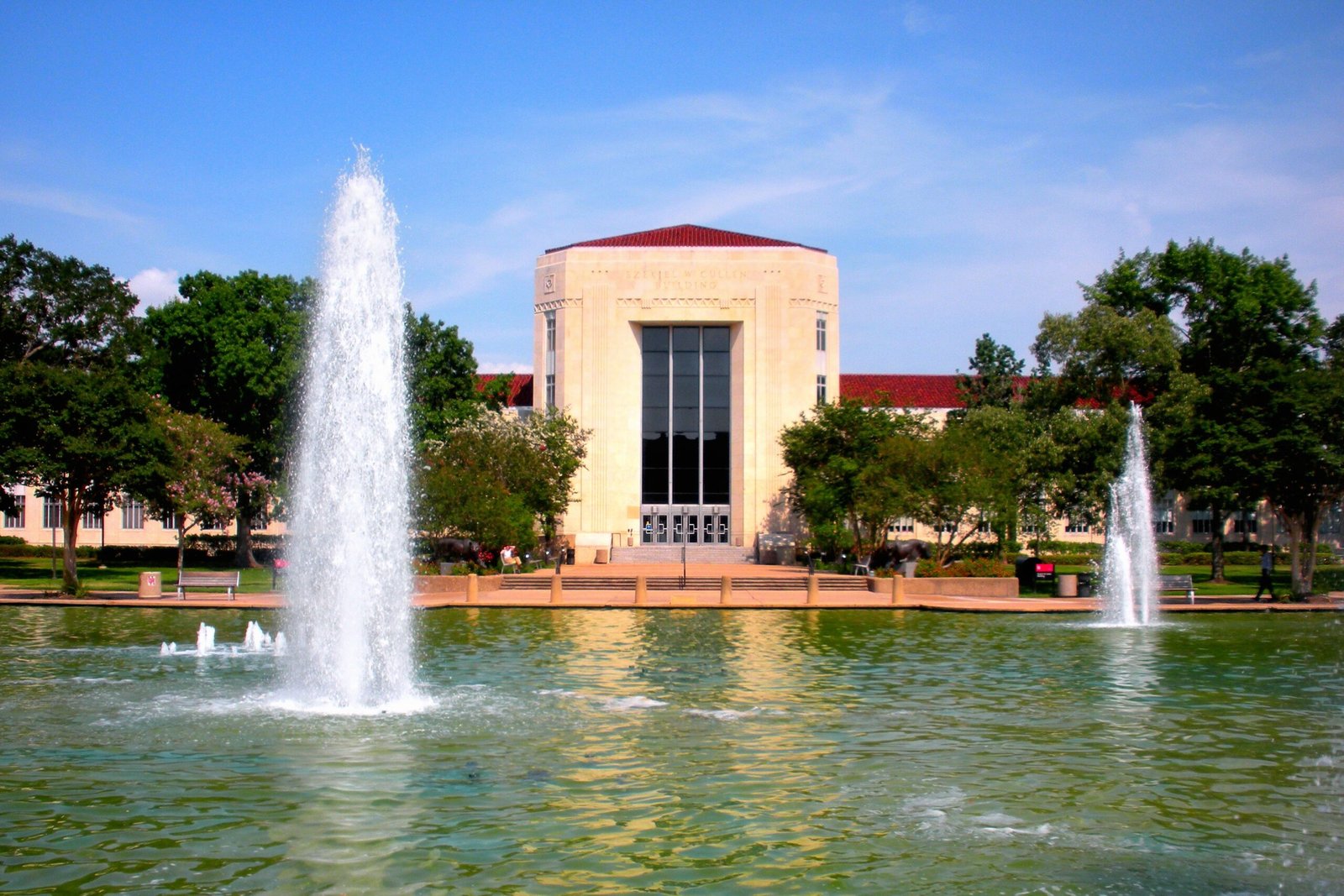
The administrative heart of the University of Houston, this Art Deco landmark designed by Texas architect Alfred C. Finn has defined the campus’s visual identity since its completion in 1950.
At a glance
A defining presence on the University of Houston campus, the E. Cullen Building serves as the administrative headquarters for both the university and the University of Houston System. The structure seamlessly integrates functional office space with performance facilities, making it central to institutional and cultural life on campus.
History
The building is named after Ezekiel Wimberly Cullen, a congressman of the Republic of Texas and grandfather of Hugh Roy Cullen, the financier who made the building’s construction possible. Completed in 1950, it emerged during a period of institutional growth and expansion for the University of Houston.
What you see
Architect Alfred C. Finn designed the building in the Art Deco style, a choice that gave it distinctive visual character. The structure is functionally divided: the east portion houses the Cullen Performance Hall, while the west portion contains the office of the University of Houston’s president alongside other administrative offices. Its iconic design has become inseparable from the university’s public image.
Cultural significance
The building represents an important moment in the University of Houston’s development, embodying both institutional aspirations and architectural modernism. Its Art Deco aesthetic connects it to a broader cultural movement that shaped American civic and educational architecture in the mid-twentieth century.
Key facts
- Country: United States
- City: Houston, Texas
- Architect: Alfred C. Finn
- Completed: 1950
- Style: Art Deco
- Coordinates: 29.72037, -95.34374
Practical information & getting there
The building is located within the Cullen Family Plaza of the University of Houston campus. As the primary administrative building, it is generally accessible during university business hours. For specific visiting information or event details, contact the University of Houston directly.
Sources & resources
Find it on the map
See this place and what’s around it →📷 Become a Cultural Heritage Online photographer
Share your photos of places: they stay published under your name as the author. The more they're seen, the more you get noticed — and soon a contest will reward the most appreciated photos.
Log in or sign up free to add a photoIs this page about you?
This page is read by travellers and heritage enthusiasts who find it on Google. Tell us how you are connected to this place and we will take it from there.