
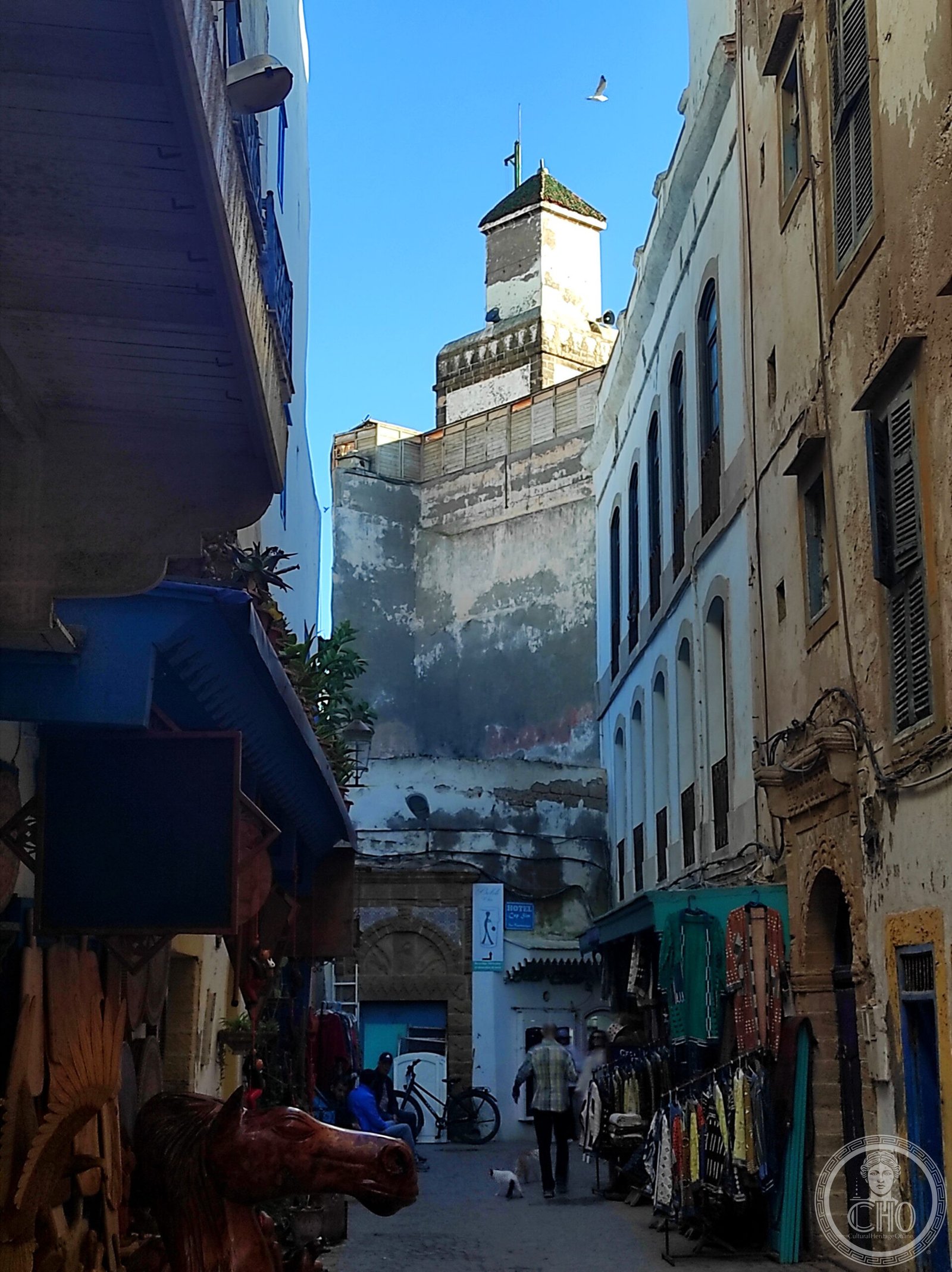
A perfectly preserved 18th-century Atlantic port city where Baroque urban planning meets traditional Moroccan medina: built in a decade by a sultan and a French architect, and still very much alive.
At a glance
Essaouira is a fortified port city on the Atlantic coast of Morocco, approximately 175 km south-west of Marrakech. Its historic medina was inscribed by UNESCO in 2001 as an outstanding example of late 18th-century colonial urban planning, unique in the Islamic world for combining a European Baroque street grid with traditional North African medina architecture, executed within a decade under a single patron. The result is a city unlike any other in Morocco: straight streets, planned vistas, imposing sea bastions, blue-white painted houses, and a cosmopolitan mercantile history that made it the principal Atlantic trading port of the Sus region and a crossroads of Jewish, Muslim, and Christian commerce.
Key facts
- UNESCO inscription: 2001
- Location: Atlantic coast of Morocco, 175 km south-west of Marrakech
- Coordinates: 31.5085 N, 9.7595 W
- Founded/rebuilt: 1764-1776 CE under Sultan Sidi Mohammed Ben Abdallah
- Architect: Theodore Cornut, French military engineer
- Historical role: Principal Atlantic trading port of the Sus region; major centre of Jewish-Muslim-Christian commerce
- Notable visitors: Orson Welles filmed Othello here in 1952; Jimi Hendrix visited in 1969
History
The site had been known since antiquity as a small anchorage, with Phoenician and Roman remains found on the offshore islands. Essaouira as it stands today was created from scratch by the Alaouite sultan Sidi Mohammed Ben Abdallah between 1764 and 1776, with the goal of redirecting Moroccan trade away from Agadir and bringing European merchants into direct commercial relationship with the Moroccan state.
The sultan engaged Theodore Cornut, a French military engineer, to design the new city using Enlightenment planning principles: right-angled streets, principal axes, planned civic spaces derived from Vauban’s military urbanism. This produced something entirely without precedent in the Islamic world: a medina built on a Baroque grid.
European trading houses rapidly established consulates and warehouses here. A large Sephardic Jewish community, the sultan’s merchants, played the central role as commercial intermediaries, and their mellah remains one of the largest in Morocco. In the 20th century, Orson Welles filmed his 1952 Othello here, and Jimi Hendrix visited the nearby village of Diabat in 1969, drawing a generation of artists who followed.
What you see
Walking into the medina, the most immediately striking quality is that the streets are straight: something never seen in organically grown Islamic cities. The main axis runs perpendicular to the seafront, flanked by arcaded shopfronts of consistent height and whitewashed stone. The blue-white colour scheme is universal and gives the city its distinctive visual identity.
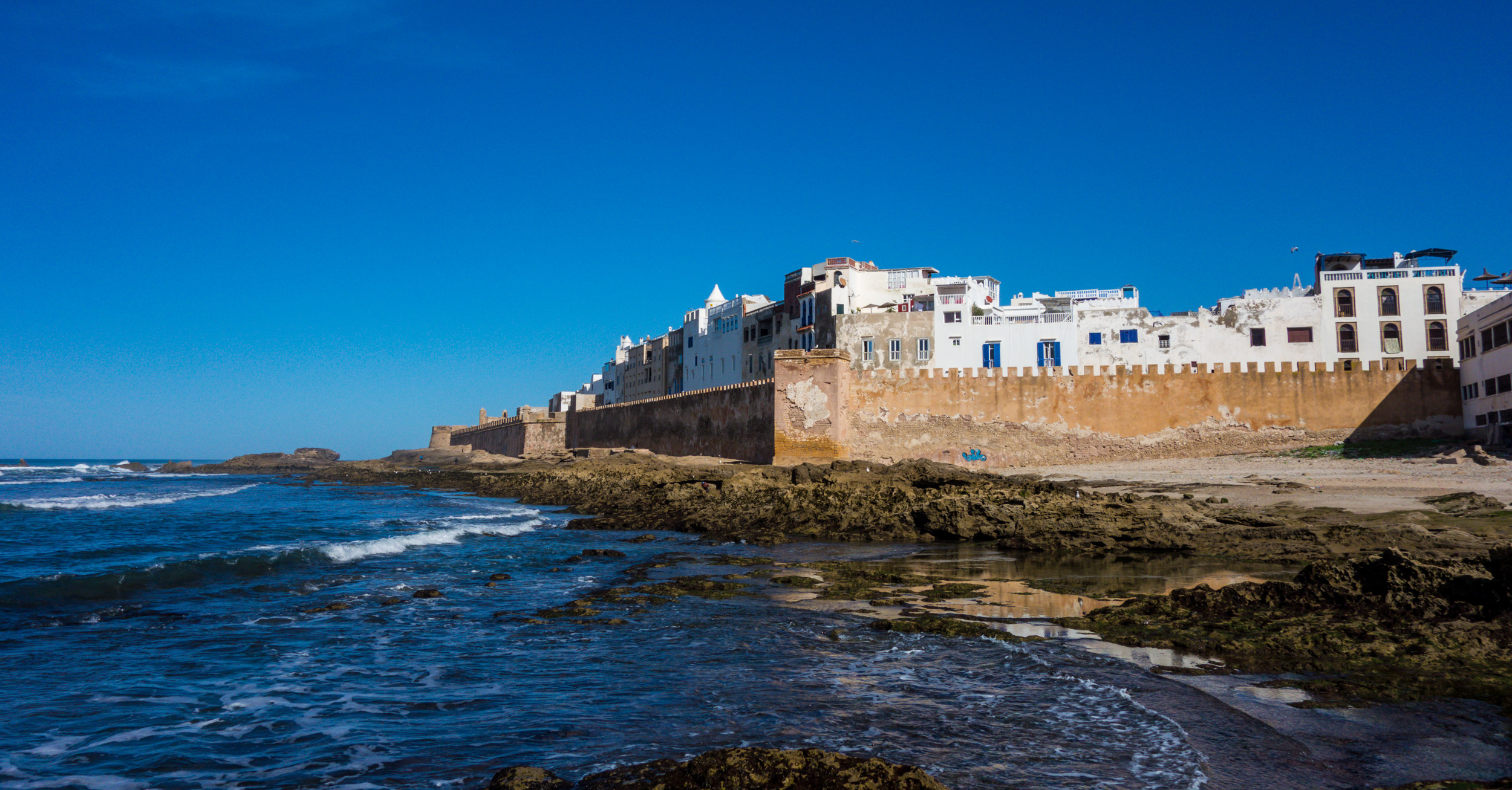
The skala, the cannon bastions, are the most photographed feature. The north skala runs along the sea wall and preserves a long battery of bronze cannons pointing out over the Atlantic, gifts from European powers. The views across the ocean and back over the medina rooftops are exceptional. The southern harbour remains an active fishing port with a traditional boat-building yard where wooden vessels are still constructed by hand.
The mellah contains some of the finest domestic architecture in the city: tall courtyard houses with ornate carved-stucco doorways. The spice market, the woodworkers’ souk where Essaouira’s famous thuya-wood marquetry is made, and the fish auction at the harbour are among the most atmospheric working markets in Morocco.
Why this matters
Essaouira is the only medina in the Islamic world designed from scratch on a European grid plan. That paradox, a Baroque city built with traditional Moroccan materials and inhabited according to Islamic urban customs, makes it an unparalleled document of 18th-century connections between Europe and North Africa. It also remains a living city: not a museum or heritage zone, but a place where people live, trade, and practice the crafts their ancestors brought here 250 years ago.
Practical information
- Access: CTM and Supratours buses from Marrakech in approx. 3 hrs; from Agadir in approx. 3 hrs; limited airport service
- Medina: Entirely walkable; all major sites within 20 minutes on foot; vehicle access restricted
- Best season: March-May and September-November; summer is very windy
- Annual event: Gnaoua and World Music Festival in June, one of North Africa’s most important music festivals
- Recommended: Overnight stay essential: the medina at dawn and after dark is a different experience from daytime tourist hours
Getting there
The nearest major hub is Marrakech Menara Airport, with connections across Europe and the Middle East. CTM and Supratours run comfortable coaches from Marrakech to Essaouira in approximately 3 hours, with several departures daily. Driving via the P2302 road takes approximately 2.5-3 hours through the Argan forest.
Nearby
The argan forest between Essaouira and Agadir is a UNESCO Biosphere Reserve and the source of Morocco’s famous argan oil. The ruins of the Portuguese-era castle at Mogador on the offshore islands can be visited by boat. Sidi Kaouki beach, 25 km south, is a world-class kitesurfing destination. Marrakech is approximately 3 hours east.
Sources
- UNESCO World Heritage Centre: Medina of Essaouira, formerly Mogador
- Wikipedia: Essaouira
- Ministere de la Culture du Maroc
Gallery
Find it on the map
See this place and what’s around it →Historical events at this place (1)
📷 Become a Cultural Heritage Online photographer
Share your photos of places: they stay published under your name as the author. The more they're seen, the more you get noticed — and soon a contest will reward the most appreciated photos.
Log in or sign up free to add a photo