
Ellora Caves
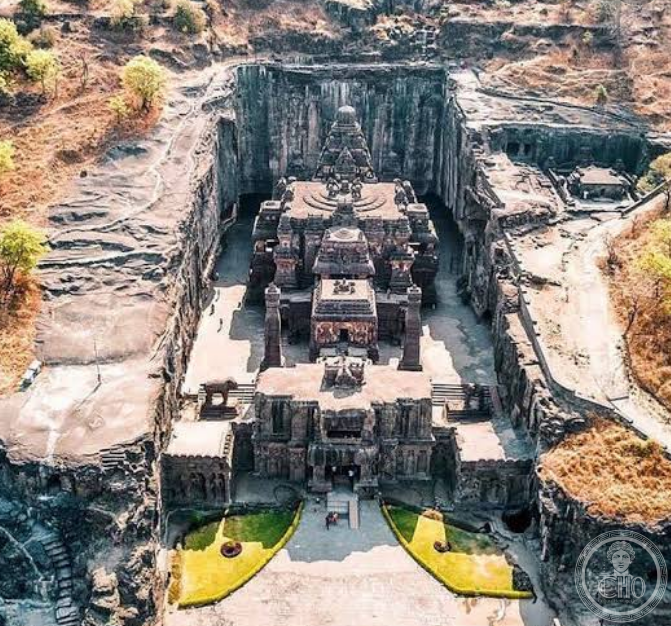
The most ambitious rock-cut construction in world history and the only site where Buddhist, Hindu, and Jain religious architecture coexist in a single ancient complex — the Ellora Caves (Aurangabad, Maharashtra, India; UNESCO WHS 1983) contain 34 rock-cut monasteries and temples excavated from the 5th to 12th century CE, dominated by the monolithic Kailasa Temple (Cave 16; approximately 750-775 CE), carved from a single basalt hill from the top downward.
At a glance
Ellora Caves (the most precisely ElloraCavesIndia single 34 caves 2 km basalt cliff 12 Buddhist 1-12 500 750 CE 17 Hindu 13-29 600 900 CE 5 Jain 30-34 800 1100 CE three religions coexist same cliff unique world single site Buddhist Mahayana Vajrayana Hindu Vaishnavism Shaivism Shaktism Jainism Digambara Shvetambara all represented same place Kailasa Temple Cave 16 Rashtrakuta Dynasty Dantidurga 750 775 CE 8th century CE monolithic not a cave a free-standing temple carved from single basalt hill from top downward 90m wide 50m deep 30m open pit carved down around the temple 60m high cliff sides courtyards caves carved into walls largest rock-cut temple world 2 times size Parthenon volume 400000 tonnes basalt removed equivalent 100 pyramids estimated 150 200 years construction 7000 workers 150 years 8000 workers alternative estimate Rashtrakuta Govinda III completed son most important single architectural achievement India UNESCO heritage: the Kailasa Temple (Cave 16; the defining monument of Ellora and possibly the most extraordinary single building in the history of world architecture): the method of construction (the carving proceeded from the top of the hill downward, not from the ground up; the builders first carved the summit of the rock to create the shikhara (the tower above the inner sanctum); then they carved downward through the rock, removing material from the sides to create the courtyard, the pillared hall, and the surrounding gallery; the result is a free-standing temple, not a cave — every element was carved in situ from the living rock; no blocks were lifted, no mortar was used; the entire 58m × 51m footprint × 32.6m high structure is one single piece of basalt rock); the scale (the courtyard is 82m long; the main tower is 32.6m high; 400,000 tonnes of basalt were removed; the Kailasa Temple contains more carved rock than the Parthenon at Athens and the Temple of Jupiter at Baalbek combined)) — the most precisely ElloraCavesIndia single 34 caves 2 km cliff 12 Buddhist 17 Hindu 5 Jain 3 religions same site unique world Kailasa Temple Cave 16 Rashtrakuta Dantidurga 750 775 CE 8th century CE monolithic free-standing not cave single basalt hill top downward 82m courtyard 32.6m tower 400000 tonnes removed 2 times Parthenon volume 150 200 years 7000 8000 workers UNESCO heritage in any UNESCO world heritage site)).
Key facts
- Ravana lifts Mount Kailash (Ravana Anugrahamurti): the most precisely ElloraCavesIndia single Kailasa Temple Cave 16 south side giant panel Ravana lifting Mount Kailash 10-headed 20-armed demon-king Lanka demon Lanka Ramayana epic 15 humans height panel Shiva Parvati Kailash mountain heavenly abode Shiva sitting peacefully Parvati startled clings Shiva Shiva presses down one finger mountain enough pin Ravana all 20 arms crush weight 18 armed attendants witness event carved single low relief composition masterpiece Indian sculpture UNESCO heritage — the finest single sculptural panel at Ellora and one of the greatest compositions in Indian sculpture: the Ravana Anugrahamurti (Ravana being pardoned by Shiva) on the south wall of the Kailasa Temple; the composition (approximately 5m × 5m; carved in high relief from the living rock): Ravana (the ten-headed, twenty-armed demon king of Lanka from the Ramayana) is shown lifting Mount Kailash (the cosmic mountain; the heavenly abode of Shiva) in a display of his strength; Shiva sits calmly at the summit, with Parvati (his consort) clutching him in fear as the mountain shakes; Shiva simply presses one toe downward with enough force to pin Ravana under the mountain; the 18 divine attendants around them witness the event; the scene shows Ravana (the villain of the Ramayana) not in defeat but in a moment of supreme devotional surrender — this is not punishment but a test that will lead to Ravana’s release and his composition of the Shiva Tandava Stotram (the famous hymn to Shiva)
- GPS: 20.0268° N, 75.1800° E
History
From Buddhist Vakataka to Hindu Rashtrakuta to Jain Yadava to British rediscovery (the most precisely ElloraCavesIndia single Vakataka dynasty Buddhist patronage 5th 6th century CE Caves 1-12 Buddhist Chalukya dynasty shifted Buddhist Vakataka patronage to Hindu Shaiva 6th 7th century CE early Hindu caves 13 29 Rashtrakuta dynasty 752 CE greatest Hindu caves Kailasa Temple Cave 16 750 775 CE Dantidurga Govinda III reign Rashtrakuta major Hindu temples Mountain range caves elaborate Badami also Rashtrakuta Yadava dynasty 9th 12th century CE Jain caves 30-34 5 Jain temples Indra Sabha Cave 32 finest Jain cave multi-storey elaborate sculpture program Digambara Shvetambara representations 1100 CE local political decline activity ceases jungle overgrowth medieval Ahmed Shah Bahmani Sultanate 1430s CE known in Mughal period 1600 CE 1820s CE British EIC survey documented W. Erskine 1824 CE James Bird published description 1847 CE UNESCO heritage: the Vakataka-to-Rashtrakuta patronage shift (the most important architectural shift in early medieval India): the Buddhist caves at Ellora (1-12; 5th-6th century CE; excavated under Vakataka patronage) were built at exactly the same time as the Ajanta caves (100 km northeast); when the Vakataka dynasty collapsed (approximately 500 CE) and the Chalukya dynasty consolidated power in Maharashtra and Karnataka, the Buddhist patronage network dried up; the new rulers were Shaivite Hindus (devotees of Shiva); the Hindu caves (13-29) began to appear at the existing Buddhist complex; the Rashtrakuta dynasty (which defeated the Chalukyas in 752 CE) were even more devoted to Shiva and provided the resources for the extraordinary Kailasa Temple; the Jain caves (30-34; 9th-12th century CE) were added later under Jain merchant patronage; the fact that all three traditions continued to excavate at the same cliff is evidence of the genuine religious pluralism of medieval Maharashtra)) — the most precisely ElloraCavesIndia single Vakataka Buddhist 5th 6th century CE Caves 1 12 Chalukya shift Hindu 6th 7th century CE Rashtrakuta 752 CE Dantidurga Kailasa Temple Cave 16 750 775 CE Govinda III Yadava Jain 9th 12th century CE Caves 30 34 Indra Sabha Cave 32 1100 CE decline jungle medieval Ahmad Shah Bahmani 1430s CE Mughal 1600 CE EIC survey Erskine 1824 CE Bird 1847 CE UNESCO heritage in any UNESCO world heritage site)).
What you see
Kailasa Temple, Buddhist monasteries, and Jain caves (the most precisely ElloraCavesIndia single 2 km approach cliff road 34 caves Buddhist south 1-12 Ajanta similarities Buddhist Mahayana 5th 8th century CE Cave 10 Vishvakarma Carpenter Cave chaitya prayer hall horseshoe carved arch facade Buddha preaching figure stupa behind Cave 12 Tin Tal Three Floor three storey monastery complex largest Buddhist Ellora Hindu central 13-29 Rashtrakuta 8th 9th century CE Cave 14 Ravana Ki Khai Ravana’s Lair Cave 15 Das Avatara Ten Incarnations Vishnu finest Buddhist Hindu caves Kailasa Temple Cave 16 most important see first courtyard 82m long 45m wide court Nandi Bull hall free-standing large two victory pillars central mandapa rock pillars ceiling carved painted trace original paint 32.6m shikhara carved top down surrounding gallery carvings Ravana lifting Kailash south wall Ramayana Mahabharata panels large frieze Shiva Nataraj 8 arms dancing panel extraordinary Jain north 30-34 Jain Digambara Shvetambara Cave 32 Indra Sabha two storey lotus ceiling finest Jain lotus ceiling oldest carved lotus India Cave 33 Jagannath Sabha elaborate Mahavira seated central UNESCO heritage: the visitor circuit (minimum 4h for a serious visit): start at Cave 16 (Kailasa Temple: allow 1h30m): the entry gateway (the large entrance gopuram carved with elephants and lions); the courtyard (the free-standing Nandi hall, the two dhvajastambha victory pillars; the main mandapa (the pillared assembly hall)); the inner sanctum (the dark garbhagriha with the Shiva lingam)); the south wall (the Ravana Lifting Kailash panel; the Ramayana frieze)); then the Buddhist caves (walk south along the cliff road; Cave 10 (the finest single chaitya hall; the three-tiered carved facade; the Buddha preaching figure in the apse); Cave 12 (Tin Tal; the three-floor monastery complex)); then the Jain caves (walk north past the Kailasa Temple; Cave 32 (Indra Sabha; the finest carved lotus ceiling in India; the two-storey Jain assembly hall with full sculptural program); Cave 34 (the best-preserved Jain cave facade)))) — the most precisely ElloraCavesIndia single Buddhist Caves 1 12 Cave 10 Vishvakarma chaitya horseshoe arch Buddha stupa Cave 12 Tin Tal three storey largest Buddhist Hindu Caves 13 29 Cave 15 Das Avatara Vishnu finest Kailasa Temple Cave 16 courtyard 82m Nandi hall victory pillars mandapa painted traces 32.6m shikhara Ravana Lifting Kailash south Ramayana Mahabharata Shiva Nataraj 8 arms dancing Jain Caves 30 34 Cave 32 Indra Sabha finest lotus ceiling oldest India Cave 33 Jagannath Sabha Mahavira UNESCO heritage in any UNESCO world heritage site)).
Practical information
- Getting there: Ellora is 29 km from Aurangabad (Chhatrapati Sambhajinagar); the Maharashtra State Transport Bus (MSRTC) from Aurangabad Bus Stand to Ellora: 45 min; approximately ₹50/€0.55; private taxis available (approximately ₹700/€7.70 return, waiting); fly to Aurangabad Airport (IXU; flights from Mumbai (1h) and Hyderabad); or approach from Ajanta (the combined Ajanta + Ellora itinerary requires 2 days; Aurangabad is the base: 105 km from Ajanta and 29 km from Ellora); entry tickets (₹600/€6.60 for foreign tourists; valid for all 34 caves); the Kailasa Temple (Cave 16) is the highlight and requires the most time (minimum 1h30m); the visiting time (minimum 4h for the essentials; a full 6-7h for all 34 caves); the best time (October-March (the monsoon (July-September) makes the basalt surfaces slippery and some caves partially flooded)); the morning light (the Hindu caves are south-facing; the best morning light is on the Buddhist and Jain caves; the Kailasa Temple is best in mid-morning light (10 AM-noon))
Getting there
Aurangabad (IXU) → bus 45 min (₹50/€0.55) or taxi ₹700/€7.70 return. Entry ₹600/€6.60. Start at Cave 16 (Kailasa Temple; allow 1h30m). Allow 4-6h total. Best: October-March. Morning light best for Buddhist/Jain caves. GPS: 20.0268, 75.1800.
Nearby
- Ajanta Caves — 105 km northeast (UNESCO WHS 1983; the finest ancient paintings in the world (5th century CE); the 29 Buddhist rock-cut caves; the Bodhisattva Padmapani in Cave 1; the Vakataka court scenes in Cave 17; the Ellora + Ajanta combination is the essential two-day heritage itinerary of Maharashtra)
- Bibi Ka Maqbara — 29 km east in Aurangabad (the “Taj of the Deccan” (1651-1661 CE; mausoleum of Dilras Banu Begum, wife of Aurangzeb); the Aurangabad Caves (6 Buddhist caves; 2nd century BCE; smaller than Ajanta and Ellora but the oldest archaeological site in the Aurangabad area; free admission); the Panchakki (the water mill and garden complex; built 1624 CE; the dargah (shrine) of Sufi saint Zain-ud-din; the 6 km underground aqueduct bringing water from the distant hills to the watermill))
Sources
- Wikipedia, Ellora Caves; Kailasa temple, Ellora; Ravana, accessed June 2026
- UNESCO, Ellora Caves, WHS reference 243, inscribed 1983
Find it on the map
See this place and what’s around it →📷 Diventa un fotografo di Cultural Heritage Online
Condividi le tue foto dei luoghi: restano pubblicate con la tua firma come autore. Più vengono viste, più ti fai conoscere — e presto un concorso premierà le foto più apprezzate.
Accedi o registrati gratis per aggiungere una foto