

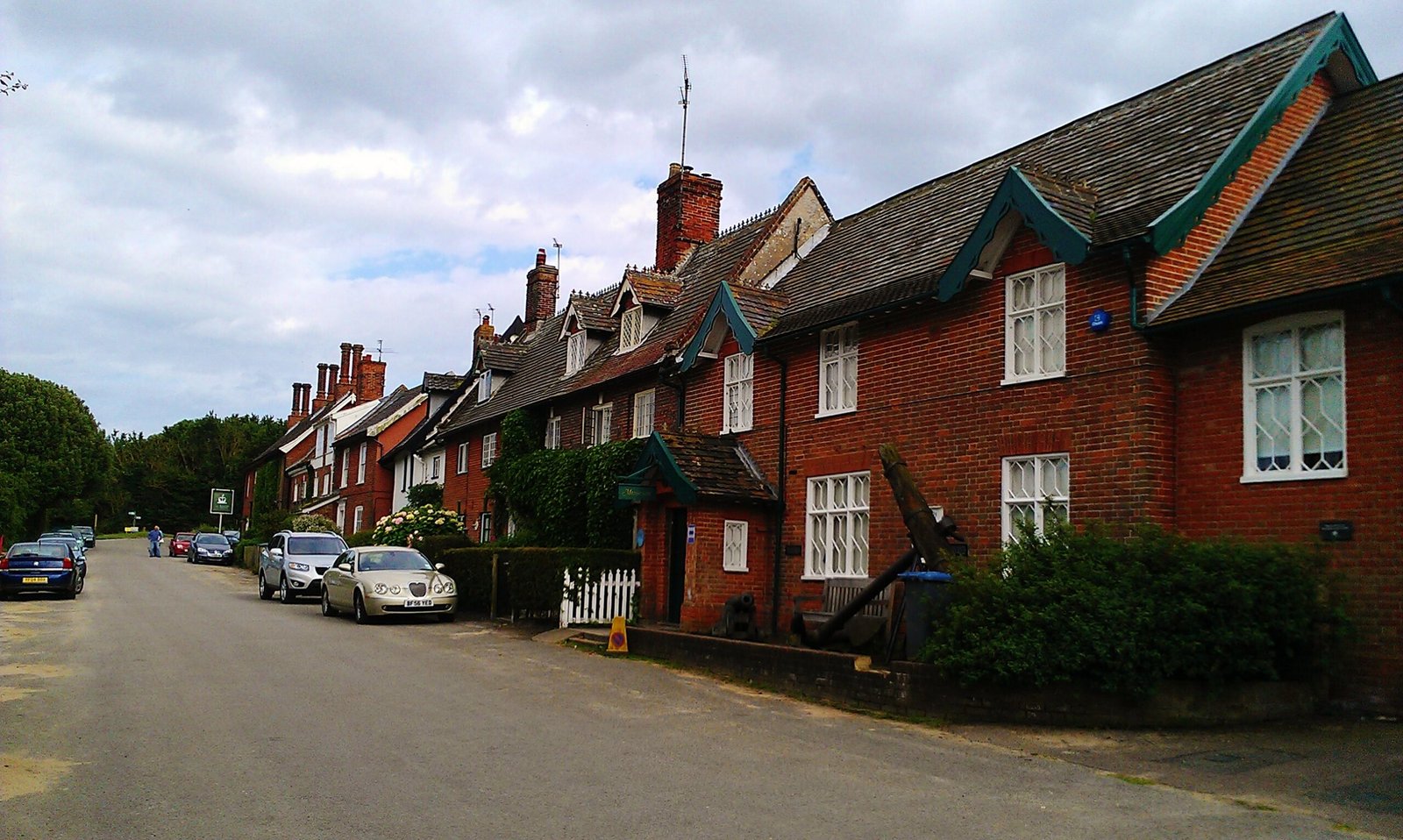
Once the fifth largest city in medieval England Dunwich now lies mostly beneath the North Sea — swallowed by catastrophic storms that began in 1286 and erased a thriving port city within two centuries. On stormy nights legend holds that the bells of its drowned churches still ring beneath the waves.
At a glance
Dunwich stands as one of the most dramatic examples of coastal erosion and urban loss in European history. At its medieval peak it was a prosperous port city with at least eight major churches a cathedral a royal mint two hospitals a friary and a thriving fishing and wool-trading fleet rivalling Norwich and Ipswich as the greatest city in East Anglia. Today the village of Dunwich has fewer than 200 inhabitants a single ruined church fragment above water and the vast majority of the medieval city drowned beneath the North Sea spread across the sea floor in water between 5 and 15 metres deep. Ongoing cliff erosion continues to tip medieval remains into the sea: archaeologists have identified submerged building foundations church graveyards and town streets through sonar mapping and diving surveys.
Key facts
- Founded: c. 630 CE when St Felix of Burgundy established his see here as first Bishop of East Anglia.
- Medieval peak: 5th largest city in England; at least 8 parish churches a cathedral seat and royal mint.
- Catastrophic storms: January 1286-1287 first major events; 1347 and 1362 accelerated destruction.
- Churches lost: at least 8 of the city churches submerged; last ruins of All Saints Church fell into the sea in 1919.
- Current depth: submerged remains lie at 5-15 metres below sea level across approximately 1 km of sea floor.
- Sonar survey: University of Southampton confirmed locations of drowned buildings streets and graveyard on sea floor.
- Legend: the bells of the drowned churches said to ring from beneath the North Sea during storms — recorded since the 17th century.
History: a city swallowed by the sea
Dunwich origins lie in the earliest years of Anglo-Saxon Christianity in Britain. Around 630 CE the Burgundian bishop Felix established his episcopal see at Dunwich making it the first Christian bishopric in the region and the spiritual capital of the Anglo-Saxon kingdom of East Anglia. By the time of the Domesday Book in 1086 Dunwich was recorded as a major fishing town paying 60000 herrings annually to the crown reflecting the extraordinary scale of its maritime operations. Through the 11th and 12th centuries the city expanded rapidly with stone churches a royal mint and active wool-trade with France Flanders and the Baltic. Its population at medieval peak has been estimated at 3000 to 5000.
The catastrophe began on 14 January 1286 when violent North Sea storms struck the Suffolk coastline depositing a massive sandbar across the harbour mouth and driving the sea against the soft glacial clay cliffs with such force that entire streets and buildings collapsed into the sea. Further catastrophic storms in 1347 and 1362 destroyed hundreds of houses and multiple churches. By 1326 the city had already lost two of its eight churches to the sea. The final stages came across the 15th and 16th centuries as ongoing cliff erosion averaged approximately 1 metre per year consuming the remaining medieval structures. The last above-ground ruin of All Saints Church fell from the eroding cliff into the sea in 1919.
What lies beneath: the submerged city
The underwater remains of Dunwich were systematically mapped for the first time between 2008 and 2014 when a team from the University of Southampton used sidescan sonar multibeam bathymetry and sub-bottom profiling to survey the sea floor off the present-day Dunwich shore. The survey confirmed traces of stone building foundations streets following the original medieval grid and foundations of at least two of the drowned churches buried beneath a thin layer of marine sediment at depths of 5-15 metres. Divers in 2012 reported clearly seeing the foundations of All Saints Church on the sea floor in approximately 10 metres of water with stone masonry still standing approximately 1 metre high. Associated with the church foundation is a section of the medieval churchyard where human skeletal remains are periodically exposed by tidal action.
Cultural significance
Dunwich holds a special place in English cultural consciousness. The myth of the bells ringing from beneath the sea has inspired centuries of poetry fiction and legend: Algernon Swinburne wrote a celebrated elegy By the North Sea specifically referencing Dunwich drowned churches and M.R. James used Dunwich as inspiration for his ghost stories. Scientifically Dunwich is one of the best-documented examples of rapid medieval coastal erosion in Europe and is used as a reference site for studies of accelerating coastal erosion under climate change.
Practical information
- Village and beach: freely accessible; Dunwich Museum open April-October.
- Diving: qualified divers can access the underwater site via charter operators from Southwold and Lowestoft; visibility 0-5 metres typical.
- Best diving season: May-September; recommended at slack water.
- Greyfriars Priory ruins: freely accessible on foot from the village.
- Dunwich Museum: Beach Street Dunwich IP17 3DT — dunwichmuseum.org.uk.
Getting there
Dunwich is on the Suffolk Heritage Coast approximately 30 km south of Lowestoft and 20 km north of Aldeburgh. By car: from the A12 take the B1125 towards Blythburgh then minor roads signposted Dunwich. Free car park in the village. No direct bus; nearest train station is Darsham on the East Suffolk Line from Ipswich and Lowestoft. From London Liverpool Street approximately 2 hours to Darsham then taxi approximately 10 km.
Nearby
- Southwold (12 km north) — charming Victorian seaside town with Adnams brewery and the Sailors Reading Room with maritime artefacts.
- Minsmere RSPB Reserve (3 km south) — premier birdwatching site for marsh harriers bitterns and avocets.
- Blythburgh Holy Trinity Church (7 km west) — 15th-century Cathedral of the Marshes with famous carved wooden angels.
- Sutton Hoo (30 km south) — Anglo-Saxon ship burial site contemporary with earliest Dunwich history.
Sources
- Gardner Thomas. An Historical Account of Dunwich. London 1754.
- Comfort Nicholas. The Lost City of Dunwich. Lavenham 1994.
- University of Southampton HWTMA: Dunwich Underwater Survey 2008-2014. Reports via Historic England.
- Dunwich Museum: dunwichmuseum.org.uk.
Find it on the map
See this place and what’s around it →📷 Become a Cultural Heritage Online photographer
Share your photos of places: they stay published under your name as the author. The more they're seen, the more you get noticed — and soon a contest will reward the most appreciated photos.
Log in or sign up free to add a photo