

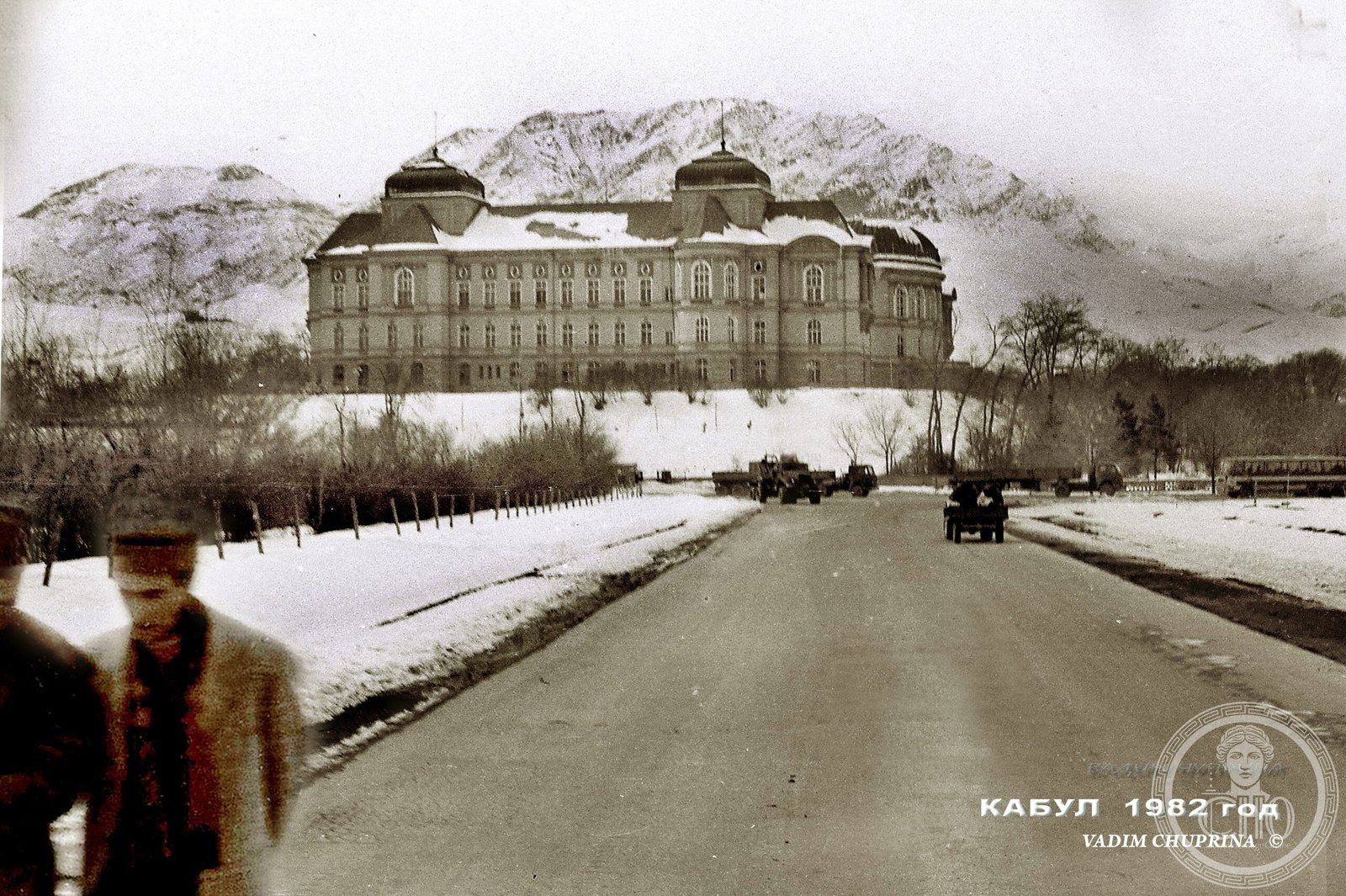
Few ruins in the world carry as much weight as Darul Aman Palace. Rising on a low hill at the edge of Kabul, this neoclassical building was the grand ambition of King Amanullah Khan — the reformist monarch who won Afghan independence from Britain in 1919 and immediately set about modernizing his country along European lines. Commissioned in 1919 and inaugurated in 1923, the palace was meant to anchor a new capital city called Darulaman, with wide boulevards, an electric tram line, and a parliament building planned nearby. Amanullah wanted to signal to the world that Afghanistan had joined the modern age. Instead, the palace became one of the 20th century’s most haunted ruins: burned in 1969, seized by Communist forces in 1978, shelled to a skeleton during the civil war of 1992–1996, bombed in 2001, and repeatedly stripped for scrap metal in the years that followed. Today, after decades of desolation, the Afghan Ministry of Public Works is leading a comprehensive restoration effort — returning the palace’s columns, arches, and wings to something approaching their original grandeur as a symbol of national reconstruction and continuity.
At a glance
- Type
- Palace / Government Building
- Period
- 1919–1923 (inaugurated)
- Style
- Neoclassical / Afghan Rationalism
- Location
- Darulaman district, Kabul, Afghanistan
- Coordinates
- 34.5433° N, 69.1254° E
- Architect(s)
- French and German architects under the direction of King Amanullah Khan
Overview
Darul Aman Palace stands on a rise southwest of central Kabul, its neoclassical facade — columns, arched windows, and a central pediment — still legible beneath decades of damage. King Amanullah Khan envisioned it as the centerpiece of a new administrative capital, replacing the old city as the seat of Afghan government. The name means “Abode of Peace” in Dari. The palace was only one element of a broader planned district: a railway connected it to Kabul, and a parliament building (Shoura) was erected across the road. The experiment collapsed when Amanullah’s sweeping modernization reforms provoked a tribal rebellion in 1928–1929, forcing his abdication. The palace then passed through successive Afghan regimes, each leaving its mark in fire and shell damage, until restoration began in earnest in the 2010s.
History
Amanullah Khan returned from a tour of Europe and Turkey in 1928 inspired by Atatürk’s reforms: women unveiled, men in Western suits, co-education introduced. Conservative and tribal opposition hardened into armed rebellion under Habibullah Kalakani, who took Kabul in January 1929. Amanullah abdicated and fled to India, then Italy, where he died in exile in 1960. His palace was never properly finished. Over the following decades it served as a Defense Ministry headquarters, was gutted by fire in 1969 under Zahir Shah, seized again during the 1978 Saur Revolution, and shelled repeatedly during the 1992–1996 civil war between the Mujahideen factions. By the time the Taliban fell in 2001, the building was a roofless shell. After 2014, the Ministry of Public Works undertook a phased restoration, stabilizing the structure and beginning systematic reconstruction of the interior.
Architecture & Design
The palace is a symmetrical two-storey neoclassical composition approximately 250 metres long, with a projecting central bay, flanking wings, and a roofline articulated by a shallow pediment. The exterior used locally quarried stone and brick, with European decorative detailing — pilasters, keystones, and arched openings — executed by craftsmen working alongside foreign engineers. The design echoes contemporaneous government buildings in Ankara and Vienna rather than traditional Afghan palatial architecture, a deliberate choice by Amanullah to project modernity. The adjacent Shoura (parliament) building, slightly smaller, mirrors the neoclassical language. Both buildings sit within a landscaped compound with axial drives, largely overgrown today but partially restored.
Cultural significance
Darul Aman is not merely an architectural landmark but a compressed history of modern Afghanistan: independence, reform, civil war, occupation, resistance, and reconstruction. For Afghans, the building’s ruin and revival have become a powerful metaphor. The ongoing restoration — funded by the Afghan government, with technical input from international partners — has been presented as proof that the state can reclaim and honor its own heritage. The palace appears on Afghan currency and in national iconography, embedding it in everyday consciousness as a symbol of sovereignty and aspiration.
Visiting today
As of the early 2020s, the palace exterior and grounds are accessible for visits, though the security situation in Kabul has restricted tourism significantly since August 2021. Restoration work continues in phases and parts of the building remain closed. The adjacent Shoura (parliament) building across the road is also visible from the public road. Most visitors who have seen the palace recently report that the exterior stonework and central section have been substantially restored, giving a clear impression of the original design.
Getting there
Darul Aman Palace is located in the Darulaman district, approximately 12 kilometres southwest of central Kabul via the Darulaman Road. Under normal conditions, the site is accessible by taxi or private car from central Kabul in 20–30 minutes. The historic electric tram line that once connected the palace to the city center no longer operates. No public bus route serves the site directly. Travel to Afghanistan requires careful pre-trip security assessment; consult your government’s current travel advisory before planning any visit.
Sources & resources
Find it on the map
See this place and what’s around it →Record researched and written by Luigi De Marchi for Cultural Heritage Online, 2026.
📷 Become a Cultural Heritage Online photographer
Share your photos of places: they stay published under your name as the author. The more they're seen, the more you get noticed — and soon a contest will reward the most appreciated photos.
Log in or sign up free to add a photoIs this page about you?
This page is read by travellers and heritage enthusiasts who find it on Google. Tell us how you are connected to this place and we will take it from there.