
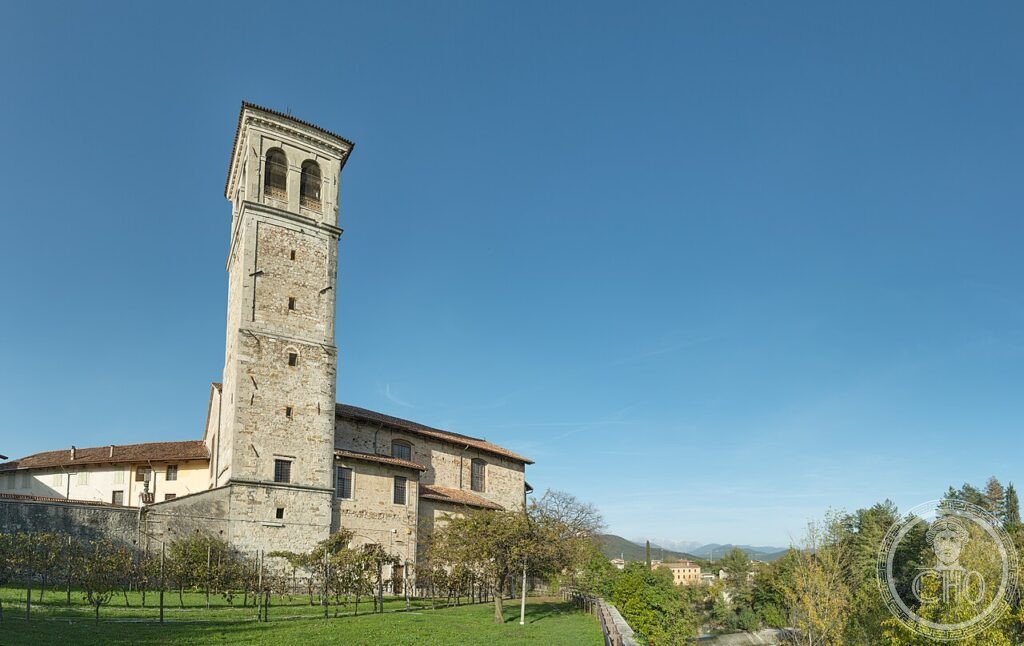
Inside a small oratory above the Natisone river, six stucco saints have watched over the same wall for twelve centuries. The Tempietto Longobardo holds the most complete surviving interior of Longobard art anywhere, a rare point of contact between Byzantine icon painting and the emerging three-dimensional style that would shape early medieval Europe.
At a glance
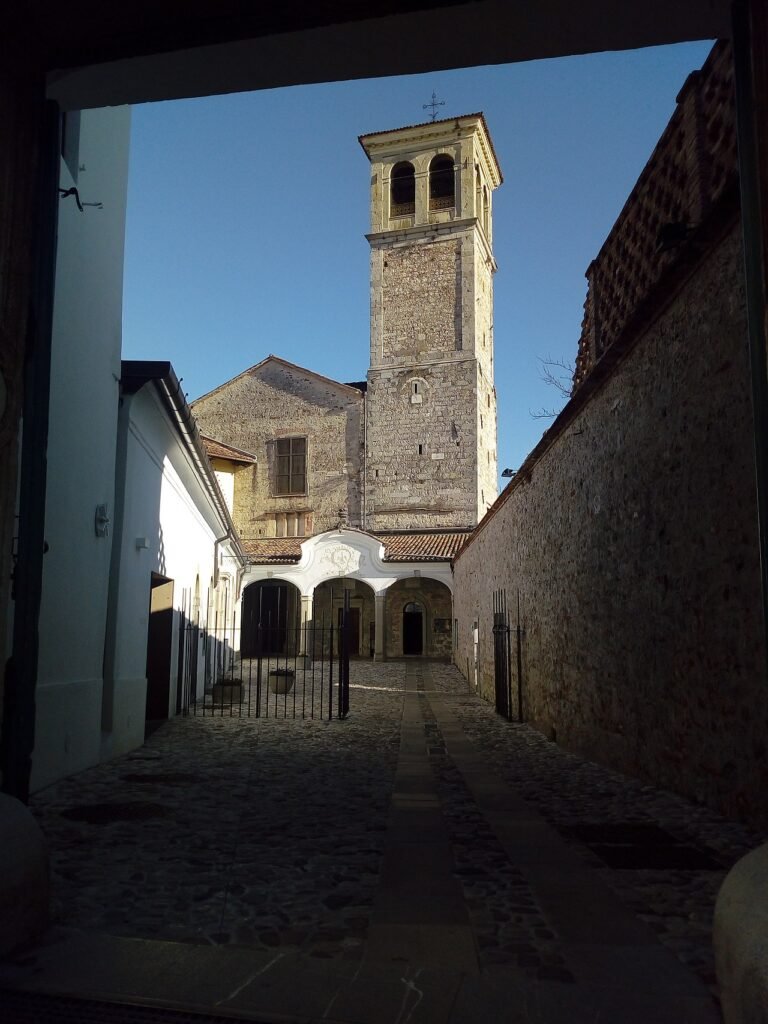
The Tempietto Longobardo, also known as the Oratorio di Santa Maria in Valle, stands within the Monastero Maggiore complex in Cividale del Friuli. It forms one of seven components making up the UNESCO serial inscription ‘Longobards in Italy: Places of Power’, listed in 2011 under reference 1318, alongside sites in Lombardy, Umbria, Campania and Puglia.
Cividale itself began as the Roman Forum Iulii, later became the first Longobard capital in Italy as seat of the Duchy of Friuli, and gave its name to the modern region of Friuli.
Key facts
- Type: Longobard oratory with 8th-century stucco decoration, part of the Monastero Maggiore complex
- UNESCO status: component of the 2011 inscription ‘Longobards in Italy: Places of Power’, reference 1318
- Stucco figures: six high-relief female saints, each roughly 1.1 metres tall, on the west wall, dated to the second half of the 8th century CE
- Technique: lime-gypsum stucco built over a wooden armature, originally tinted with mineral pigments
- Related object: the Altar of Ratchis, dated to 740 CE, held in the nearby Museo Cristiano
- Coordinates: 46.0930° N, 13.4330° E
History
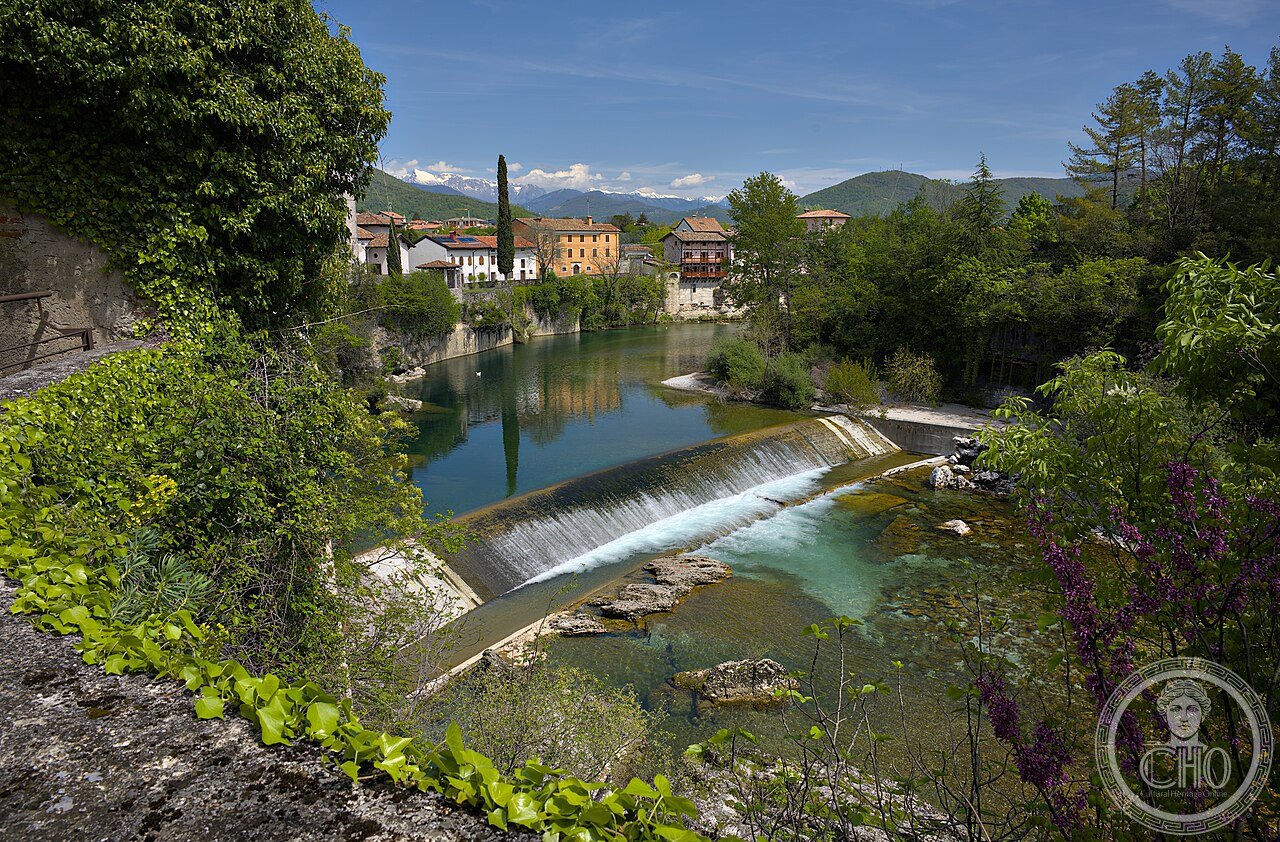
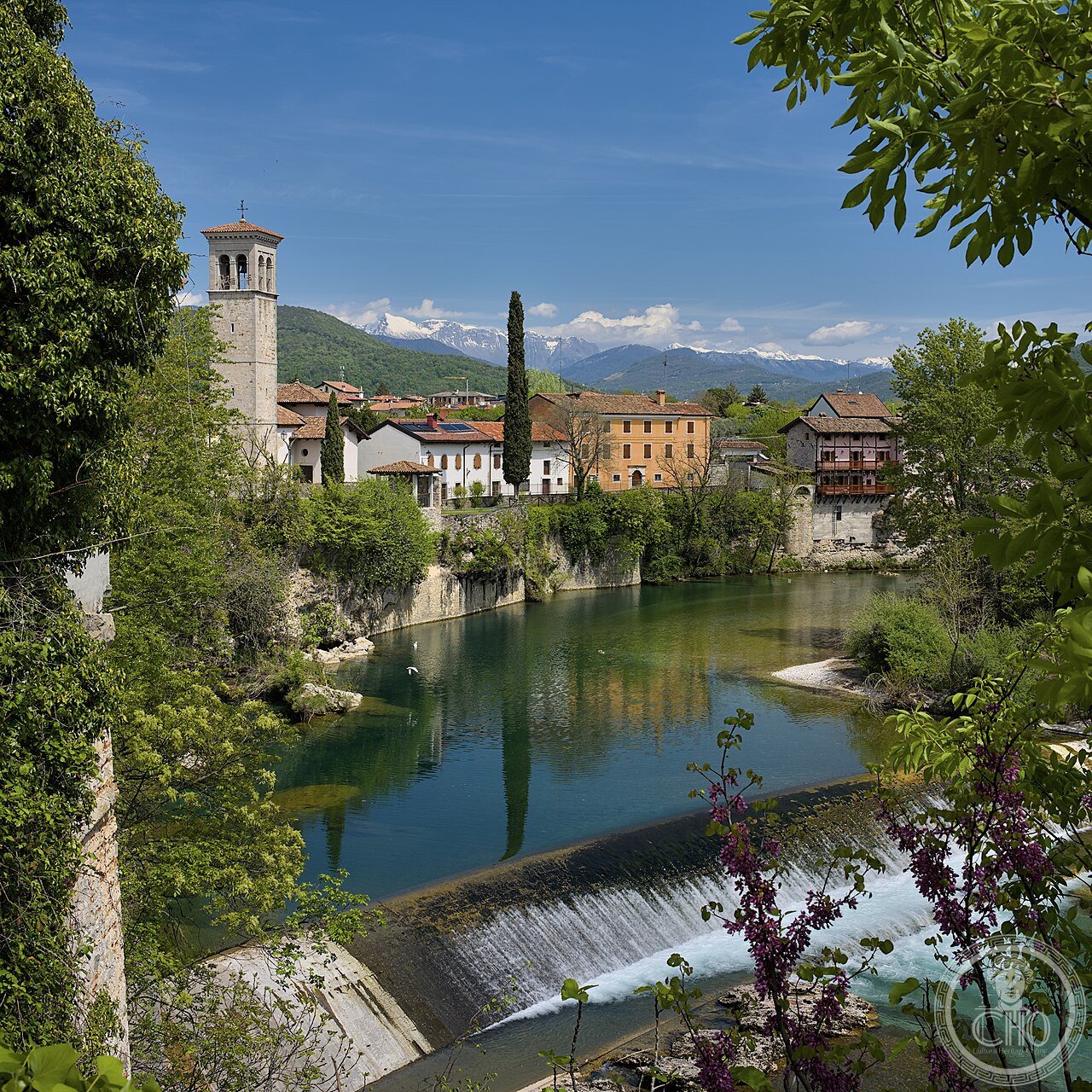
Cividale began as Forum Iulii, a Roman settlement on the left bank of the Natisone, traditionally linked to Julius Caesar though also attributed to Augustus. Traces of the Roman town survive beneath the modern Piazza Paolo Diacono, and the piers of the Roman bridge were later incorporated into the medieval Ponte del Diavolo.
In 568 CE the Longobard king Alboin entered Italy through the passes of Friuli and took Cividale first, making it the seat of the Duchy of Friuli, the earliest Longobard administrative division in Italy. The city became a centre of Longobard learning: Paul the Deacon, author of the Historia Langobardorum, was born nearby and educated there. Because Aquileia lay exposed to Byzantine attack, the Patriarchs of Aquileia moved their seat to Cividale, where it remained for over four hundred years; the Tempietto was built during this period. In 1420 Cividale passed to Venetian rule, remaining part of the Venetian Republic until the Treaty of Campoformio in 1797. The Tempietto’s place within the wider Longobard story was formally recognised in 2011, when it was inscribed by UNESCO as part of the serial site ‘Longobards in Italy: Places of Power’.
What you see
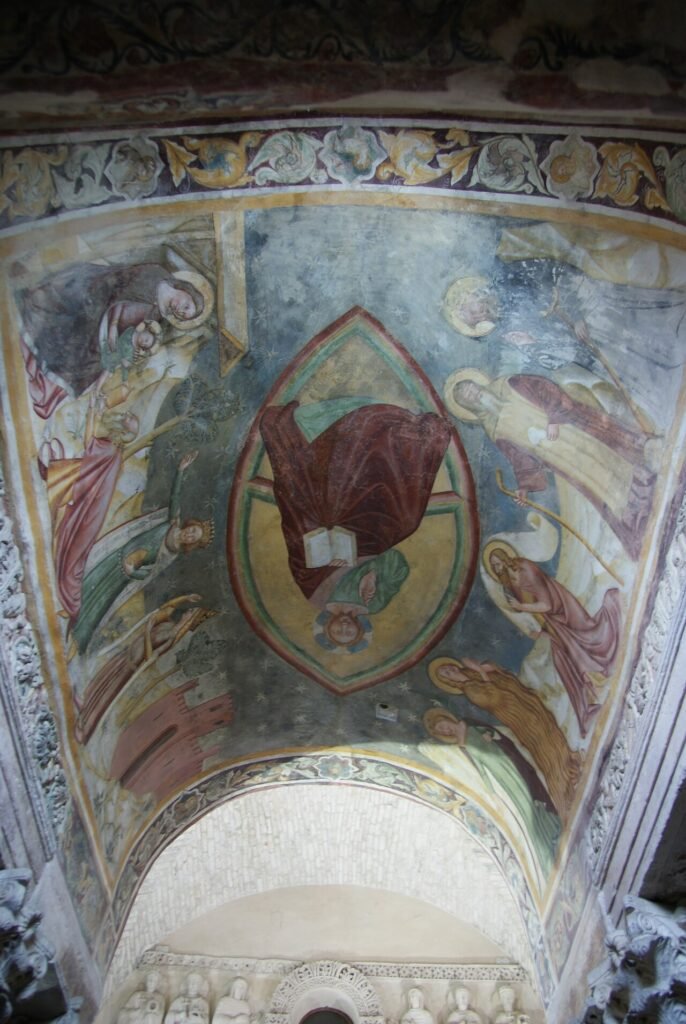
The Tempietto’s small interior is dominated by the west wall, where six stucco saints stand in three pairs above the entrance arch, holding books or palm leaves in the manner of Byzantine saint iconography. Their faces are individually modelled, each with distinct features, a departure from the standardised faces of contemporary Byzantine mosaics and Merovingian illumination. Traces of the original red, blue and ochre tinting survive in protected areas between the figures, and wooden dowels are visible where fragments of stucco have fallen away. Two wooden choir stalls, dated to the 9th or 10th century, sit against the north and south walls and are among the oldest surviving choir furnishings in Italy. The original 8th-century arch and vault still form the ceiling.
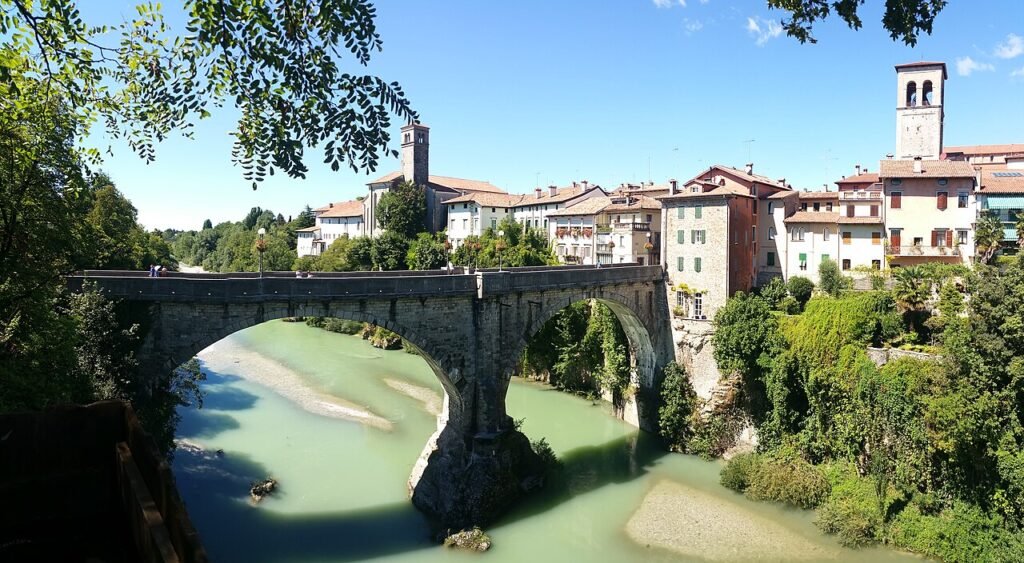
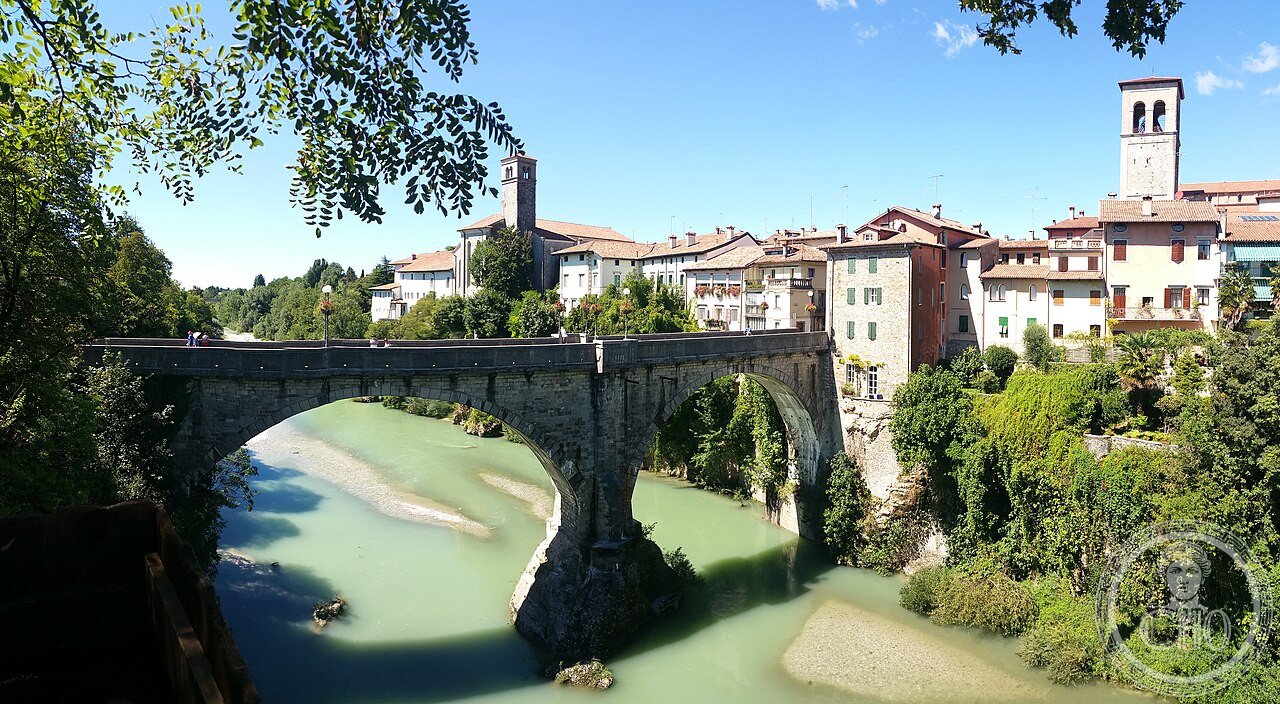
A short walk away, the Museo Cristiano in the Duomo di Cividale houses the Altar of Ratchis, a marble altar of 740 CE showing the Adoration of the Magi, the Visitation and Christ in Majesty in relief deeper than most contemporary Byzantine carving. The same museum holds the Baptistery of Callisto panels, shallower and more Byzantine in style, offering a direct point of comparison. The Museo Nazionale di Cividale displays further Longobard material, including the burial goods from the tomb of Duke Gisulf and a 7th-century pectoral cross in cloisonné enamel and garnet. The medieval Ponte del Diavolo, rebuilt in the 15th century over Roman foundations, spans the Natisone nearby, its two Gothic arches and central pier visible from the footpath below.
Practical information
- Location: Monastero Maggiore, Piazzetta San Biagio, Cividale del Friuli
- Visiting the interior: the space is small, and visitor numbers inside are limited at any one time; the main hall has no artificial lighting, so a torch helps in reading the detail of the stuccoes
- Opening times and admission: these should be checked directly with the Tempietto Longobardo or the Cividale tourist office before visiting
- Combine with: the Museo Cristiano and the Museo Nazionale di Cividale, both a short walk away, for the fuller Longobard collection
Getting there
Cividale del Friuli is reached from Udine on the Ferrovie Udine-Cividale narrow-gauge railway, a regional service connecting the two towns. Udine itself is linked to Venice by rail. Current timetables and fares are best checked with the railway operator or the local tourist office.
Nearby
- Museo Cristiano, Duomo di Cividale — about 200 metres from the Tempietto, home to the Altar of Ratchis and the Baptistery of Callisto panels
- Museo Nazionale di Cividale — housed in the Palazzo dei Provveditori, with Longobard burial goods and jewellery
- Ponte del Diavolo — the medieval bridge over the Natisone, built on Roman foundations
More photographs
Sources
- UNESCO (Longobards in Italy: Places of Power, reference 1318)
- Museo Cristiano di Cividale
- Museo Nazionale di Cividale
- Paul the Deacon, Historia Langobardorum
Gallery
Find it on the map
See this place and what’s around it →📷 Become a Cultural Heritage Online photographer
Share your photos of places: they stay published under your name as the author. The more they're seen, the more you get noticed — and soon a contest will reward the most appreciated photos.
Log in or sign up free to add a photo