

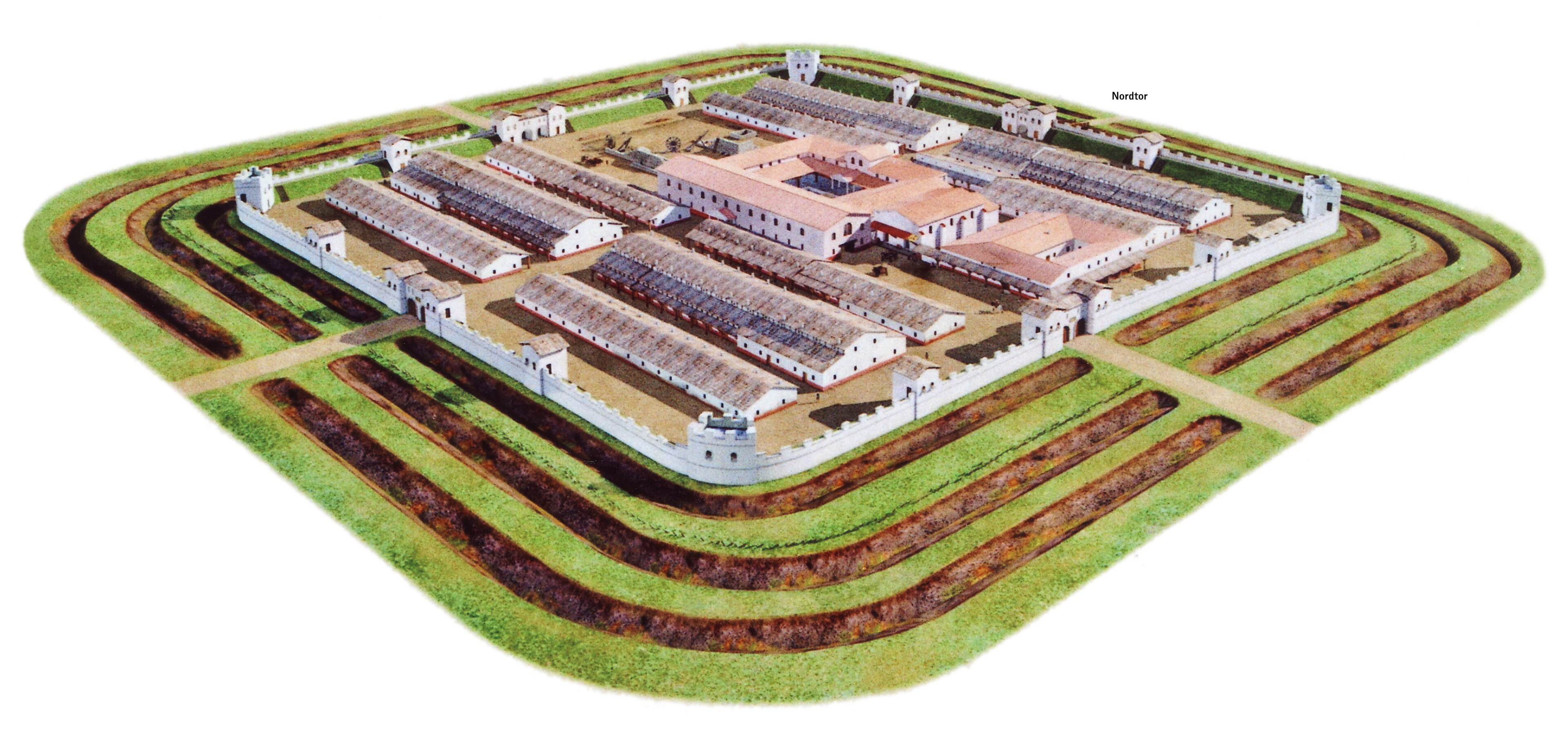
A remarkably preserved Roman cavalry fort on Germany’s Upper Germanic-Rhaetian frontier, now a UNESCO World Heritage Site with underground structures, reconstructed gates, and a dedicated museum.
At a glance
Biriciana was an ala castellum—a cavalry fort—guarding Rome’s northernmost frontier in what is now Bavaria. The site preserves rare subterranean remains, architectural reconstructions, and thermal facilities. A Roman Museum and Limes Information Centre now anchor the site, making it one of Germany’s premier destinations for understanding the frontier system.
History
This garrison stood on the Upper Germanic-Rhaetian Limes, the defensive line that marked Rome’s boundary along the Rhine and Danube. The fort served as a cavalry post, its troops patrolling and defending the empire’s edge. After Rome’s withdrawal, the site lay largely undisturbed, preserving structures that might otherwise have been destroyed or built over.
What you see
The fort contains partly subterranean building remains that reveal Roman construction techniques and daily life. A reconstructed north gateway stands as a tangible reminder of the fort’s defensive purpose and architectural sophistication. Large thermal baths—a luxury even on the frontier—showcase the Romans’ engineering prowess and their priorities for soldier comfort.
Cultural significance
Biriciana ranks among the most important research sites on the Roman limes in Germany. Its combination of archaeological evidence and interpretive infrastructure has made it central to modern understanding of how Rome managed its borders and sustained military communities far from the Mediterranean heartland.
Key facts
- UNESCO World Heritage Site
- Ancient name: Biriciana
- Type: Roman cavalry fort (ala castellum)
- Located: Weißenburg, Weißenburg-Gunzenhausen county, Middle Franconia, Germany
- Coordinates: 49.03083°N, 10.9625°E
Practical information & getting there
The site is accessible to the public. The Roman Museum and integrated Limes Information Centre provide context for the visible remains and the broader significance of the Upper Germanic-Rhaetian frontier. Plan time to explore both the reconstructed and subterranean structures.
Sources & resources
- Biriciana — Wikipedia
- Cultural Heritage Online
Find it on the map
See this place and what’s around it →📷 Become a Cultural Heritage Online photographer
Share your photos of places: they stay published under your name as the author. The more they're seen, the more you get noticed — and soon a contest will reward the most appreciated photos.
Log in or sign up free to add a photo