
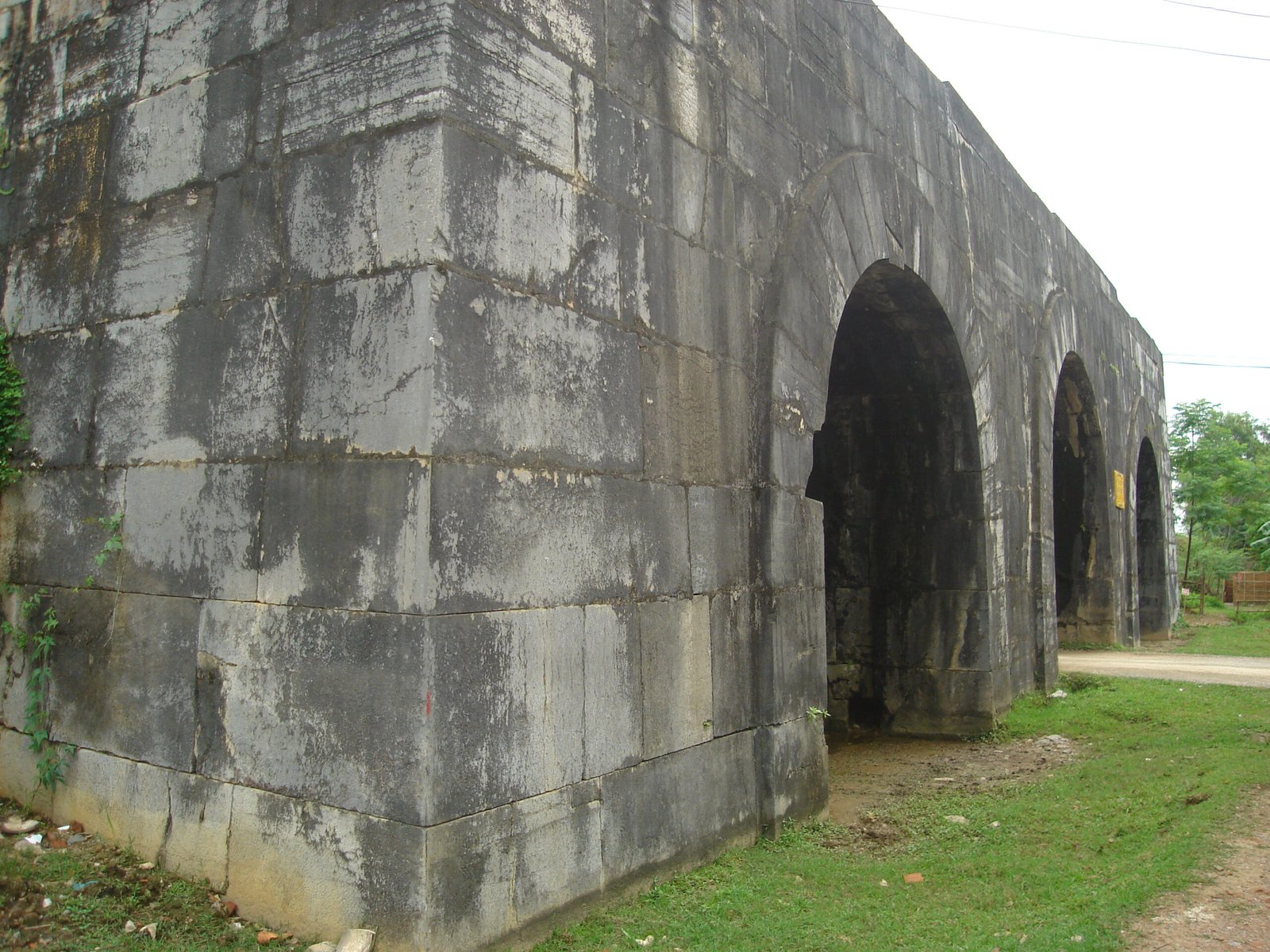
The only surviving citadel in Southeast Asia built entirely from precisely cut stone blocks — a 15th-century marvel constructed in three months, designed as a new Confucian capital and captured intact by the Ming Dynasty of China.
At a glance
The Ho Dynasty Citadel (Vietnamese: Thành Nhà Hồ) stands in the Ma River valley of Thanh Hoa Province, approximately 150 km south of Hanoi. Built in 1397 CE by Ho Quy Ly — the minister who would shortly usurp the Tran dynasty — the citadel was conceived as a new capital to replace the old imperial centre of Thang Long (modern Hanoi). It is the only monument of its kind in Southeast Asia: walls built entirely from large blocks of hand-cut green limestone, fitted without mortar, in a tradition comparable to Inca stonework.
UNESCO inscribed the citadel in 2011, recognising both the exceptional engineering achievement of the stone construction and the Confucian urban planning principles embedded in its layout — four cardinal-direction gates, a central palace axis, and outer earthwork suburbs forming a complete planned city.
Key facts
- UNESCO inscription: 2011
- Construction date: 1397 CE — built in approximately three months
- Ho Dynasty: 1400–1407 CE (seven years only)
- Stone blocks: hand-cut green limestone, some weighing 10–26 tonnes, fitted without mortar
- Walls: approximately 3.5 m thick, surviving to heights of up to 8.5 m
- Gates: four gates aligned to the cardinal directions; the south gate (Ngo Mon) is the best preserved
- Vietnamese name: Thành Nhà Hồ (literally Citadel of the Ho family)
- Alternative name: Tây Đô (Western Capital)
History
Ho Quy Ly rose to prominence as a military commander and minister under the late Tran dynasty, gaining effective control of the Vietnamese state through strategic marriages and military success. In 1397 CE he ordered the construction of a new capital — Tây Đô (Western Capital) — in the Ma River valley, away from the old capital Thang Long (Hanoi), which he associated with the declining Tran power. The speed of construction — completed in approximately three months — is one of the citadel’s most remarkable features, testifying to extraordinary organisational capacity and the mobilisation of thousands of labourers and craftsmen.
In 1400 CE Ho Quy Ly deposed the last Tran emperor and proclaimed himself founder of the Ho dynasty. His brief reign was marked by ambitious Confucian reform: he promoted literacy by ordering Buddhist texts translated into the Vietnamese demotic script (chữ Nôm), issued paper currency (one of the earliest in Southeast Asia), and attempted to limit aristocratic land ownership. These reforms alienated the traditional elite without securing popular support.
In 1407 CE, invited by Tran dynasty loyalists, the Ming Dynasty of China invaded Vietnam. Ho Quy Ly was captured and taken to China, ending the Ho dynasty after just seven years. The citadel itself survived — the Ming used it as their administrative centre during two decades of occupation (1407–1427 CE). After the successful Vietnamese resistance under Le Loi expelled the Ming, the citadel lost its political function but continued to be used as a regional administrative centre through subsequent dynasties.
The citadel’s exceptional preservation is partly explained by its remote location and the exceptional durability of the dry-stone construction: the limestone blocks, fitted with extraordinary precision, have required no mortar to maintain their structural integrity for over six centuries.
What you see
The citadel forms a near-perfect rectangle oriented to the cardinal directions, with walls approximately 870 m (north–south) by 880 m (east–west). The walls are constructed from dressed green limestone blocks in regular courses — the largest blocks, used at the base of the gates, weigh up to 26 tonnes. The precision of the cutting and placement, achieved without mortar, has been compared to Inca stonework at Cusco and Sacsayhuamán.
The south gate (Ngo Mon) is the most impressive surviving structure: three arched passageways framed by massive stone lintels, with the central arch (reserved for the emperor) significantly taller than the flanking passages. The gate survives to near-original height. The north gate is also largely intact; the east and west gates are more fragmentary.
Inside the citadel walls, the original palace structures have not survived above ground — Vietnamese traditional timber architecture was too fragile to endure six centuries of warfare and monsoon climate. Archaeological excavations have revealed the foundations of the main palace complex along the central north–south axis, conforming to the classical Confucian model of a capital city. The outer earthwork suburbs — a second defensive perimeter — are partially preserved in the surrounding landscape.
The citadel is set within an exceptional natural landscape: the Ma River to the south, two hills flanking the east and west (incorporated into the defensive design as natural bastions), and the Truong Son mountain range on the horizon — a setting that embodies Confucian geomantic principles.
Practical information
- Entrance fee: approximately 40,000 VND (adults); the site includes a small on-site museum
- Opening hours: 7:00–17:30 daily
- Best time to visit: October–April (dry season); the Ma River valley can be very hot and humid May–September
- Duration: 1.5–2 hours for the citadel perimeter and museum; add half a day for the surrounding archaeological zone
- Guides: English-speaking guides available at the site; recommended for understanding the Confucian urban layout and Ho dynasty context
- Combined visit: many visitors combine with the Lam Kinh historical site (Le dynasty founding site, 50 km away)
Getting there
The citadel is located near Vinh Loc District, Thanh Hoa Province, approximately 150 km south of Hanoi and 45 km west of Thanh Hoa city. From Hanoi: take the train or bus to Thanh Hoa (2.5–3 hours), then hire a taxi or motorbike taxi for the 45 km to Vinh Loc. From Thanh Hoa city: approximately 45 minutes by car or motorbike along National Highway 45. There is no direct public bus service; private hire or tour is the practical option. The citadel is not currently on standard tourist circuits from Hanoi or Hue, making it a destination for travellers specifically interested in Vietnamese history rather than casual sightseers.
Nearby
The surrounding Ma River valley contains several associated archaeological sites from the Ho dynasty period. The Lam Kinh historical site (50 km south-east) preserves the founding monuments of the Le dynasty, including royal tombs and the Lam Kinh Temple complex — a UNESCO candidate site. Thanh Hoa city (45 km east) offers the Ham Rong Bridge (a famous site from the American War) and the Thanh Hoa Museum with regional archaeological collections. The route south towards Hue passes through Nghe An Province (birthplace of Ho Chi Minh) and the UNESCO-listed Phong Nha-Ke Bang National Park (cave system).
Sources
- UNESCO World Heritage: Citadel of the Hồ Dynasty — whc.unesco.org/en/list/1358
- Vietnam National Administration of Tourism — vietnam.travel
- Institute of Archaeology, Hanoi — excavation reports 2007–2011
- Vietnam Heritage Magazine — Tây Đô: The Stone Capital
Find it on the map
See this place and what’s around it →📷 Become a Cultural Heritage Online photographer
Share your photos of places: they stay published under your name as the author. The more they're seen, the more you get noticed — and soon a contest will reward the most appreciated photos.
Log in or sign up free to add a photo