

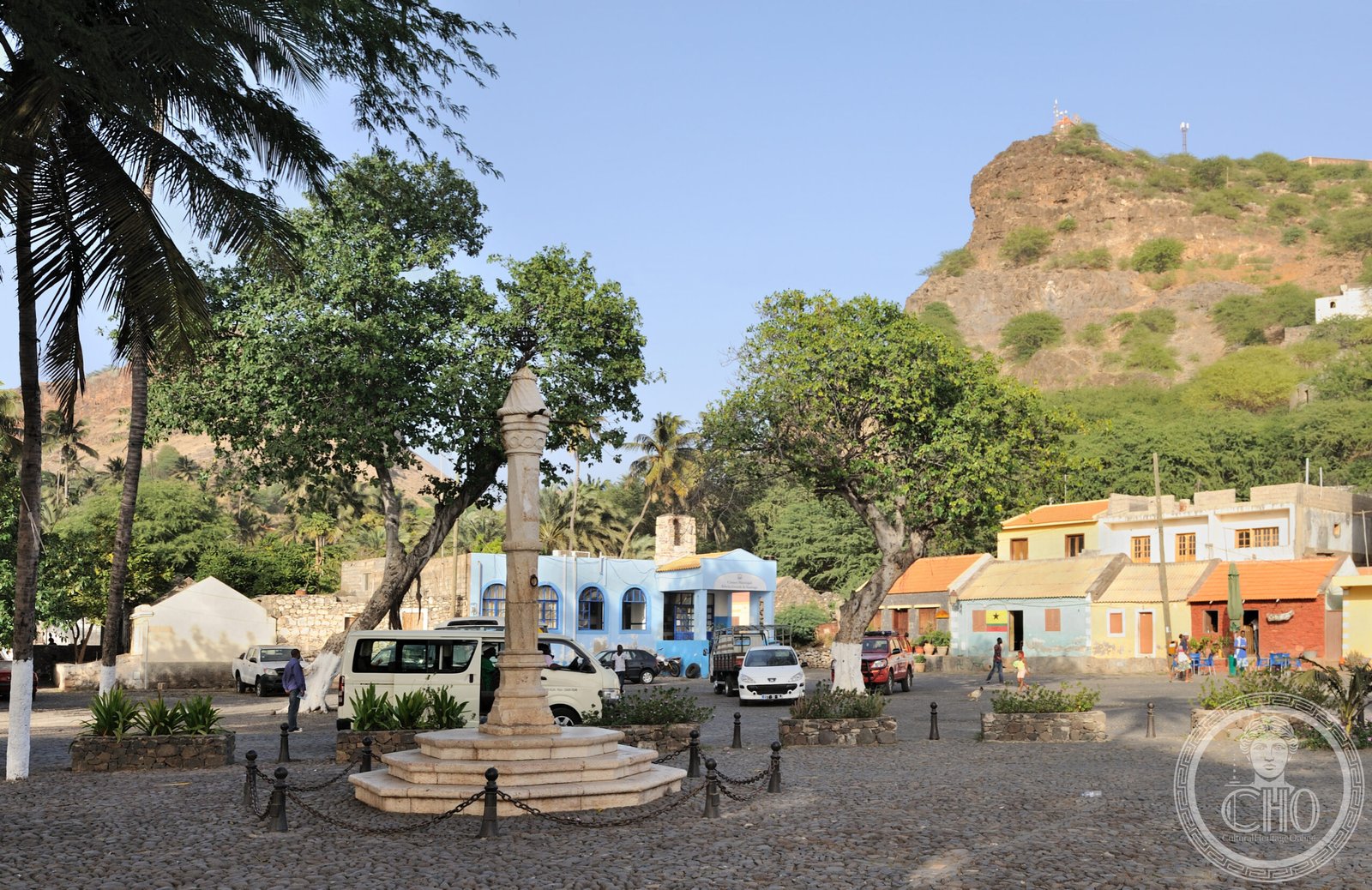
The first European colonial city built in sub-Saharan Africa, and the central node of the transatlantic slave trade: a haunting UNESCO landscape where Portuguese Renaissance architecture stands alongside the Pelourinho, the stone post where enslaved people were disciplined in full public view.
At a glance
Cidade Velha (Old City) is the historic centre of what was once called Ribeira Grande, located on the island of Santiago in the Cape Verde archipelago. Founded by Portuguese colonists around 1462 CE, it was the first European colonial settlement established on sub-Saharan African soil, and for nearly two centuries served as the most important Portuguese colonial city in the Atlantic world. Its harbour was the primary victualling and staging point for Portuguese voyages of exploration along the African coast, across the Atlantic to Brazil, and around the Cape of Good Hope to India. Inscribed as a UNESCO World Heritage Site in 2009, Cidade Velha is also recognised as the first city in history built specifically to support the transatlantic trade in enslaved Africans. Its monuments are among the most significant and sobering in the Atlantic world.
Key facts
- UNESCO inscription: 2009 (Cultural)
- Founded: c. 1462 CE by Portuguese colonists
- Location: Santiago Island, Cape Verde (Atlantic Ocean, 570 km off Senegal)
- Key monuments: Pelourinho (pillory and slave-discipline post); Cathedral of Our Lady of the Rosary (1495 CE); Fort of Sao Filipe (c. 1590 CE); Church of Our Lady of the Rosary (Renaissance)
- Historical significance: First European colonial city in sub-Saharan Africa; first city central to the transatlantic slave trade
- Sacked by: Francis Drake, 1585 CE
- Decline: Gradual from late 17th century as slave trade shifted to Sao Tome and Luanda
- Current status: UNESCO WHS; largely a small village with preserved ruins
History
The Portuguese navigator Diogo Gomes is credited with the discovery of the Cape Verde islands around 1460 CE. Settlement of Santiago Island began rapidly, and by 1462 CE Portuguese colonists had established Ribeira Grande as the first permanent European settlement in the tropics of sub-Saharan Africa. The site was chosen for its natural harbour on the south coast of Santiago, fed by the Ribeira Grande valley, which provided fresh water and agricultural land in an otherwise arid landscape.
For the following century, Ribeira Grande was the most strategically important city in the Portuguese Atlantic empire. Every major Portuguese voyage of exploration and trade passed through its harbour. The city grew wealthy on the slave trade: enslaved people from the West African coast (present-day Guinea-Bissau, Senegal, and Guinea) were brought to Ribeira Grande, held, baptised, and processed for transport across the Atlantic to Brazil and the Caribbean. The Pelourinho, the stone pillory post at the centre of the main square, was where enslaved people were disciplined and where the social order of colonial bondage was enacted daily in public.
In 1585 CE, the English privateer Francis Drake sacked Ribeira Grande with a fleet of 23 ships, burning much of the city. Despite reconstruction, the city never fully recovered. As the slave trade expanded during the 17th century, its logistics centres shifted south to Sao Tome and later Luanda, reducing Ribeira Grande to a secondary port. By the mid-18th century it had been largely abandoned, the capital of Cape Verde having moved to Praia. Its ruins were preserved by the very abandonment that ended its commercial life.
What you see
The historic centre is compact and largely preserved in a state of romantic ruin, set in a green valley descending to the sea. The most powerful monument is the Pelourinho, the stone pillar and square at the heart of the old city. The pillar itself, carved from local stone in the 15th century, is one of the oldest surviving physical relics of the Atlantic slave trade anywhere in the world.
The Cathedral of Our Lady of the Rosary (Nossa Senhora do Rosario), begun in 1495 CE, is one of the oldest European churches in the tropics. Though partially ruined, its nave and apse survive, and its carved stone portal shows Portuguese Manueline Gothic decoration in a remarkable state of preservation. The Church of Our Lady of the Rosary nearby shows Renaissance architectural influence. On the cliff above the city, the Fort of Sao Filipe (c. 1590 CE) commands views over the entire bay; its walls and bastions are substantially intact, and the fort served as the primary defence of the harbour against pirate and privateering attacks. A small archaeological museum in the town interprets the site history.
Practical information
- Location: Approximately 15 km southwest of Praia, capital of Cape Verde, on Santiago Island
- Access: Day trip from Praia by shared taxi (aluguer) or hired car; journey approximately 30 minutes
- Opening hours: Fort of Sao Filipe: daily, generally 09:00-17:00 (check locally); archaeological museum: mornings, closed Monday
- Entry: Small fees for fort and museum; Pelourinho square is open access
- Best time: Year-round; Cape Verde has a dry, warm climate (25-30 degrees C). November to June is drier and cooler; July to October is hotter and occasionally rainy.
- Language: Cape Verdean Creole (Kriolu) and Portuguese
- Currency: Cape Verdean Escudo (CVE)
Getting there
International flights arrive at Nelson Mandela International Airport (SID) on Sal Island or Praia International Airport (RAI) on Santiago Island; direct connections from Lisbon, Amsterdam, London, and several West African cities. From Praia airport, take a taxi or bus to the city centre, then a shared aluguer taxi or hired car to Cidade Velha (approximately 30-45 minutes). Inter-island ferries also connect Santiago to other Cape Verde islands. Most tour operators in Praia offer half-day or full-day excursions to Cidade Velha.
Nearby
- Praia: the modern capital of Cape Verde, 15 km northeast, with the Ethnographic Museum and National Museum
- Tarrafal: a historic village on the north coast of Santiago, site of a colonial-era prison camp now a memorial museum
- Sao Filipe (Fogo Island): accessible by ferry or short flight, home to the Pico do Fogo volcano and colonial townhouses
- Rui Vaz Plateau: interior highlands of Santiago with endemic vegetation and traditional villages
Sources
- UNESCO World Heritage List, Cidade Velha, Historic Centre of Ribeira Grande (2009): whc.unesco.org/en/list/1310
- Carreira, A. (1983). The People of the Cape Verde Islands: Exploitation and Emigration. Archon Books.
- Thornton, J.K. (2012). A Cultural History of the Atlantic World, 1250-1820. Cambridge University Press.
- Green, T. (2019). A Fistful of Shells: West Africa from the Rise of the Slave Trade to the Age of Revolution. Penguin.
Find it on the map
See this place and what’s around it →📷 Become a Cultural Heritage Online photographer
Share your photos of places: they stay published under your name as the author. The more they're seen, the more you get noticed — and soon a contest will reward the most appreciated photos.
Log in or sign up free to add a photo