

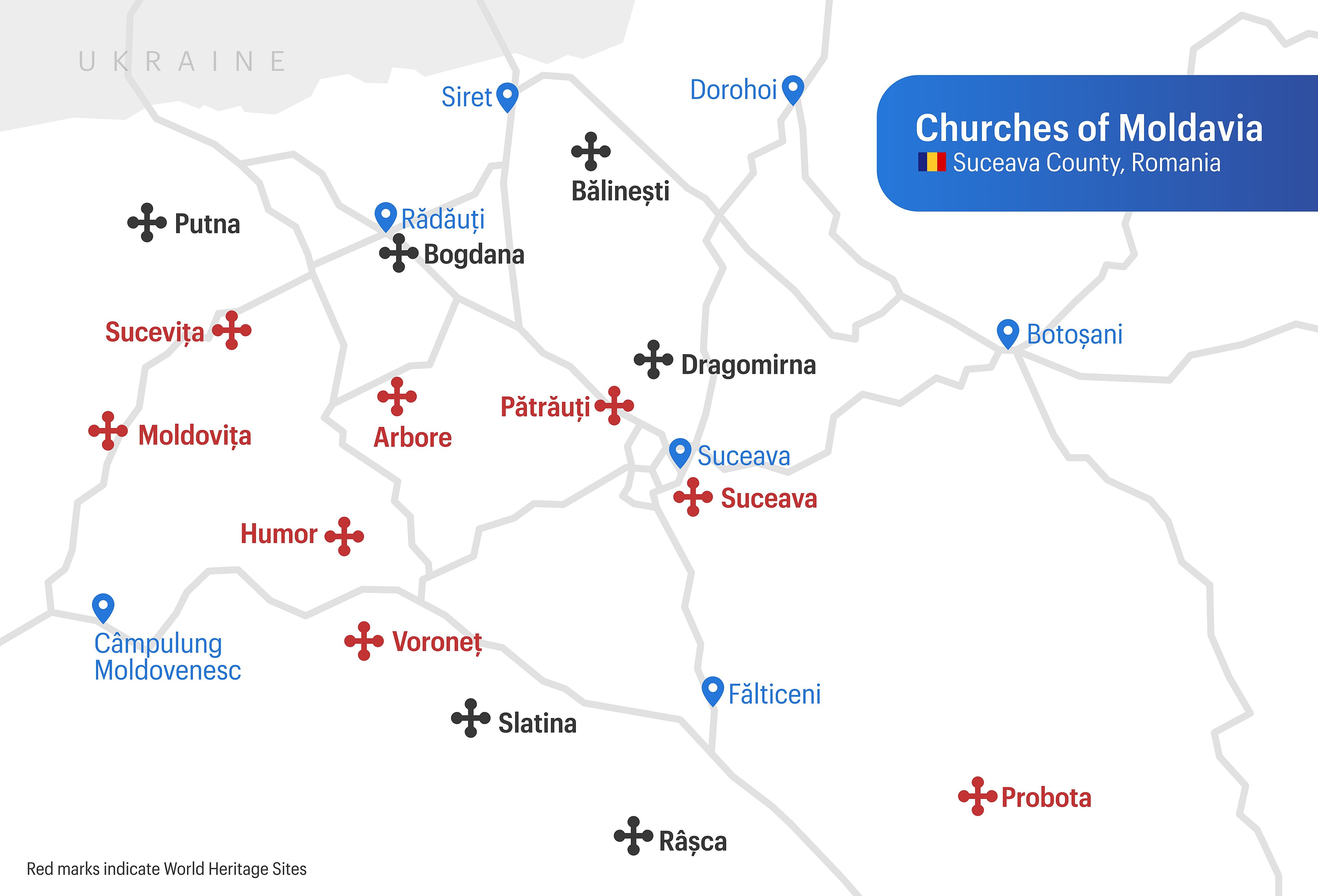
Nine Orthodox churches crowned with stunning exterior frescoes stand as living monuments to the distinctive Moldavian architectural tradition that flourished in this corner of Romania.
At a glance
Eight churches built between the late 15th and late 16th centuries, clustered in Suceava County, showcase the remarkable fresco-painting tradition of the Moldavian school. The Church of the Resurrection at Sucevița Monastery joined the ensemble in 2010, bringing the total to nine structures recognized together as a UNESCO World Heritage Site.
History
These churches represent the flowering of Moldavian architectural style, a tradition that emerged in the Principality of Moldavia from the 14th century onward. Construction of the eight core churches spanned the late 15th to late 16th centuries, a period of cultural consolidation in the region. The Church of the Resurrection was later recognized as part of this heritage complex in 2010, affirming the continued significance of Moldavian religious architecture.
What you see
The churches are distinguished by their external walls, which are entirely covered with authentic fresco paintings—a practice unique to this architectural tradition. These painted cycles depict complete religious themes, transforming each façade into a visual scripture. The consistent application of exterior frescoes across all nine structures demonstrates a coherent artistic vision that defines the Moldavian school.
Cultural significance
The Churches of Moldavia embody a regional architectural and artistic identity that developed over centuries. The external fresco paintings preserve theological narratives and artistic techniques specific to Eastern Orthodox tradition in this territory. Together, they form an exceptional testimony to how a principality expressed its spiritual and cultural values through coordinated architectural practice.
Key facts
- UNESCO World Heritage Site since 1993 (expanded 2010)
- Nine Orthodox churches in total
- Built late 15th–late 16th century
- Location: Suceava County, Romania
- Coordinates: 47.7783°N, 25.7128°E
Practical information & getting there
The churches are distributed across Suceava County in northern Moldavia. Each site maintains its own access conditions and visiting hours. We recommend checking locally for current information and any restrictions before planning your visit to individual churches.
Sources & resources
Find it on the map
See this place and what’s around it →📷 Become a Cultural Heritage Online photographer
Share your photos of places: they stay published under your name as the author. The more they're seen, the more you get noticed — and soon a contest will reward the most appreciated photos.
Log in or sign up free to add a photoIs this page about you?
This page is read by travellers and heritage enthusiasts who find it on Google. Tell us how you are connected to this place and we will take it from there.