
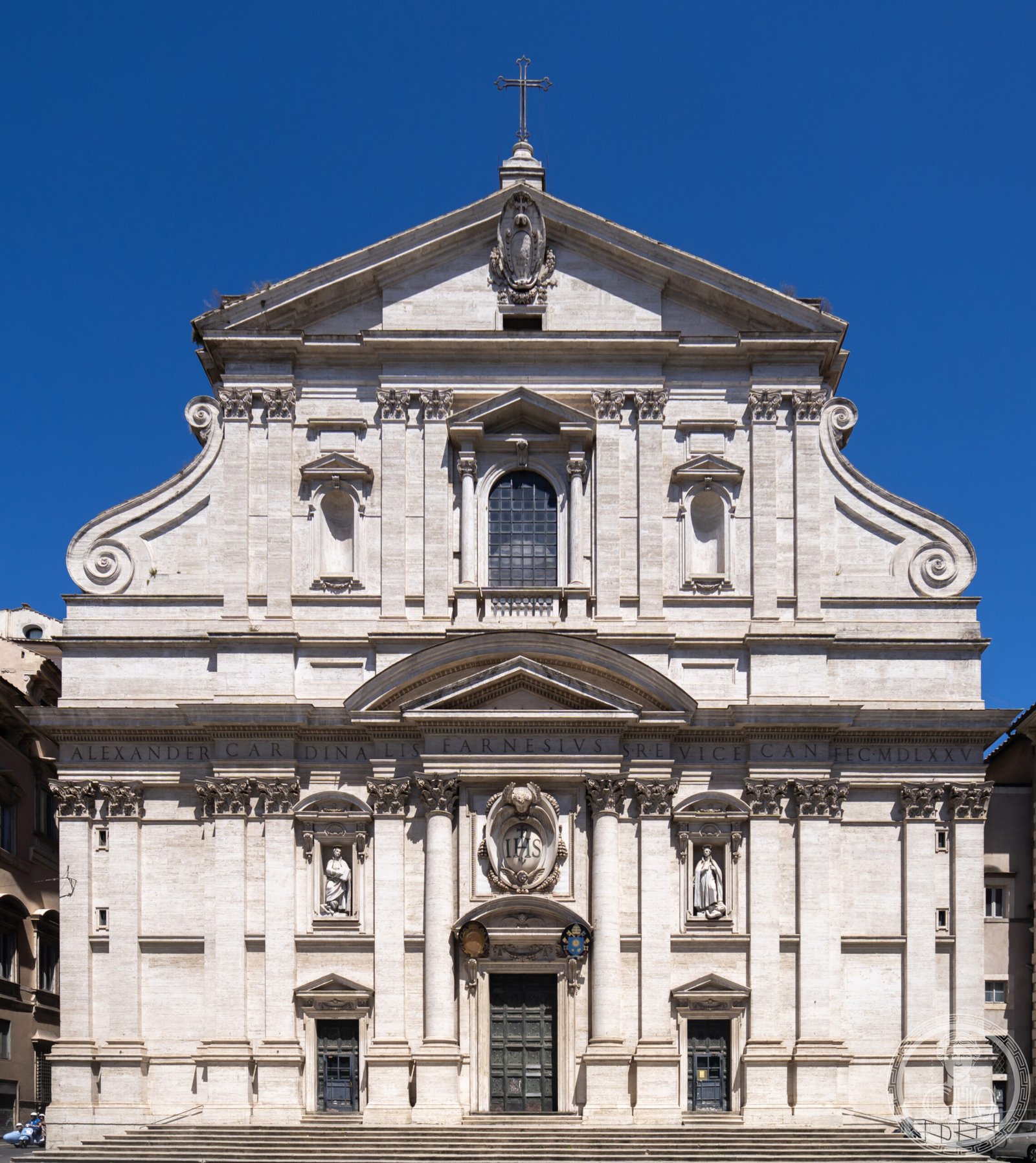
The mother church of the Society of Jesus, consecrated in 1584, pioneered the architectural language of Counter-Reformation Catholicism across Europe.
At a glance
The Gesù represents a watershed in ecclesiastical design. Commissioned by Cardinal Alessandro Farnese and built over sixteen years, the church synthesises the spiritual needs of the Jesuits with the formal innovations of the Renaissance. Its bold facade and unified interior set the template for Catholic churches worldwide.
History
Construction began in 1568, twelve years after founder Ignazio da Loyola’s death, under General Francesco Borgia. Cardinal Alessandro Farnese, nephew of Pope Paul III, established the building fund that year.
The architectural evolution reflects shifting priorities. Nanni di Baccio Bigio, a Florentine architect, designed the first projects requested by Ignazio himself. Michelangelo reworked the scheme in 1554, followed by Giacomo Vignola in 1568, who oriented the design toward two key liturgical functions: a vast nave with lateral pulpit for preaching and a central altar for Eucharistic celebration, both mandated by the Council of Trent.
Vignola supervised construction from 1568 to 1575. Giacomo Della Porta then directed the work until 1580, refining the facade’s dynamic composition and designing the dome. The church was consecrated on November 25, 1584.
What you see
The facade by Della Porta breaks with earlier restraint. Its sculptural relief, deep recesses and stacked orders create dramatic chiaroscuro. The interior prioritises sight lines and acoustic clarity—a single expansive nave allows every worshipper to see the altar and hear the preacher’s voice without obstruction.
The dome crowns a unified spatial sequence. Side chapels line the nave without fragmenting the central focus, embodying the Jesuits’ pastoral mission and the Council of Trent’s insistence on clarity and directness in religious experience.
Cultural significance
The Gesù became the prototype for Counter-Reformation church design. Its functional clarity and emotional impact influenced ecclesiastical architecture across Italy, Europe and the colonial world for centuries. The church demonstrates how theological reform shaped physical space, making liturgy visible and participatory.
Key facts
- Consecrated: November 25, 1584
- Architects: Nanni di Baccio Bigio (initial design); Michelangelo (1554); Giacomo Vignola (1568); Giacomo Della Porta (1575–1580)
- Address: Via degli Astalli, 16, 00186 Roma
- Coordinates: 41.89584454833981, 12.479519248008726
- Website: http://www.chiesadelgesu.org/
Practical information
Opening hours and admission details are listed on the official website. The church remains an active Jesuit parish and place of worship.
Getting there
The Gesù stands in central Rome, near Piazza del Gesù. Public transport and walking access from nearby metro stations and historic monuments are straightforward. Check the official website for current visiting conditions.
Sources & resources
Find it on the map
See this place and what’s around it →Historical events at this place (3)
📷 Become a Cultural Heritage Online photographer
Share your photos of places: they stay published under your name as the author. The more they're seen, the more you get noticed — and soon a contest will reward the most appreciated photos.
Log in or sign up free to add a photoIs this page about you?
This page is read by travellers and heritage enthusiasts who find it on Google. Tell us how you are connected to this place and we will take it from there.