
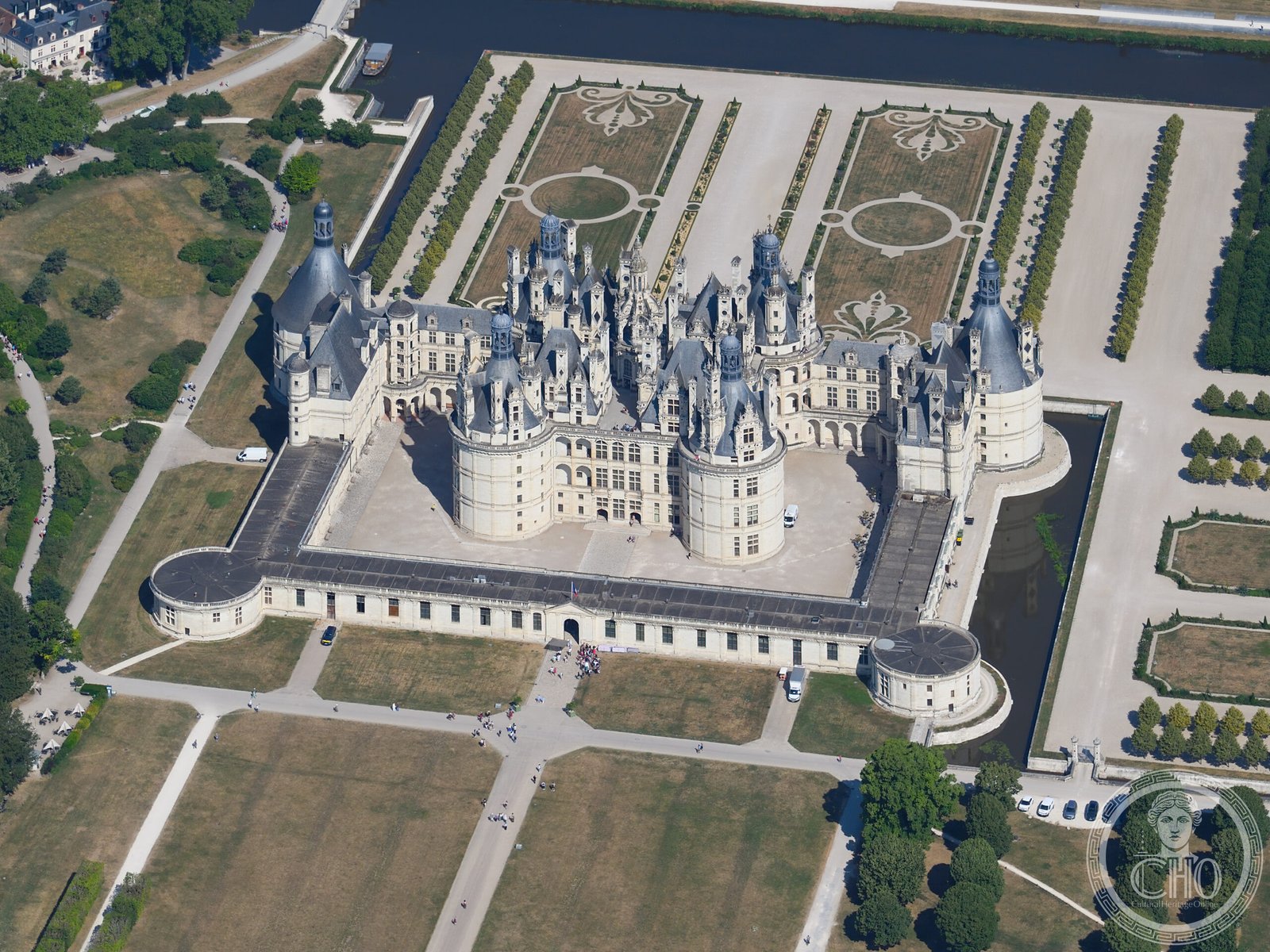
The largest château in the Loire Valley, Chambord stands as Francis I’s architectural triumph—a hunting lodge that showcases the marriage of French medieval tradition and Italian Renaissance innovation on an unprecedented scale.
At a glance
Commissioned by King Francis I, Chambord was built between 1519 and 1547 as a royal hunting retreat. Its distinctive silhouette—with multiple towers, turrets, and ornamental chimneys—defines the French Renaissance aesthetic and remains instantly recognisable worldwide.
History
Francis I conceived Chambord as a monument to his power and wealth, complementing his other royal residences at Blois and Amboise. The original design is attributed to Tuscan architect Domenico da Cortona, though Leonardo da Vinci may have influenced its conception. Pierre Neveu oversaw construction on-site throughout the 28-year building campaign, during which the design underwent considerable revision.
Near completion, Francis invited his former rival Charles V, Holy Roman Emperor, to witness this symbol of French grandeur. The château’s fortunes declined after the French Revolution: in 1792, furnishings were sold and timber salvaged. Though abandoned for a period, 19th-century restoration efforts halted its deterioration. During the Second World War, masterworks from the Louvre and Château de Compiègne were sheltered within its walls. Today it welcomes roughly 700,000 annual visitors.
What you see
Chambord’s exterior blends medieval French forms—crenellated walls, corner towers, and keeps—with Classical Renaissance proportions and ornamentation. Distinctive roof structures feature an array of ornamental chimneys and turrets that create its celebrated skyline. The architecture represents a dialogue between Gothic verticality and Renaissance harmony.
Cultural significance
Chambord epitomises the Renaissance transformation of French royal culture. It demonstrates how Italian artistic principles were absorbed into northern European contexts, establishing a template for aristocratic building across the continent. As France’s pre-eminent hunting château, it reflects the importance of the hunt in courtly life and Francis I’s assertion of absolute power through architectural splendour.
Key facts
- Location: Chambord, Centre-Val de Loire, France
- Coordinates: 47.6161, 1.5172
- Built: 1519–1547
- Commissioned by: King Francis I of France
- Original design attributed to: Domenico da Cortona
- On-site overseer: Pierre Neveu
- UNESCO World Heritage Site: Yes
Practical information & getting there
The château is open to the public year-round. Located in the Loire Valley region, Chambord is accessible by car from major towns including Blois and Tours, or by regional rail services. Flooding in June 2016 affected the grounds but caused no structural damage to the building itself.
Sources & resources
Find it on the map
See this place and what’s around it →📷 Become a Cultural Heritage Online photographer
Share your photos of places: they stay published under your name as the author. The more they're seen, the more you get noticed — and soon a contest will reward the most appreciated photos.
Log in or sign up free to add a photoIs this page about you?
This page is read by travellers and heritage enthusiasts who find it on Google. Tell us how you are connected to this place and we will take it from there.