
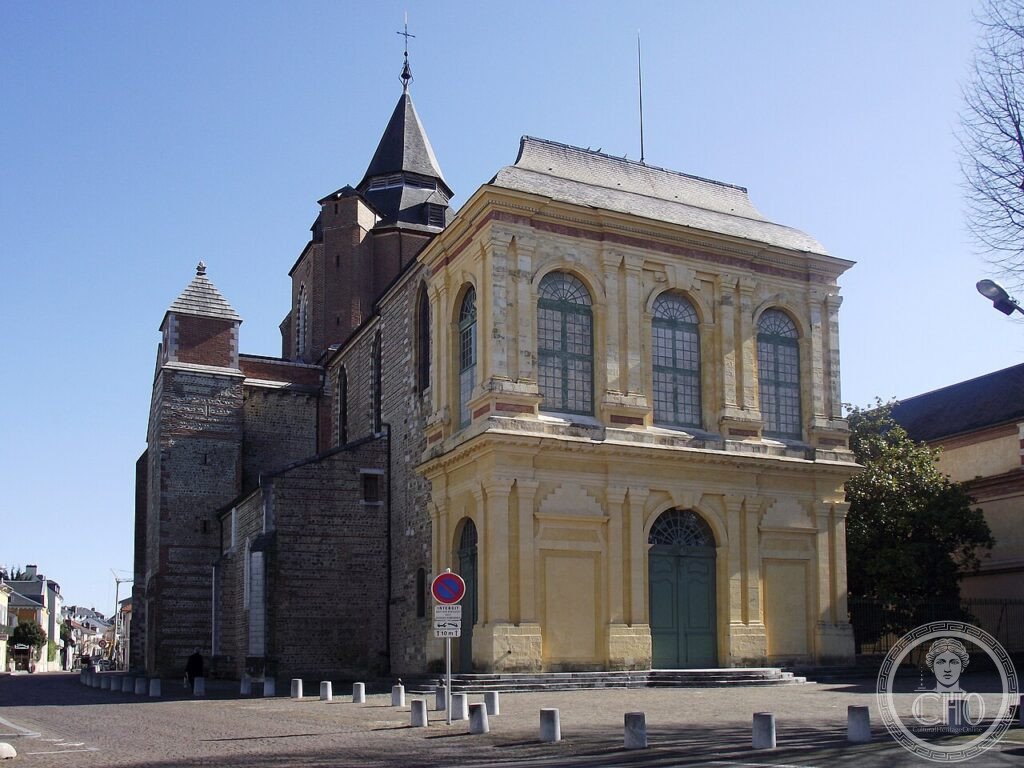
La sede vescovile di Tarbes risale al IV secolo, sorta su una basilica gallo-romana. Distrutta dalle incursioni saracene e poi normanne, la cattedrale attuale nacque solo nella seconda metà del XII secolo — per poi vedere la propria abside fortificata e sopraelevata durante le guerre di religione del Cinquecento.
At a glance
Tarbes Cathedral (Cathédrale Notre-Dame-de-la-Sède) traces the origins of its episcopal seat to around the 4th century, when a first church was built on the site of an earlier Gallo-Roman basilica. That early church was destroyed in succession by Saracen raids and later Norman invasions, and it was only in the second half of the 12th century that construction began on the cathedral whose fabric substantially survives today, built directly over the ruins of its destroyed predecessor. The main construction campaign, running from the late 12th into the early 13th century, proceeded east to west over roughly a century, and a Gothic nave was added as a first major extension in the 14th century. During the Wars of Religion in the 16th century, the cathedral’s main apse and smaller apsidioles were fortified and heightened — a direct architectural response to the religious violence sweeping the region — and in the 18th century a classical facade was erected to modernise the building’s exterior appearance and enlarge the nave.
Key facts
- Episcopal origins: c. 4th century, on the site of a Gallo-Roman basilica; destroyed successively by Saracen and Norman raids
- Present cathedral: begun second half of the 12th century, over the ruins of the earlier destroyed church; main campaign late 12th-early 13th century, progressing east to west over roughly a century
- Gothic nave: added as a first major extension in the 14th century
- Wars of Religion fortification: 16th century, the main apse and apsidioles were fortified and heightened in direct response to the period’s religious violence
- 18th-century facade: a classical facade added to modernise the building’s style and enlarge the nave
- Heritage status: listed historic monument since 30 October 1906
History
Tarbes’s status as an episcopal seat since roughly the 4th century places it among the older documented Christian dioceses in what is now southwestern France, and the successive destruction of its early church buildings by Saracen raids (part of the broader wave of Muslim incursions into southern Gaul during the 8th century and beyond) and subsequently by Norman/Viking raids reflects the same pattern of repeated violent disruption that affected numerous early medieval religious sites across the region, particularly those, like Tarbes, situated in areas exposed to both Mediterranean-facing and Atlantic-facing raiding routes. The decision to rebuild directly over the ruins of the destroyed predecessor church, standard medieval practice reflecting both the practical reuse of an already-consecrated site and the symbolic continuity of restoring worship at a location with established sacred significance, gave the resulting late-12th-century cathedral a direct physical connection to centuries of prior religious use on the same ground.
The 16th-century fortification of the cathedral’s apse and apsidioles during the Wars of Religion represents a directly defensive architectural response to genuine physical danger, rather than a purely symbolic or decorative choice: raising and reinforcing the most vulnerable projecting sections of a church building was a documented practical strategy across numerous French towns during this period of intense and often violent conflict between Catholic and Protestant factions, allowing the building to serve, if necessary, a genuine defensive function beyond its religious one. The subsequent 18th-century addition of a classical facade, arriving well over a century after the Wars of Religion had subsided, reflects instead a purely aesthetic and modernising ambition typical of the period, deliberately updating the building’s public face to contemporary classical taste rather than responding to any ongoing practical necessity.
What you see
The building’s layered construction history — Romanesque-to-Gothic core fabric from the 12th-14th centuries, the fortified and heightened apse from the 16th-century Wars of Religion, and the classical facade added in the 18th century — gives visitors a legible record of successive architectural responses to different historical pressures across roughly six centuries. The baldaquin (canopy) over the high altar is a further notable interior feature. The fortified apse specifically rewards attention as a rare, directly documented instance of a French cathedral choir section reinforced for genuine defensive purposes rather than purely decorative or symbolic fortification-style architecture.
Practical information
- Opening hours: generally open daily, check current hours before visiting; free admission
- Address: Place du Général de Gaulle, 65000 Tarbes
Getting there
Tarbes has direct rail connections from Toulouse (approximately 1.5 hours) and Paris (via Toulouse or Bordeaux, approximately 5-6 hours), and its own airport (Tarbes-Lourdes-Pyrénées). By car, Tarbes sits on the A64 motorway. The cathedral stands in the historic centre, walkable from Tarbes station. GPS: 43.2338° N, 0.0689° E.
Nearby
- Jardin Massey — in Tarbes; a significant 19th-century English-style landscape garden
- Haras de Tarbes — in the city; a historic national stud farm, reflecting the region’s equestrian tradition
- Lourdes — approximately 20 minutes by car; one of the world’s most visited Catholic Marian pilgrimage sites
Sources
- Tarbes Tourisme — official visitor portal, cathedral history (tarbes-tourisme.fr)
- Ministère de la Culture — heritage documentation, Base Mérimée (culture.gouv.fr)
- Le Petit Journal Hautes-Pyrénées — “Cathédrale Notre-Dame de la Sède: l’histoire” (lepetitjournal.net)
- Wikipedia — “Cathédrale Notre-Dame-de-la-Sède de Tarbes” (fr.wikipedia.org)
Find it on the map
See this place and what’s around it →📷 Become a Cultural Heritage Online photographer
Share your photos of places: they stay published under your name as the author. The more they're seen, the more you get noticed — and soon a contest will reward the most appreciated photos.
Log in or sign up free to add a photoIs this page about you?
This page is read by travellers and heritage enthusiasts who find it on Google. Tell us how you are connected to this place and we will take it from there.