
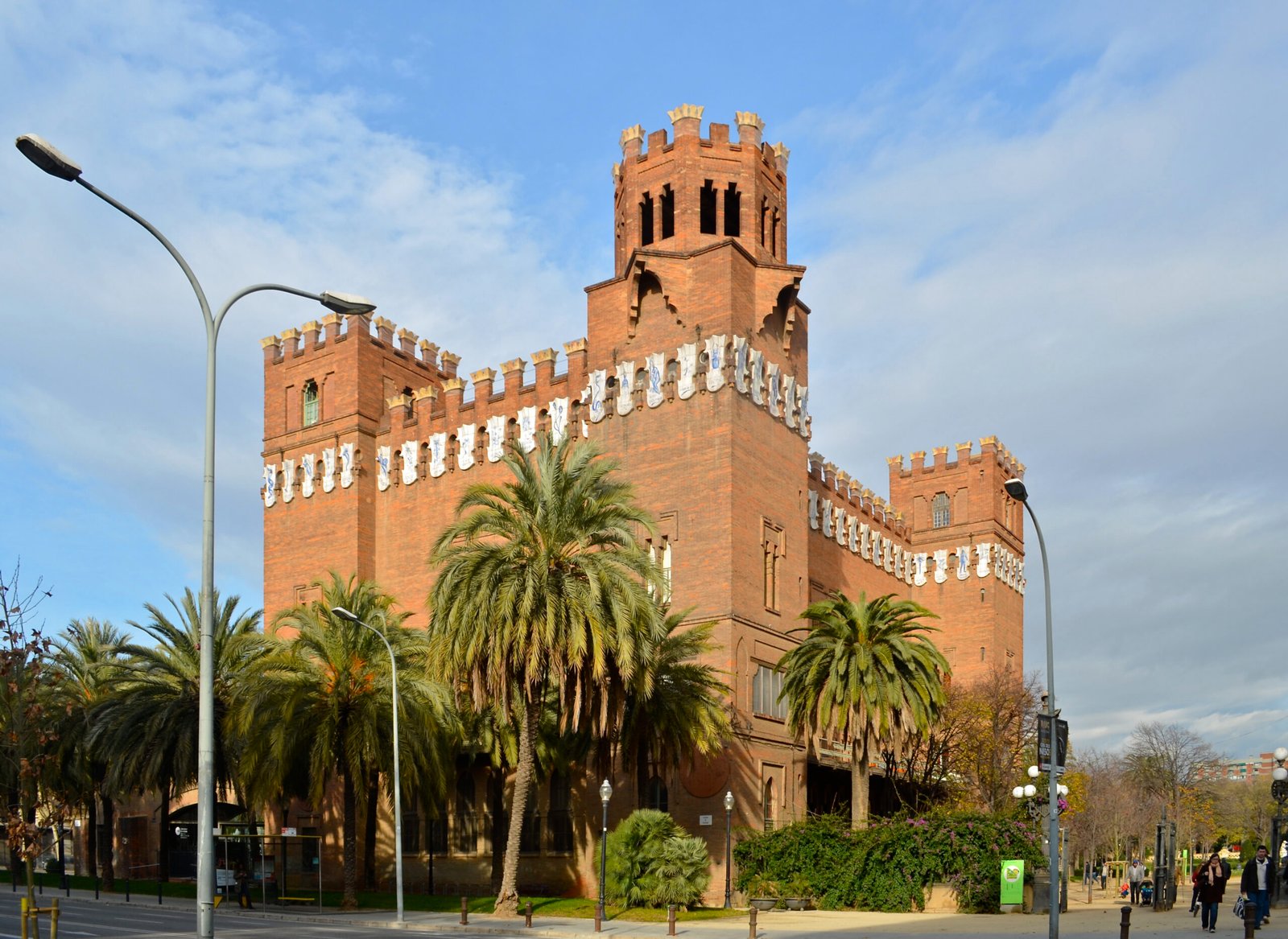
A modernisme masterpiece designed by Lluís Domènech i Montaner as a café-restaurant for Barcelona’s 1888 Universal Exposition, this iconic building takes its evocative name from an 1865 Catalan play.
At a glance
Built in 1887–1888, the Castle of the Three Dragons (Castell dels Tres Dragons in Catalan) served as a refreshment pavilion during Barcelona’s pivotal Universal Exposition. Its whimsical name derives from Serafí Pitarra’s 1865 theatrical work, lending romantic resonance to this modernist structure.
History
The building was commissioned specifically for the 1888 Universal Exposition, one of Barcelona’s most significant cultural events. Designed by Lluís Domènech i Montaner, a leading architect of the Catalan modernisme movement, it functioned as a café-restaurant for exposition visitors. The popular name was probably adopted from Pitarra’s earlier play, connecting the new architecture to Catalan literary tradition.
What you see
The structure exemplifies modernisme principles through its distinctive design. Domènech i Montaner’s approach blends ornamental detail with functional elegance, characteristic of Barcelona’s fin-de-siècle architectural language.
Cultural significance
The Castle stands as a testament to Barcelona’s confidence and cosmopolitan ambition during the 1888 Exposition. It represents the modernisme movement’s integration of art, architecture, and civic culture—a moment when Barcelona positioned itself as a modern European metropolis while honoring its Catalan identity through literary and artistic references.
Key facts
- Location: Sant Pere, Santa Caterina i la Ribera, Barcelona, Spain
- Coordinates: 41.3881°N, 2.1834°E
- Architect: Lluís Domènech i Montaner
- Completed: 1888
- Original purpose: Café-Restaurant for the Universal Exposition
Practical information & getting there
The Castle of the Three Dragons is located in the Sant Pere, Santa Caterina i la Ribera neighbourhood, accessible via Barcelona’s public transport network. Visitors should confirm current opening hours and any entry requirements before visiting.
Sources & resources
Find it on the map
See this place and what’s around it →📷 Become a Cultural Heritage Online photographer
Share your photos of places: they stay published under your name as the author. The more they're seen, the more you get noticed — and soon a contest will reward the most appreciated photos.
Log in or sign up free to add a photoIs this page about you?
This page is read by travellers and heritage enthusiasts who find it on Google. Tell us how you are connected to this place and we will take it from there.