
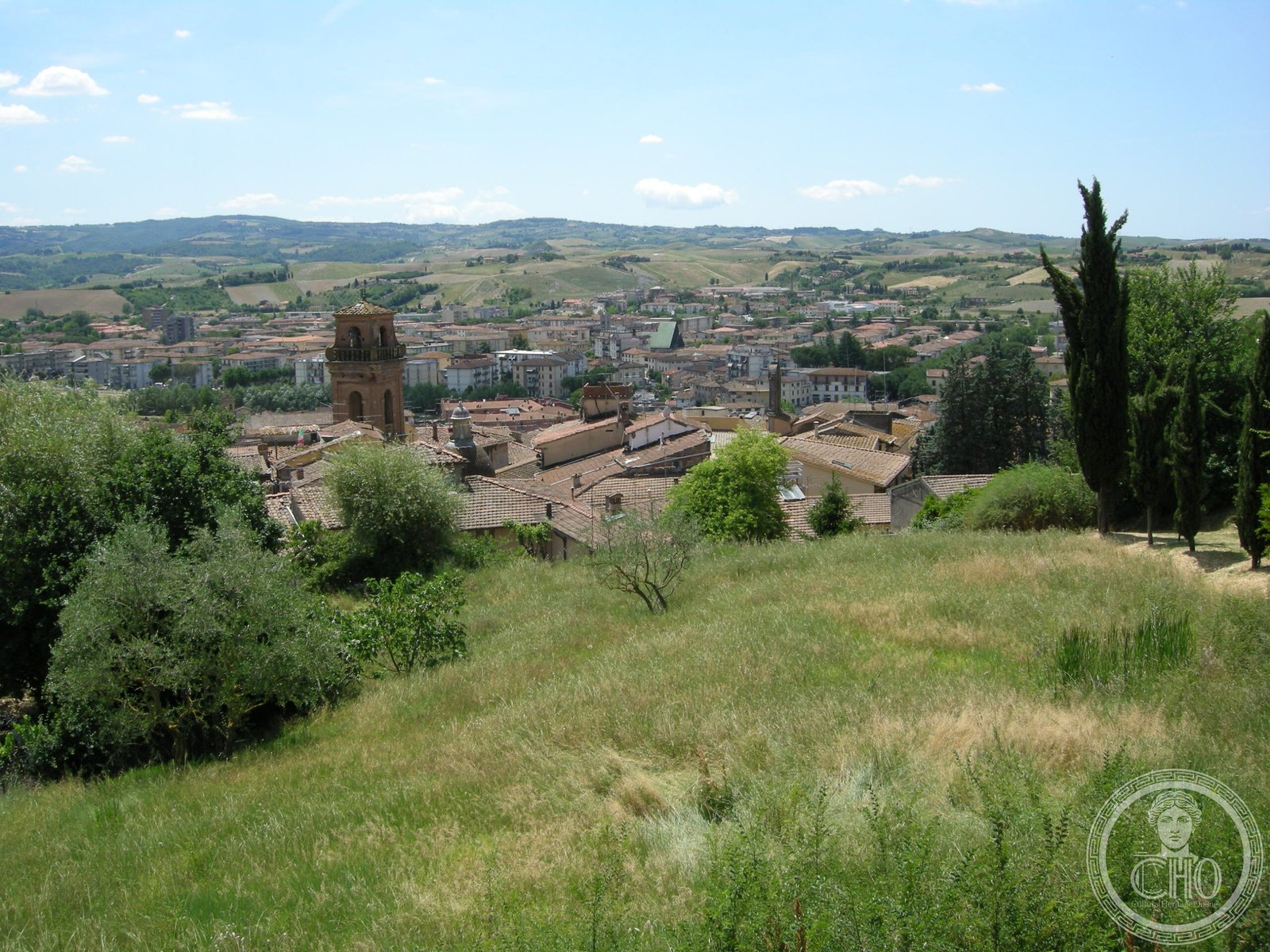
Castelfiorentino is a historic town and municipality of approximately 20,000 inhabitants in the Metropolitan City of Florence, Tuscany, situated in the Valdelsa valley between Florence, Pisa, and Siena. Occupying a strategic position on the ancient Via Francigena pilgrimage route, the town preserves a medieval core, several Romanesque churches, and a museum renowned for two detached fresco cycles by Benozzo Gozzoli (c. 1484–1490) depicting the Madonna della Tosse and the Madonna della Purità — among the finest late-Quattrocento fresco ensembles in Tuscany outside of Florence itself.
At a glance
- Type
- Historic town and comune
- Period
- Medieval origins; documented from 10th century; communal status from 13th century
- Style
- Medieval Romanesque; late-medieval civic architecture
- Location
- Castelfiorentino, Metropolitan City of Florence, Tuscany, Italy
- Part of
- Valdelsa; Via Francigena heritage corridor
- Key monument
- Museo Benozzo Gozzoli (detached fresco cycles, 1484–1490)
- Current use
- Active municipality; heritage and agritourism destination
Overview
Castelfiorentino is a city and comune in the Metropolitan City of Florence, Tuscany, central-northern Italy, located between Florence, Pisa (45 km), and Siena (55 km). The population numbers approximately 20,000 inhabitants and the comune forms part of the Valdelsa area, bordering Certaldo, Empoli, Gambassi Terme, Montaione, Montespertoli, and San Miniato. Its position along the medieval Via Francigena — the principal pilgrimage road from Canterbury to Rome — shaped the town’s development and left a legacy of roadside tabernacles, oratories, and hospice architecture that distinguishes the Valdelsa from other Tuscan valleys.
History
The settlement developed around a Carolingian-era castle guarding the Elsa river crossing; by the 13th century it had acquired communal institutions under Florentine influence. The town was formally subject to Florence from 1399, and its economy was shaped by wool-working, river mills, and trade along the Via Francigena. The Renaissance painter Benozzo Gozzoli, court artist to the Medici and author of the famous Journey of the Magi frescoes in the Palazzo Medici Riccardi, received commissions in the area in the 1480s and produced two fresco cycles — for roadside tabernacles — that were later detached and preserved in the town museum. The late 19th and early 20th centuries brought modest industrialisation, and today Castelfiorentino balances light manufacturing with a growing heritage tourism economy.
What you see
The historic centre retains its medieval street plan with the Palazzo Pretorio as its civic anchor; several Romanesque churches with stone facades line the old Via Francigena corridor through the valley. The most significant cultural draw is the Museo Benozzo Gozzoli, which houses the two detached fresco cycles by Gozzoli: the Madonna della Tosse (Virgin of the Cough, 1484) and the Madonna della Purità (1490–1491), both originally painted for open-air tabernacles for pilgrims and travellers. The cycles are notable for their delicate colour, naturalistic landscape backgrounds, and the blend of sacred iconography with genre detail that characterises Gozzoli’s mature style. The Valdelsa countryside surrounding the town offers classic Tuscan hill scenery of vineyards, olive groves, and medieval hamlets.
Cultural significance
Castelfiorentino’s Gozzoli frescoes represent a rare case of well-preserved late Quattrocento popular devotional painting outside major urban centres, offering insight into how Renaissance imagery filtered into small Tuscan communities along pilgrimage routes. The town is part of the Via Francigena UNESCO candidacy corridor, which is gradually being developed as a long-distance heritage trail from Canterbury to Rome, linking dozens of historic towns across northern and central Italy.
Practical information
The Museo Benozzo Gozzoli is open Tuesday to Sunday; admission is free or low-cost. The historic centre is walkable and compact. The town hosts a historic procession and fair in September linked to its patron saint. Check the official comune website (comune.castelfiorentino.fi.it) for current opening hours and local events. Accommodation options include agriturismo farms in the surrounding hills.
Getting there
Castelfiorentino is served by the Empoli–Siena railway line with regular trains from Florence Santa Maria Novella (change at Empoli, total journey approximately 50–60 minutes). By car, take the SGC FI-PI-LI motorway to the Empoli exit and then follow the SR429 south along the Valdelsa. The town is also well-connected by local bus to Empoli, Certaldo, and San Miniato. A bicycle route follows the Elsa riverside path through the valley.
Sources & resources
See the place
Find it on the map
See this place and what’s around it →Historical events at this place (1)
📷 Become a Cultural Heritage Online photographer
Share your photos of places: they stay published under your name as the author. The more they're seen, the more you get noticed — and soon a contest will reward the most appreciated photos.
Log in or sign up free to add a photo