
A Roman legionary fortress that became the capital of Pannonia Superior, Carnuntum once rivaled Vienna as a major Danube power—its archaeological remains sprawl across the Austrian landscape between two imperial cities.
At a glance
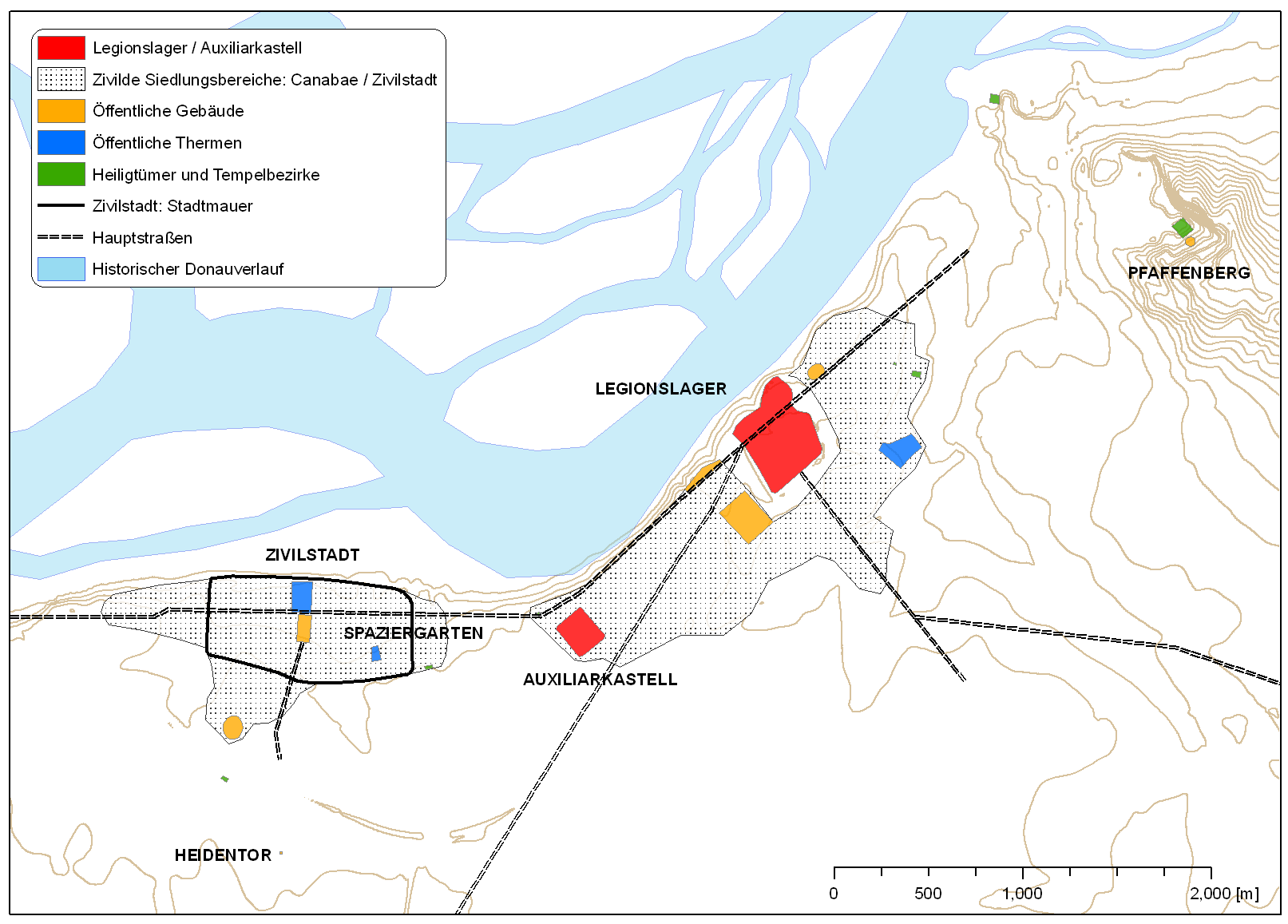
Carnuntum was established in 50 AD as a Roman military stronghold and fleet headquarters on the Danube. By the 1st century, it had evolved into the provincial capital of Pannonia Superior, growing to accommodate roughly 50,000 inhabitants. Today, its substantial ruins lie within the Carnuntum Archaeological Park, a 10-square-kilometre expanse straddling the modern villages of Petronell-Carnuntum and Bad Deutsch-Altenburg.
History
Founded as a legionary fortress in 50 AD, Carnuntum served as the headquarters of the Pannonian fleet, anchoring Roman control of the Danube frontier. After the 1st century, it assumed the administrative role of capital for Pannonia Superior province. The fortress evolved into a cosmopolitan urban centre, drawing merchants, soldiers, and administrators from across the Roman world. Its strategic location midway between Vienna and Bratislava made it indispensable to imperial defence and commerce along the great river.
What you see
The archaeological park preserves the extensive remains of the Roman settlement spread across 10 square kilometres. Visitors encounter the physical infrastructure of military and civilian life: fortress foundations, temples, administrative buildings, and domestic quarters. The scale of these ruins testifies to Carnuntum’s importance as a major urban centre in the Roman provinces.
Cultural significance
Carnuntum stands as one of Europe’s most significant Roman archaeological sites, illuminating life on the Danube frontier during the imperial period. The settlement’s remains document the complex integration of military strategy, civic administration, and daily life in a provincial capital. Its preservation offers rare insight into how Rome administered its northern territories and how local populations adapted to Roman rule.
Key facts
- Country: Austria
- Location: Lower Austria, between Vienna and Bratislava
- Established: 50 AD
- Role: Legionary fortress, fleet headquarters, provincial capital
- Population at peak: approximately 50,000
- Archaeological site: Carnuntum Archaeological Park (10 km²)
- Coordinates: 48.1133°N, 16.8614°E
Practical information & getting there
The Carnuntum Archaeological Park is accessible near the villages of Petronell-Carnuntum and Bad Deutsch-Altenburg in Lower Austria. The site lies on the Danube between Vienna and Bratislava, making it reachable by road or riverside transport. Contact local tourism offices for visiting hours, guided tours, and current excavation information.
Sources & resources
Find it on the map
See this place and what’s around it →
📷 Become a Cultural Heritage Online photographer
Share your photos of places: they stay published under your name as the author. The more they're seen, the more you get noticed — and soon a contest will reward the most appreciated photos.
Log in or sign up free to add a photo