
Byblos (Jbeil)

Byblos Jbeil Lebanon Phoenicia oldest continuously inhabited city papyrus alphabet Crusader castle UNESCO
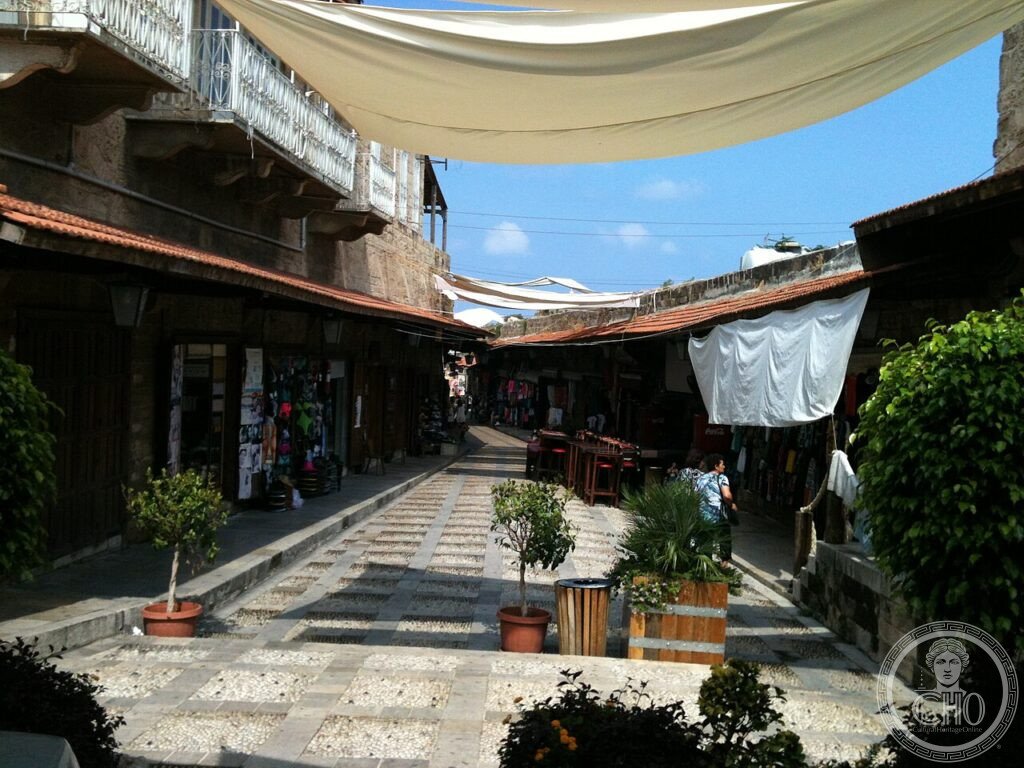
Byblos (ancient Gebal, modern Jbeil; the Crusader Castle of Byblos (1108 CE; the Counts of Tripoli; built from stone quarried from the Phoenician and Roman ruins of the city; the characteristic small Crusader keep visible within the larger fortified enclosure) at the edge of the ancient Phoenician port (one of the oldest continuously used harbors in the Mediterranean; used for papyrus timber and cedar export since at least 2700 BCE); the archaeological zone beyond: Bronze Age temples, Phoenician royal tombs, and a Roman colonnaded street visible within the same fenced site), Byblos (Jbeil), North Governorate, Lebanon. UNESCO World Heritage Site 1984. Photo via Wikimedia Commons.
North Governorate, Lebanon · Continuously inhabited since ca. 7000 BCE; Phoenician port city; papyrus trade named the Bible; Phoenician alphabet precursor; Crusader castle 1108 CE; UNESCO WHS 1984

Byblos (Jbeil)

The city that gave the Bible its name and the world its alphabet — Byblos (Jbeil in Arabic; UNESCO WHS 1984) has been continuously inhabited since approximately 7000 BCE, making it one of the oldest cities on Earth; as a Phoenician port it exported the Egyptian papyrus scrolls that Greeks called “biblos,” and it was here, or in the nearby Phoenician cities, that the first consonantal alphabet was developed, around 1050 BCE, from which all subsequent Western alphabets descend.

At a glance

Byblos (the most precisely Byblos single Jbeil Arabic ancient Gebal Gebal Byblos ancient name North Governorate Lebanon Mediterranean coast 37 km north Beirut 34m elevation coastal Mediterranean Neolithic settlement ca 7000 BCE one oldest continuously inhabited cities Earth Neolithic Bronze Age Iron Age Phoenician period 3000 BCE 539 BCE Persian period 332 BCE Alexander Great conquest Hellenistic Roman Byzantine Arab Crusader Mamluk Ottoman French Mandate Lebanese Republic modern 1943 CE continuous settlement 9000 years UNESCO WHS 1984 reference 295 archaeological zone Crusader Castle Phoenician temples royal tombs Roman colonnaded street all within single fenced site modern town Jbeil around archaeological zone Lebanese fishing village character touristic old port area UNESCO heritage in any UNESCO world heritage site).

Key facts

  • The Phoenician alphabet and the word “Bible” (how Byblos named the world’s most widely read book): the word “Bible” derives from “Byblos” through an indirect chain: (1) Byblos (the Greek rendering of the Phoenician city name Gebal) was the primary entrepôt through which Egyptian papyrus scrolls were shipped to the Greek world from ca. 1100 BCE; (2) Greeks used the word “byblos” (βύβλος) — derived from the city name — as a generic term for the papyrus plant, for papyrus sheets, and then for the scrolls made from them; (3) “biblos” (βίβλος) then came to mean “book” in general; (4) the plural “ta biblia” (τὰ βιβλία = “the books”) was used by early Christians to refer to their sacred scriptures; (5) Latin transliterated this as “biblia,” which became “Bible” in English; the Phoenician alphabet (of which the Byblos script, the Ahiram sarcophagus inscription ca. 1050 BCE, is among the earliest surviving examples) is the ancestor of the Greek alphabet (adapted ca. 800 BCE) and thus of all Latin-script and Cyrillic-script languages — a Phoenician merchant writing a trade transaction in Byblos ca. 1000 BCE was using a system whose direct descendants include English, French, Arabic, Hebrew, Russian, and Amharic
  • GPS: 34.1210° N, 35.6479° E

History

From Neolithic fishing village to Phoenician alphabet city to Crusader port to Lebanese heritage (the most precisely Byblos single ca 7000 BCE Neolithic first settlement Byblos coast archaelogical evidence pottery stone tools 3000 BCE Bronze Age early Phoenician period Gebal city-state cedar trade Egypt Pharaoh shipped cedar Lebanon timber Byblos for Egyptian boats temples coffins vital trade relationship 3000 BCE 2000 CE cedar Lebanon most famous timber antiquity Egyptian hieroglyphs Byblos specifically mentioned Egypt Abydos list 2800 BCE Egyptian Middle Kingdom period Byblos major Egyptian client city-state 2700 2000 BCE Egyptian papyrus scrolls traded through Byblos to eastern Mediterranean hence Greek term byblos papyrus hence bible word derived 1100 BCE Late Bronze Age Collapse Sea Peoples disrupted eastern Mediterranean trade Byblos declining but surviving 1050 BCE Ahiram sarcophagus inscription King Ahiram of Byblos longest early Phoenician alphabetic inscription known alphabetic script 22 consonants no vowels ca 800 BCE Greeks adapted Phoenician alphabet added vowels Greek alphabet derived all Western alphabets 539 BCE Cyrus the Great Persia took Lebanon Byblos 332 BCE Alexander Great took Lebanon Phoenicia Byblos Hellenistic period Greek overlay 64 BCE Roman Empire Pompey took Syria Lebanon Roman period Byblos Byblos impressive Roman colonnaded street amphitheater still visible 395 CE Byzantine period 636 CE Arab conquest Muslim caliphate period 1099 CE First Crusade 1108 CE Crusader capture Byblos County of Tripoli built Crusader castle from recycled Roman and Phoenician stones 1187 CE Saladin Crusader defeat reconquest but Byblos remained Crusader until 1289 CE 1516 CE Ottoman Empire took Lebanon 1918 CE French Mandate Syria Lebanon 1943 CE Lebanese independence 1984 CE UNESCO heritage: the cedar of Lebanon and the tree that built Egypt (why Byblos was the most strategically important city in the ancient Near East for 1000 years): the cedar of Lebanon (Cedrus libani) was the most prized building timber in the ancient Near East: Egyptian acacia (the local alternative) rots in water and is inadequate for large naval vessels and temple roofing beams; Lebanon cedar is durable, aromatic, resistant to insects and rot, and grows to enormous dimensions; the forests of the Lebanon Mountains (the “cedar forests” described in the Epic of Gilgamesh as the home of the monster Humbaba — the oldest known description of a Lebanese cedar forest, ca. 2100 BCE) covered the western slopes of the Lebanon range; Egypt, which had virtually no large timber of its own, was entirely dependent on Lebanon cedar for: (1) its naval fleet (the Egyptian fleet that defeated the Sea Peoples at the Battle of the Delta, ca. 1175 BCE, was cedar-built); (2) its temple roof beams (the solar barque shrine at Abydos; the Karnak hypostyle hall roofing; multiple pyramid complex buildings); (3) its royal coffins; Byblos controlled access to the most easily accessible port for cedar export from the Lebanon Mountains, making it Egypt’s most important foreign trade partner for 1,500 years — longer than any other diplomatic relationship in recorded Egyptian history) — the most precisely Byblos single ca 7000 BCE Neolithic 3000 BCE Bronze Age cedar trade Egypt 3000 2000 CE Egyptian Middle Kingdom major client city Ahiram sarcophagus 1050 BCE longest early Phoenician inscription 22 consonants no vowels Greek adapted 800 BCE added vowels all Western alphabets derived byblos = papyrus = biblos = ta biblia = Bible word chain 332 BCE Alexander 64 BCE Rome 1108 CE Crusader castle recycled Phoenician Roman stones 1289 CE last Crusader 1516 CE Ottoman 1943 CE independent 1984 CE UNESCO cedar Lebanon Gilgamesh 2100 BCE oldest cedar forest description Egyptian fleet Sea Peoples Battle Delta 1175 BCE cedar-built UNESCO heritage in any UNESCO world heritage site).

What you see

The archaeological zone, the Crusader Castle, the Phoenician temples, and the ancient harbour (the most precisely Byblos single archaeological zone fenced site entrance 4 USD admission includes all monuments Crusader Castle 1108 CE Counts Tripoli small keep central tower built recycled Phoenician and Roman stone blocks visible stratification quarried from older ruins Phoenician ashlar stone Roman column drums visible in castle walls interior museum small exhibits coins pottery Phoenician bronze swords Roman glass royal tombs access Phoenician royal tombs necropolis 9 shaft tombs cut into rock below the archaeological zone most famous Ahiram tomb Sarcophagus King Ahiram 1050 BCE now Beirut National Museum replica on site Ahiram sarcophagus carved relief lotus friezes seated king sphinx throne most elaborate Phoenician carved sarcophagus known L-shaped Temple dedicated Baalat Gebal Lady of Byblos 3000 2500 BCE oldest temple site earliest temple anywhere Lebanon excavated by French archaeologist Pierre Montet 1921 1924 CE reveals Egyptian influence in architectural details Temple of the Obelisks 1900 1600 BCE second major temple 30+ small votive limestone obelisks still in place many surrounding one central larger obelisk dedicated to local Phoenician deity notable votive landscape Roman colonnaded street 1st 2nd century CE granite columns fluted partial reconstruction 8 columns still standing along original street axis Roman wall visible east ancient harbour area enclosed by breakwater small fishing port boats modern still using partially ancient harbor basin Crusader tower guard at harbour entrance 12th CE UNESCO heritage: the Byblos harbour and the oldest continuously used port in the Mediterranean (what 5,000 years of the same harbour looks like): the harbour of Byblos (the current small enclosed port with its Crusader tower) has been in continuous use since at least 2700 BCE — the longest continuous operating port in the Mediterranean; the Egyptian Palermo Stone (ca. 2392 BCE; one of the oldest historical records in existence) documents 40 ships arriving from Byblos in a single Egyptian expedition to collect cedar; the harbour basin is not natural — it was engineered with a stone breakwater (Phoenician period, ca. 2000 BCE; partially still functioning) and has been maintained, rebuilt, and reused by every civilization that held Byblos: Phoenicians, Persians, Macedonians, Romans, Byzantines, Arab caliphates, Crusaders, Mamluks, Ottomans, and the modern Lebanese state; fishing boats still depart from the same harbour today) — the most precisely Byblos single Crusader Castle 1108 CE recycled Phoenician Roman stone stratification visible L-shaped Temple Baalat Gebal 3000 2500 BCE oldest Lebanon excavated Montet 1921 1924 Pierre Temple Obelisks 1900 1600 BCE 30+ limestone obelisks votive Ahiram tomb shaft tomb 1050 BCE sarcophagus Beirut National Museum Roman colonnaded 1st 2nd CE 8 columns still standing harbour 2700 BCE continuous use Palermo Stone 2392 BCE 40 ships documented oldest historical record port Mediterranean Phoenician breakwater 2000 BCE still functioning UNESCO heritage in any UNESCO world heritage site).

Practical information

  • Getting there: from Beirut: shared taxi (service taxi; from Charles Helou bus station in Beirut; 45 min–1h; LBP or USD 2–3 per person; ask for “Jbeil”); or private taxi from Beirut (45 min; USD 25–40 each way; worth hiring for a round trip with waiting time); bus from Cola bus station in Beirut (cheaper option; 1h; the bus drops you in Jbeil centre, 10-min walk to archaeological zone); archaeological zone (approximately USD 4 entrance fee; open daily 9 AM–6 PM; includes the castle museum, all temples, the royal tombs, and the Roman colonnaded street; allow 2h minimum for the full site); the old port area and fishing harbour (free; the old port restaurants are some of the best fish restaurants in Lebanon — the catch is brought in by the same small boats you see tied up in the ancient harbour); the old souk area (free; handicraft shops in restored Crusader-era buildings; the booksellers in the old souk sell facsimile reproductions of the Ahiram inscription); note on current conditions (2026): verify safety and access situation before visiting — Lebanon’s political and economic situation affects tourist infrastructure; check travel advisories

Getting there

From Beirut: service taxi 45 min (USD 2–3) or private taxi 45 min (USD 25–40). Archaeological zone approx. USD 4 (2h minimum). Old port fish restaurants essential. Old souk free. Check current Lebanon travel advisories before visiting. GPS: 34.1210, 35.6479.

Nearby

  • Baalbek — 85 km east (UNESCO WHS 1984; the largest Roman temple complex ever built; the Temple of Jupiter Baal (1st–3rd century CE; the temple podium: the largest stone-cutting achievement in human history — the Trilithon: three 800-tonne quarried limestone blocks used in the foundation course; the largest individual stone ever placed in a building; the temple columns: 20m tall, 2m diameter, 9 surviving of the original 54; visible from 20 km in clear conditions); the Temple of Bacchus (2nd century CE; the best-preserved Roman temple in the world outside Rome itself; larger than the Parthenon; the carved entablature intact on three sides))
  • Beirut — 37 km south (the rebuilt Lebanese capital after the 1975–1990 civil war; the reconstructed downtown (Solidere reconstruction project): a controversial rebuild of the Ottoman and French Mandate historic centre; the National Museum of Lebanon (the best archaeological museum in the Levant: the Ahiram sarcophagus in Gallery 1; Phoenician jewellery; Roman and Byzantine mosaics; the museum was on the Green Line during the civil war — exhibits left in place during shelling, some are still marked with bullet holes); the Corniche seaside promenade (the social heart of Beirut; the best people-watching in the Eastern Mediterranean))

Sources

  • Wikipedia, Byblos; Phoenician alphabet; Ahiram sarcophagus; Cedar of Lebanon; Bible (etymology), accessed June 2026
  • UNESCO, Byblos, WHS reference 295, inscribed 1984

Hero image: Byblos (Jbeil), Lebanon, Wikimedia Commons. Editorial text © Cultural Heritage Online, 2026.

📷 Diventa un fotografo di Cultural Heritage Online

Condividi le tue foto dei luoghi: restano pubblicate con la tua firma come autore. Più vengono viste, più ti fai conoscere — e presto un concorso premierà le foto più apprezzate.

Accedi o registrati gratis per aggiungere una foto
📋 Copy & share on social
Scroll to Top