
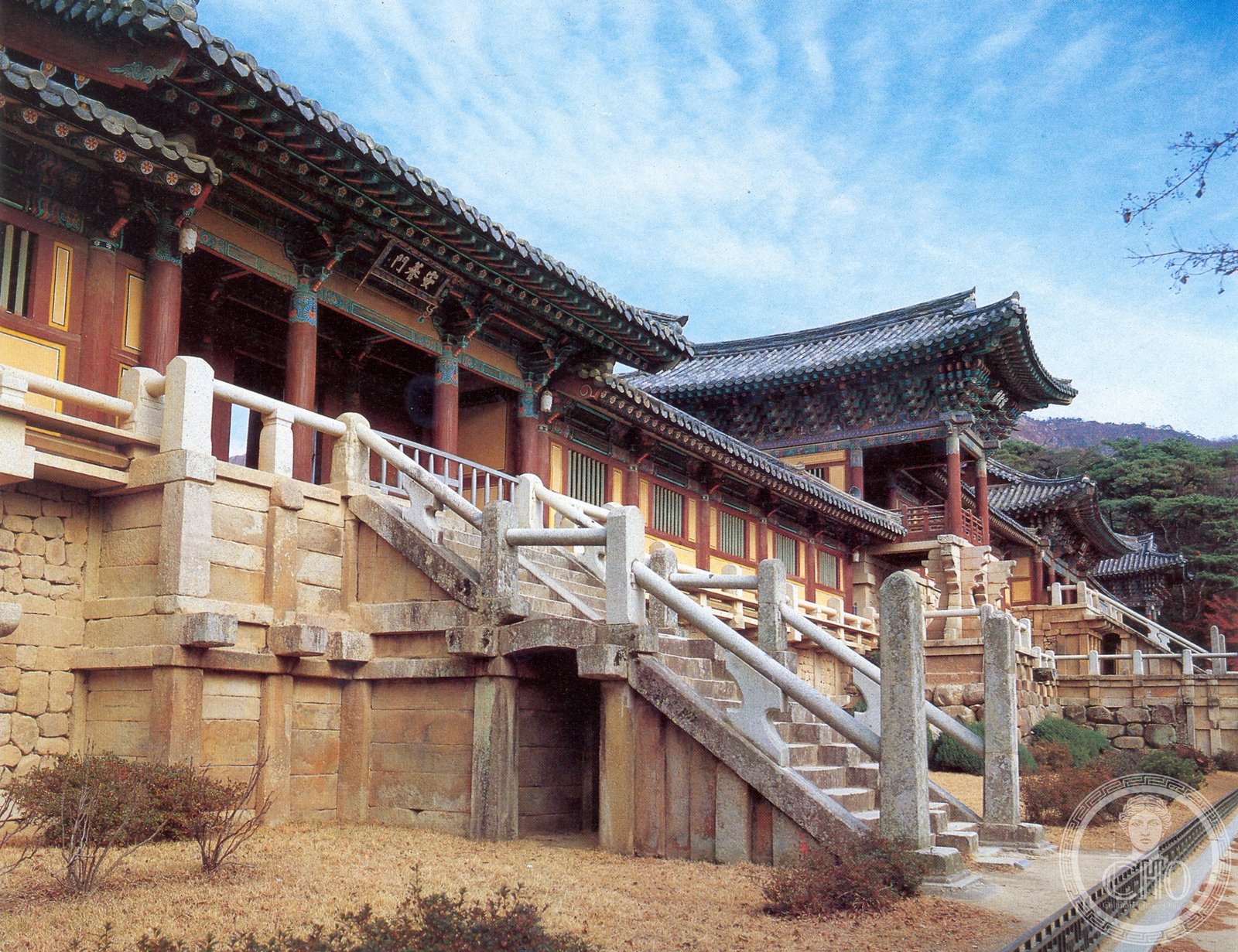
A masterpiece of Silla Buddhist architecture, this temple houses six National Treasures and contains one of the world’s earliest printed texts—a 704–751 Dharani sutra discovered in 1966.
At a glance
Bulguksa stands on Tohamsan mountain in Gyeongju, a UNESCO World Heritage site since 1995 (jointly with the nearby Seokguram Grotto). The temple serves as the head temple of the 11th district of the Jogye Order of Korean Buddhism and is classified as a Historic Site by the South Korean government.
History
Built during the golden age of Buddhist art in the Silla kingdom, Bulguksa emerged as a spiritual and artistic centre. In 1966, archaeologists discovered a woodblock-printed Dharani sutra dated between 704 and 751—among the earliest printed texts surviving anywhere in the world. The sutra was printed on mulberry paper in a narrow scroll measuring 8 cm by 630 cm.
What you see
The temple’s six National Treasures define its architectural and artistic importance. Two stone pagodas—the Dabotap and Seokgatap—rise as monuments to Silla craftsmanship. The Cheongun-gyo, known as the Blue Cloud Bridge, exemplifies the precision of the period’s stone work. Two gilt-bronze Buddha statues complete the ensemble, their surfaces burnished with gold leaf.
Cultural significance
Bulguksa represents the apex of Korean Buddhist temple design and decoration. Its treasures reflect centuries of devotion and artistic achievement. The discovery of the printed Dharani sutra challenged earlier assumptions about the origins of movable-type printing, placing Korea among the world’s earliest printing cultures.
Key facts
- Location: Jinhyeon-dong, Gyeongju, North Gyeongsang Province, South Korea
- Coordinates: 35.79°N, 129.33°E
- UNESCO World Heritage Site: 1995 (with Seokguram Grotto)
- Status: Historic Site; Head temple of the Jogye Order (11th district)
- Six National Treasures, including Dabotap, Seokgatap, Cheongun-gyo, and two gilt-bronze Buddhas
- Dharani sutra: woodblock print, 704–751, discovered 1966
Practical information & getting there
Bulguksa is located in Gyeongju, approximately 16 kilometres from the city centre. The site welcomes visitors and remains an active temple. Consult local tourism resources for current hours, admission fees, and access details.
Sources & resources
Find it on the map
See this place and what’s around it →📷 Become a Cultural Heritage Online photographer
Share your photos of places: they stay published under your name as the author. The more they're seen, the more you get noticed — and soon a contest will reward the most appreciated photos.
Log in or sign up free to add a photoIs this page about you?
This page is read by travellers and heritage enthusiasts who find it on Google. Tell us how you are connected to this place and we will take it from there.