
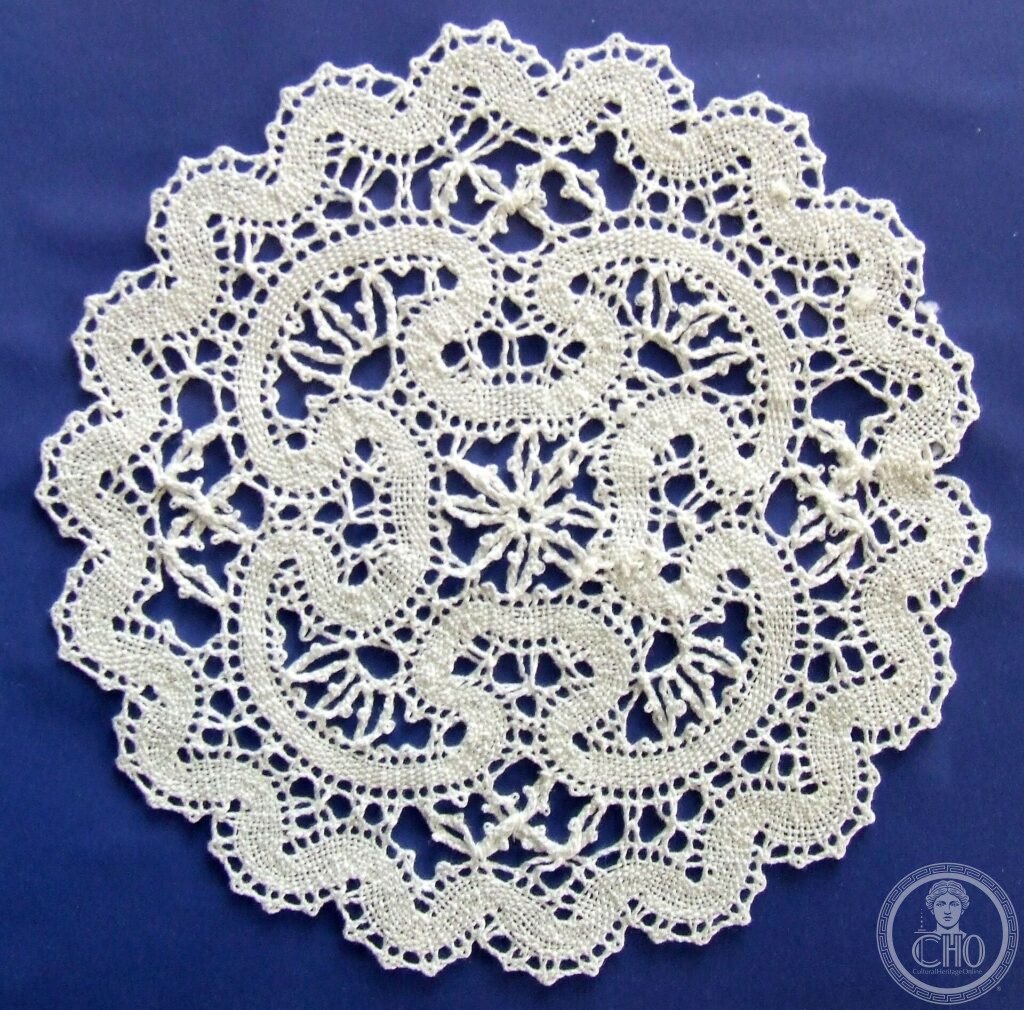
For centuries, the craftspeople of Idrija have created exquisite bobbin lace using techniques refined through generations, producing patterns named for hearts, peonies, and cradles.
At a glance
Idrija lace is a bobbin tape lace native to Slovenia, distinguished by a distinctive set of techniques and folkloric pattern names. The practice centers on the production of tape using six to eight pairs of bobbins, with two main types: broad tape developed during the Austro-Hungarian period, and narrow tape (Idrija tape), which emerged under Italian influence after World War I. The craft remains embedded in Slovenian cultural identity and continues to be taught in the renowned Idrija Lace School, established in 1876.
Origins & history
Bobbin lacemaking has been practiced in Idrija for centuries, making the town the main and oldest Slovenian lacemaking center. The tradition evolved and enriched over time, absorbing influences from neighboring cultures—particularly from the Austro-Hungarian Empire and, after World War I, from Italy. These external influences shaped the development of the two distinct tape types that define Idrija lace today. The practice was formally recognized with protected geographical indication status in 2000.
The practice
A lacemaker sits at work with bobbins—small spools of thread—typically six to eight pairs, which are manipulated by hand to create intricate patterns. The most distinctive element is the tape, formed through careful interlinking of threads. Broad tape, characteristic of the Austro-Hungarian era, contrasts with the finer narrow tape that became standard after World War I. Each pattern carries a folk name rooted in observation: srčkovke (hearts), potonke (peonies), and zibke (cradles) evoke the natural and domestic world. The lacemaker’s hands move in practiced rhythms, crossing and knotting threads to build density and texture across the work.
Cultural significance
Idrija lace plays an important part in Slovenian cultural heritage, representing centuries of continuity and craft knowledge passed from generation to generation. The practice embodies regional identity and historical connection to broader European trade and cultural exchange. Its protection as a geographical indication and inscription on UNESCO’s Representative List affirm its status as a living tradition worthy of transmission to future bearers.
Key facts
- Country: Slovenia
- Anchor community: Idrija
- Coordinates: 46.00219, 14.03124
- Idrija Lace School founded: 1876, continually operating
- Registered under protected geographical indication: August 10, 2000
- UNESCO Intangible Cultural Heritage inscription: 2018 (reference 01378)
- Primary technique: bobbin tape lace using six to eight pairs of bobbins
Where to experience it
Idrija remains the heartland of this practice. The Idrija Lace School, operating continuously since 1876, is the primary institution where the techniques and traditions are taught and preserved. Visitors to Idrija can encounter lacemakers at work and learn about the craft’s history and evolution.
Sources & resources
- Idrija lace — Wikipedia
- Bobbin lacemaking in Slovenia — UNESCO Intangible Cultural Heritage
- Cultural Heritage Online
Find it on the map
See this place and what’s around it →📷 Diventa un fotografo di Cultural Heritage Online
Condividi le tue foto dei luoghi: restano pubblicate con la tua firma come autore. Più vengono viste, più ti fai conoscere — e presto un concorso premierà le foto più apprezzate.
Accedi o registrati gratis per aggiungere una foto