

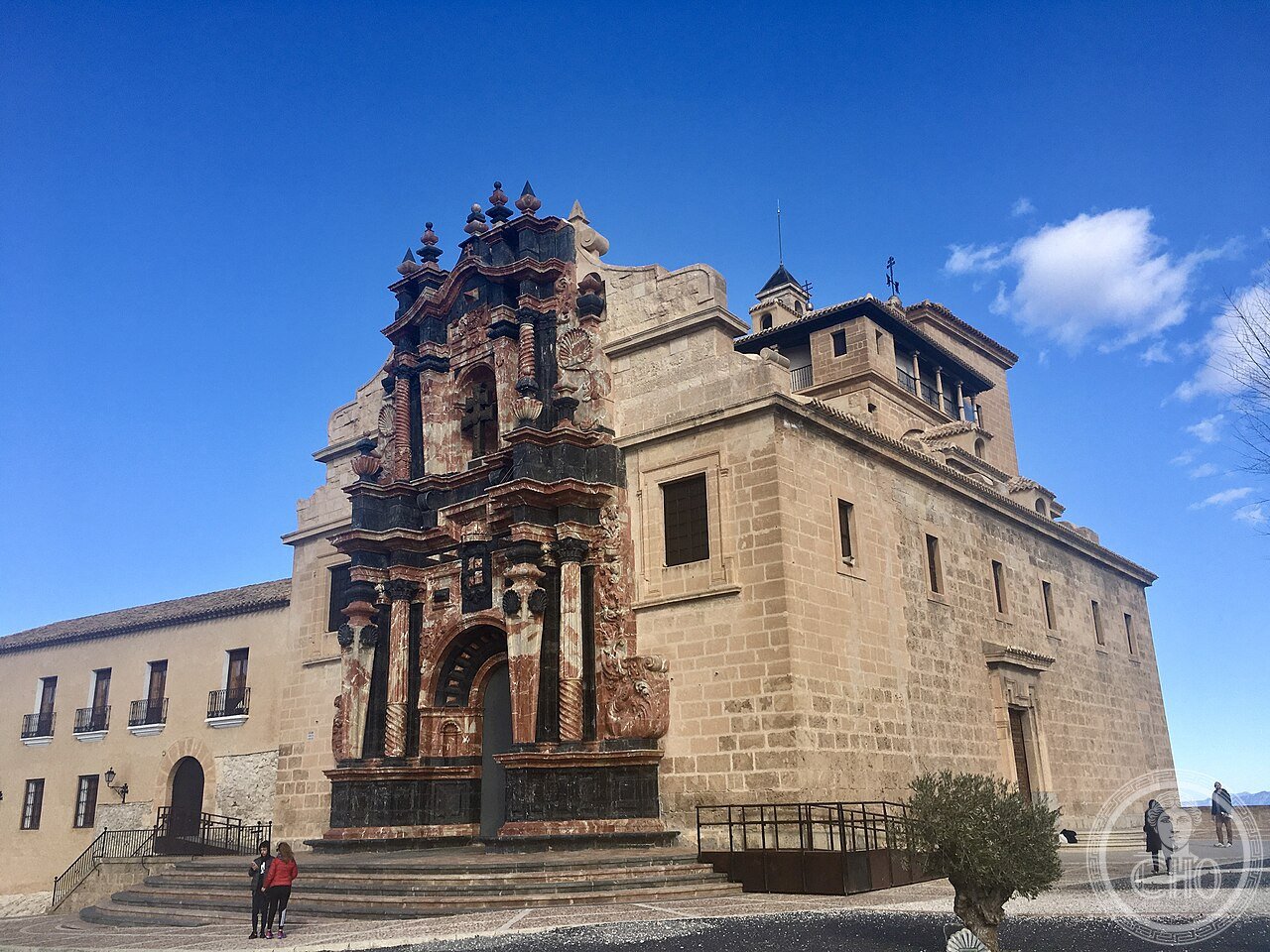
On 3 May 1231 (or 1232, according to some versions), Caravaca was still under Moorish rule. The governor of Valencia, Abu Zeit, ordered the captive priest Ginés Pérez de Chirinos to celebrate a Mass because he wanted to see the rite — but the priest realised he had no crucifix on the altar. According to the legend, at that moment the room filled with light and two angels came down from the sky carrying a double-armed cross containing a fragment of the True Cross of Christ. Since 1998, Caravaca de la Cruz has celebrated the Holy Year in perpetuity, one of only five places in the world with this privilege.
About the Basilica of Vera Cruz
According to the founding legend of Caravaca de la Cruz, on 3 May 1231 — or 1232, according to some versions of the account — the town and the wider region of Murcia remained under Moorish rule, and thousands of Christians were held prisoner by Abu Zeit, the Moorish ruler of Valencia. Among the Christian captives was a priest, Ginés Pérez de Chirinos, whom Abu Zeit ordered to celebrate Mass so that he might personally witness the Christian rite. During the ceremony, Pérez de Chirinos realised he was unable to complete the Mass because no crucifix was present on the altar. At that moment, according to the legend, the chamber was suddenly filled with brilliant light, and two angels appeared, bearing a distinctive two-armed cross — the Vera Cruz of Caravaca — said to contain a fragment of the Lignum Crucis, wood from the True Cross of Jesus Christ. This double-barred cross design, unusual within the wider Christian tradition of single-barred crucifixes, has since become one of the most recognisable and widely reproduced devotional symbols associated with any Spanish shrine, its two horizontal arms popularly interpreted as representing both earthly authority and heavenly power. The present Basilica-Sanctuary of the Vera Cruz, built atop the site of the medieval castle where the legendary apparition occurred, houses the relic today. In 1998, in recognition of the relic’s significance, Caravaca de la Cruz was granted the rare and enduring distinction of celebrating a perpetual Jubilee Year, becoming one of only five places in the world recognised by the Catholic Church with this privilege, alongside Rome, Jerusalem, Santiago de Compostela, and Santo Toribio de Liébana.
Key facts
- 3 May 1231/1232: the legendary apparition of the Vera Cruz to a prisoner priest
- The relic: a two-armed cross said to contain a fragment of the True Cross
- Design: a double-barred cross, unusual within wider Christian iconography
- Location: the basilica stands on the site of the former castle of Caravaca
- 1998: Caravaca de la Cruz granted perpetual Jubilee Year status
- Five holy places: Rome, Jerusalem, Santiago de Compostela, Santo Toribio de Liébana, and Caravaca
- Facade: 18th-century jasper marble, with sculpted “Red Dragons” flanking the entrance
History
The legend of the Vera Cruz’s angelic delivery during a Moorish captive’s celebration of Mass situates Caravaca’s founding narrative within the broader medieval Iberian tradition of miraculous relics appearing amid the religious tensions of the Reconquista, its specific detail of an involuntary Mass performed for a Muslim ruler giving the story an unusually direct interfaith staging compared to other Spanish relic legends. The cross’s distinctive two-armed design has since propagated far beyond Caravaca itself, becoming a recognisable devotional and even folk-magical symbol reproduced on pendants and amulets across the Spanish-speaking world, independent of most wearers’ awareness of its specific local origin story.
Caravaca’s 1998 elevation to perpetual Jubilee status, placing it alongside Rome, Jerusalem, and Santiago de Compostela, reflects the Catholic Church’s continued formal recognition of the site’s exceptional relic-based religious significance nearly eight centuries after the legendary apparition, an enduring institutional validation matched by only a handful of locations worldwide.
What you see
The basilica’s 18th-century facade, built in regional jasper marble over an earlier stone masonry structure, features a curved cornice topped by seven pinnacles, with two sculpted beasts flanking the lower entrance amid floral carved compositions, popularly known locally as the “Red Dragons” for the reddish colour of the marble used. The sanctuary occupies the site of the medieval castle associated with the legendary 1231 apparition, and houses the reliquary containing the two-armed Vera Cruz.
Practical information
- Opening hours: generally open daily with seasonal variation; check current hours before visiting; free admission
- Address: Cuesta del Castillo, 30400 Caravaca de la Cruz, Murcia, Spain
Getting there
The Basilica-Sanctuary of the Vera Cruz is located within the former castle grounds overlooking Caravaca de la Cruz, in the Region of Murcia, reachable by road. GPS: 38.1079° N, -1.8585° E.
Nearby
- Castle of Caravaca — the medieval fortress surrounding the basilica
- Caravaca de la Cruz old town — the historic town centre
- Camino de la Cruz — the pilgrimage route leading to the sanctuary
Sources
- Murcia Today — “The Vera Cruz, The True Cross Of Caravaca De La Cruz” (murciatoday.com)
- Región de Murcia Tourism — “The True and Holy Cross” (turismoregiondemurcia.es)
- Wikipedia — “Basilica of Vera Cruz” (en.wikipedia.org)
Find it on the map
See this place and what’s around it →📷 Become a Cultural Heritage Online photographer
Share your photos of places: they stay published under your name as the author. The more they're seen, the more you get noticed — and soon a contest will reward the most appreciated photos.
Log in or sign up free to add a photo