
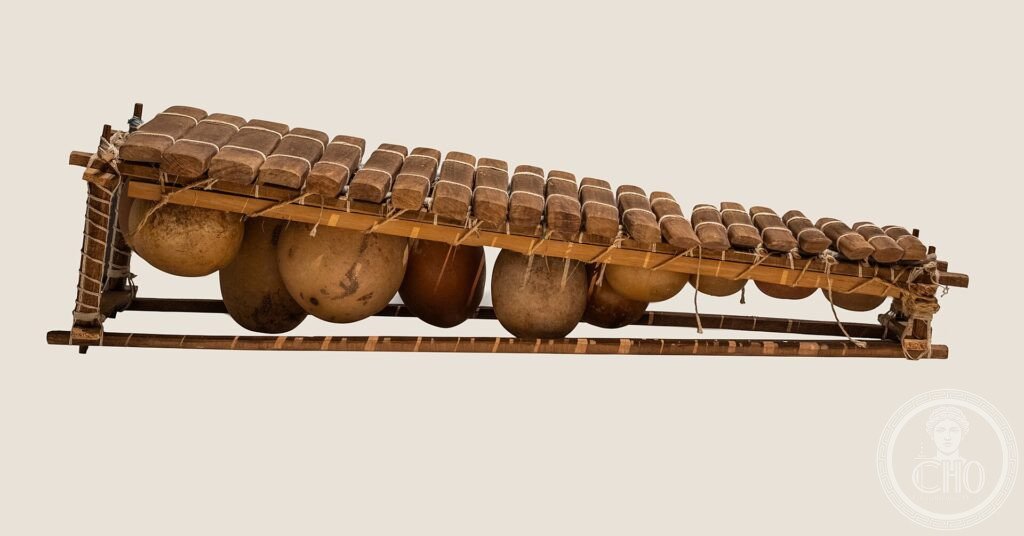
A gourd-resonated xylophone struck by hand, the balafon carries the voice of West African communities from Mali to Ivory Coast, speaking through wood and vibrating air.
At a glance
The balafon is a struck idiophone—a percussion instrument whose sound comes from the impact of mallets on wooden bars. Each bar sits above a gourd resonator that amplifies and colours the tone. Played across Mali, Burkina Faso, Ivory Coast and beyond, it remains closely linked to Mandinka and related Mandé, Bwaba Bobo, Senoufo and Gur peoples. The instrument’s very name reflects cultural exchange: balafon likely blends the Mandinka word bála with fóo (to say), or draws from the Greek root phono—suggesting how musical knowledge travels and transforms.
Origins & history
The balafon is particularly associated with the Guinean branch of the Mandinka ethnic group, though its use has spread across West Africa from Guinea eastward to Burkina Faso and Mali. Its deep roots in Mandé culture position it as a carrier of oral tradition and communal memory among peoples who have long valued the spoken word and its musical expression.
The practice
A musician sits before the balafon, holding two mallets with padded or wrapped heads. Each mallet strikes the wooden bars in sequence, producing clear, melodic tones. Below each bar hangs a hollowed gourd—the resonator—that vibrates in sympathy, deepening and enriching the sound. The player’s hands move with precision and grace, creating complex rhythmic and melodic patterns. The instrument speaks: it can accompany singing, mark out ceremonial time, or stand alone as a soloist’s voice. Sound travels through the resonators into the surrounding air, transforming intimate gesture into shared experience.
Cultural significance
For Mandinka and neighbouring communities, the balafon is far more than decoration or entertainment. It embodies ways of knowing, remembering and gathering. Through its voice, musicians transmit histories, teach values and hold communities together across generations. The practice links music, craft, ritual and identity into a living whole.
Key facts
- Type: Gourd-resonated xylophone (struck idiophone)
- Anchor community: Sikasso, Mali (11.31664, -5.66975)
- Primary cultures: Mandinka, Mandé, Bwaba Bobo, Senoufo and Gur peoples
- Geographic range: Mali, Burkina Faso, Ivory Coast, Indonesia
- UNESCO Intangible Cultural Heritage: 2022 (Reference 02131)
Where to experience it
Sikasso, in southern Mali, remains the heartland of balafon music and the anchor of this inscribed practice. The region’s communities continue to play and teach the balafon in domestic settings, ceremonies and gatherings. Visitors are encouraged to seek out local musicians and performances through community contacts and cultural organisations.
Sources & resources
- Balafon – Wikipedia
- Cultural practices and expressions linked to balafon and kolintang – UNESCO Intangible Cultural Heritage
- Cultural Heritage Online
Find it on the map
See this place and what’s around it →📷 Become a Cultural Heritage Online photographer
Share your photos of places: they stay published under your name as the author. The more they're seen, the more you get noticed — and soon a contest will reward the most appreciated photos.
Log in or sign up free to add a photo