
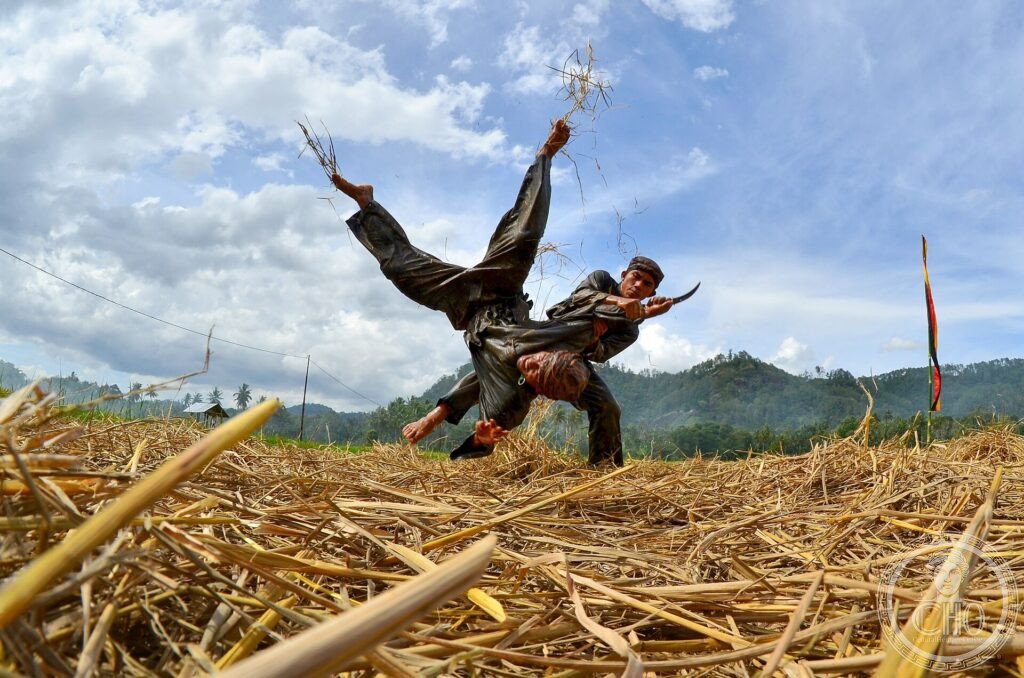
A full-body Indonesian martial art blending strikes, grappling, throws, and weaponry—practiced for physical defense and psychological development across hundreds of distinct regional styles.
At a glance
Pencak silat engages every part of the body as both weapon and target. Practitioners train in one of hundreds of styles (aliran) and schools (perguruan), each emphasizing strikes, joint manipulation, weaponry, or combinations thereof. The art serves physical combat and deeper psychological discipline.
Origins & history
Pencak silat emerged across the Indonesian archipelago as a martial tradition rooted in practical defense and spiritual cultivation. The practice spread to neighboring regions—Malaysia, Brunei, and Singapore—where it evolved into competitive forms. Professional silat now dominates neighboring countries’ terminology and competitions.
The practice
Silat training unfolds through dynamic footwork, fluid hand strikes, and decisive grappling. Practitioners flow between offensive and defensive stances, executing kicks, punches, elbow and knee strikes alongside joint locks and throws. Weapons—traditionally knives, staffs, and swords—extend the vocabulary of combat.
Movement emphasizes efficiency and economy. Speed and precision matter more than brute force. Training develops coordination, balance, and tactical awareness across the entire body.
Cultural significance
Pencak silat embodies Indonesian martial identity and regional pride. It reflects centuries of warrior culture and village self-defense traditions. Beyond combat, the practice cultivates mental discipline, courage, and respect—values woven into family and community life.
Today it anchors Southeast Asian sports and cultural exchange. The International Pencak Silat Federation, established in Jakarta in 1980, unites national organizations across Indonesia, Malaysia, Brunei, and Singapore. The sport appeared at the 1987 and 2018 Southeast Asian Games, cementing its place in regional athletic life.
Key facts
- Countries: Indonesia, Malaysia, Brunei, Singapore
- Anchor community: Jakarta, Indonesia (−6.17588, 106.82536)
- UNESCO recognition: 2019 (Reference 01391)
- International governing body: PERSILAT (established 11 March 1980)
- Hundreds of distinct styles and schools across the region
Where to experience it
Jakarta and throughout Indonesia remain the heartland of pencak silat training and culture. The Southeast Asian Games and Asian Games feature competitive silat, drawing elite practitioners and audiences. Local perguruan (martial schools) in Jakarta and other Indonesian cities welcome serious students into daily practice.
Sources & resources
- Pencak silat — Wikipedia
- Traditions of Pencak Silat — UNESCO Intangible Cultural Heritage
- Cultural Heritage Online
Find it on the map
See this place and what’s around it →📷 Become a Cultural Heritage Online photographer
Share your photos of places: they stay published under your name as the author. The more they're seen, the more you get noticed — and soon a contest will reward the most appreciated photos.
Log in or sign up free to add a photo