
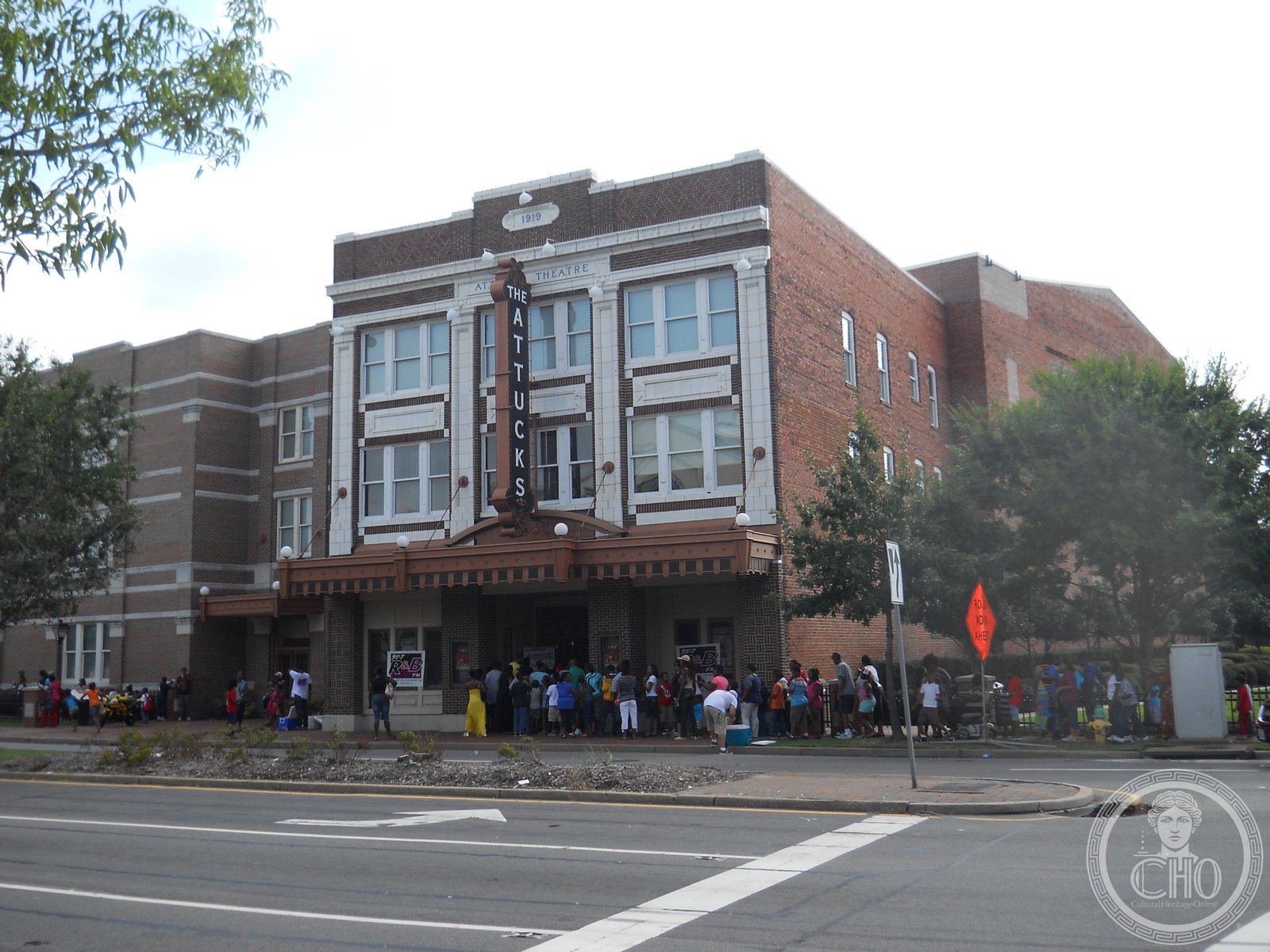
Opened in 1919 as the first professional theater in Virginia owned and operated by African Americans, the Attucks Theatre on Church Street in Norfolk became the cornerstone of the city’s Black entertainment district and a landmark of national cultural significance.
At a glance
The Attucks Theatre takes its name from Crispus Attucks, the African American patriot killed in the Boston Massacre of 1770. Built in 1919 during the Jim Crow era when segregation barred Black audiences from white-owned venues, the theater served as a vital cultural institution for Norfolk’s African American community, presenting the major touring Black performers of the era — musicians, comedians, dancers, and dramatic acts — who traveled the TOBA circuit from city to city. The building now operates as a restored performing arts venue and is listed on the National Register of Historic Places.
Key facts
- Address: 1010 Church Street, Norfolk, VA 23510
- Opened: 1919
- Named for: Crispus Attucks (c. 1723–1770), African American martyr of the Boston Massacre
- Significance: First professional theater in Virginia owned and operated by African Americans
- Listed: National Register of Historic Places
- Current use: Performing arts center, community events
History
Norfolk in 1919 was home to a substantial African American population, many of whom had been drawn to the city by employment opportunities at the naval base and the shipyards that had expanded during World War I. Despite their economic contribution to the city, Black residents were barred from white-owned theaters under Virginia’s racial segregation laws. The Attucks Theatre was built to fill this gap, providing a first-class professional venue that the African American community could call its own.
The theater became an anchor of the neighborhood known as East Church Street, which developed as Norfolk’s Black commercial and entertainment district in the 1920s and 1930s. Under the national network of theaters known as the Theater Owners Booking Association (TOBA) — sometimes called the “Tough on Black Artists” circuit by performers for its demanding conditions — the Attucks hosted artists who could not appear in white-only venues. The theater thus became a node in the national network of Black cultural life that stretched from New York’s Harlem to the cities of the South.
The decline of the Jim Crow system paradoxically threatened the theater’s mission: integration meant that Black performers could now appear in mainstream venues, and the Attucks lost its distinctive status as the only option. The building passed through years of varied use before preservation and restoration efforts restored it to its historic function as a performing arts venue. Its listing on the National Register of Historic Places recognized its significance to both Virginia history and the broader history of African American cultural institutions.
What you see
The Attucks Theatre presents a substantial brick commercial facade on Church Street, its entrance defined by arched openings and decorative brickwork in the tradition of early twentieth-century commercial architecture. The building’s scale and solidity communicated civic ambition: this was not a makeshift venue but a purpose-built theater designed to serve its community with dignity and permanence.
The auditorium interior reflects the practical priorities of a working theater: tiered seating, a performing stage with fly space, and a balcony that maximized capacity. Restoration has preserved or recreated key features while updating the technical facilities. The building stands as an artifact of a community’s determination to build institutions that reflected its cultural ambitions under conditions of systematic exclusion.
Practical information
- Access: Church Street in the St. Paul’s neighborhood of Norfolk
- Hours: Vary by programming; check the venue for current schedule
- Best for: African American history, performing arts, cultural heritage tourism
- Context: The theater is best understood in the context of Norfolk’s broader African American history and the TOBA circuit; local historic societies offer context tours
Getting there
Norfolk is served by Norfolk International Airport (ORF) and is the primary city of the Hampton Roads metropolitan area. The Attucks Theatre is located on Church Street in the St. Paul’s quadrant northwest of downtown Norfolk. Interstate 264 connects downtown Norfolk to Virginia Beach and the Hampton Roads Bridge-Tunnel to the Virginia Peninsula. Amtrak does not serve Norfolk directly; the nearest station is in Newport News, with bus connections across the harbor.
Nearby
- Chrysler Museum of Art — major art museum on the Elizabeth River waterfront, with significant collections of American and European art including glass
- MacArthur Memorial — museum and mausoleum honoring General Douglas MacArthur in downtown Norfolk’s City Hall Avenue
- Nauticus Maritime Museum — naval and maritime museum on the waterfront, with the USS Wisconsin (BB-64) battleship open for tours
- Hampton Roads Naval Museum — documents the naval history of the Hampton Roads region from the colonial era to the present
Sources
- National Register of Historic Places — Attucks Theatre, Norfolk, Virginia
- Virginia Department of Historic Resources — African American heritage sites
Find it on the map
See this place and what’s around it →Record researched and written by Luigi De Marchi for Cultural Heritage Online, 2026.
📷 Become a Cultural Heritage Online photographer
Share your photos of places: they stay published under your name as the author. The more they're seen, the more you get noticed — and soon a contest will reward the most appreciated photos.
Log in or sign up free to add a photoIs this page about you?
This page is read by travellers and heritage enthusiasts who find it on Google. Tell us how you are connected to this place and we will take it from there.