

Sacred shrines of the Asante forest kingdom
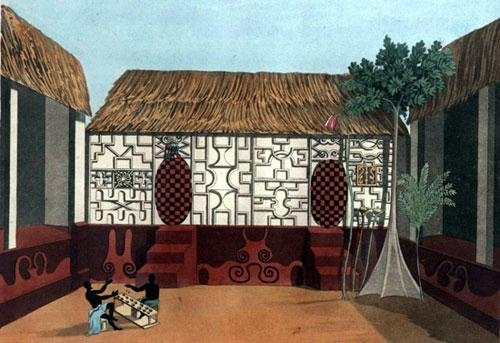
Scattered across the forests of Ghana’s Ashanti Region, the Asante Traditional Buildings are the last surviving examples of pre-colonial religious architecture built by the Akan people. These shrine houses — elaborately decorated in polychrome geometric patterns on walls of earth and wood — embody the spiritual and artistic vision of one of West Africa’s most powerful kingdoms.
UNESCO inscription: the first West African cultural site
Inscribed in 1980, the Asante Traditional Buildings were among the earliest African cultural sites added to the World Heritage List. UNESCO recognised their outstanding universal value as irreplaceable witnesses to a building tradition that has largely disappeared elsewhere — the Akan sacred architecture of the 17th–19th centuries.
Architecture of earth, palm fronds, and ochre
The buildings are constructed using a technique called swish: wet earth mixed with plant fibres, applied in layers to create walls that are then polished to a smooth surface. External walls are decorated with bas-relief geometric patterns in white, ochre, red, and black — each motif drawn from Akan cosmology and proverbs, encoding meaning visible only to the initiated.
A spiritual geography: twelve shrines across the forest
The inscribed site comprises twelve traditional shrines, each associated with a specific Asante clan and natural deity (obosom). Among the most celebrated are the Patakro shrine, the Besease shrine (the best preserved), and the shrines at Essumeja and Asokore. Each is embedded in a sacred grove where the forest itself is part of the ritual landscape.
The Asante Kingdom: gold, power, and the Golden Stool
Founded around 1670, the Asante Confederacy grew into a regional empire controlling the gold and kola trade routes across the West African forest belt. Its spiritual centre was Kumasi, and the Sika Dwa (Golden Stool) — said to have descended from heaven — symbolised the soul of the nation. The shrines were built to maintain the spiritual alliances that sustained Asante power.
Conservation challenges: humidity, termites, and abandonment
The buildings face severe threats from the forest’s tropical humidity, termite attacks, and the gradual abandonment of the traditional swish building skills. UNESCO and the Ghana Museums and Monuments Board have led restoration projects, but the survival of these structures depends on maintaining the living communities of traditional practitioners who know how to repair them.
Visiting the Asante sites
The shrines are located between 30 and 100 kilometres from Kumasi, accessible by road with a local guide. The Besease shrine near Ejisu is the most visited and best documented. All visits require respectful dress and prior arrangement with the local custodians; entering without permission is considered a spiritual offence. Photography of the interior is generally prohibited.
A West African artistic tradition that nearly vanished
Across the Akan world — from Ghana to Côte d’Ivoire — hundreds of similar shrines once stood. Colonial disruption, missionary pressure, and the replacement of earth buildings with concrete structures have reduced the tradition to these twelve protected examples. They are not ruins: most remain active places of worship, anchoring a living spiritual geography in the Asante homeland.
Find it on the map
See this place and what’s around it →📷 Become a Cultural Heritage Online photographer
Share your photos of places: they stay published under your name as the author. The more they're seen, the more you get noticed — and soon a contest will reward the most appreciated photos.
Log in or sign up free to add a photo