
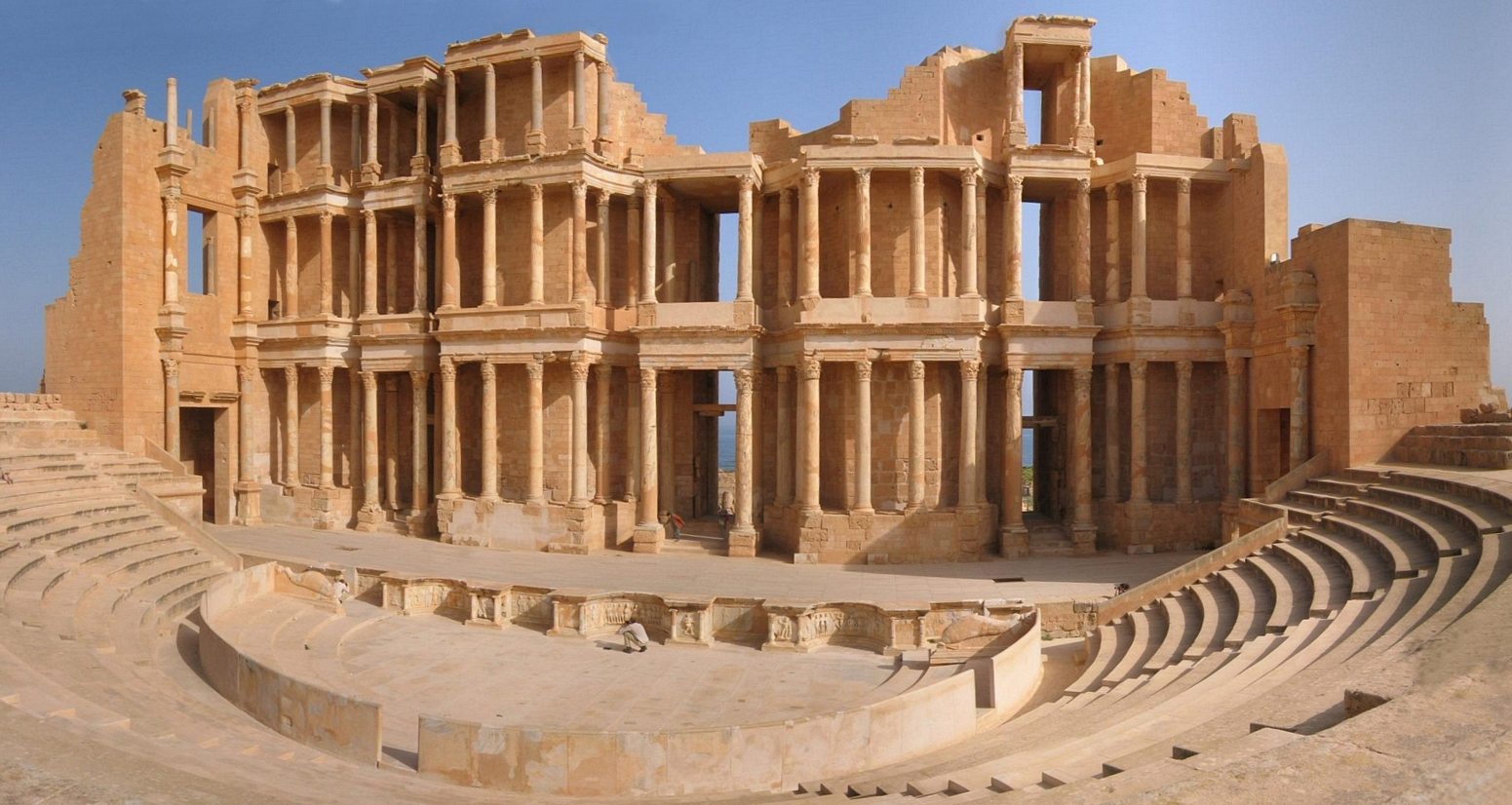
An excavated city that reveals three civilizations: Phoenician traders, Numidian rulers, and Roman builders who transformed it into a prosperous port during the 2nd and 3rd centuries.
At a glance
Sabratha stands on Libya’s Mediterranean coast as a layered testament to ancient commerce and empire. The site preserves evidence of Phoenician, Numidian, and Roman occupation across successive centuries.
History
Phoenician merchants first established Sabratha as a trading post, strategically positioned to channel African resources to Mediterranean markets. The city later became part of the Numidian Kingdom under Massinissa before Roman conquest and expansion. During the 2nd and 3rd centuries A.D., the Romans rebuilt and Romanized the city, developing it into a major urban center.
What you see
Excavations have revealed the layered remains of three distinct urban periods. Roman-era structures dominate the visible archaeological record, reflecting the city’s most prosperous phase when monumental architecture flourished on the site.
Cultural significance
Sabratha illustrates the interconnected trade networks that linked Africa, the Mediterranean, and the Roman Empire. The site documents how a Phoenician outpost was absorbed into successive political systems, each leaving architectural and material marks on the landscape.
Key facts
- Country: Libya
- Coordinates: 32.80°N, 12.50°E
- UNESCO World Heritage Site: Yes
- Occupations: Phoenician, Numidian, Roman (2nd–3rd centuries A.D.)
Practical information & getting there
Sabratha lies near the modern town of Sabratha, approximately 70 km west of Tripoli on the Libyan coast. Visit the UNESCO World Heritage Site listing and local archaeological reports for current access information and site conditions.
Sources & resources
Find it on the map
See this place and what’s around it →📷 Become a Cultural Heritage Online photographer
Share your photos of places: they stay published under your name as the author. The more they're seen, the more you get noticed — and soon a contest will reward the most appreciated photos.
Log in or sign up free to add a photo