

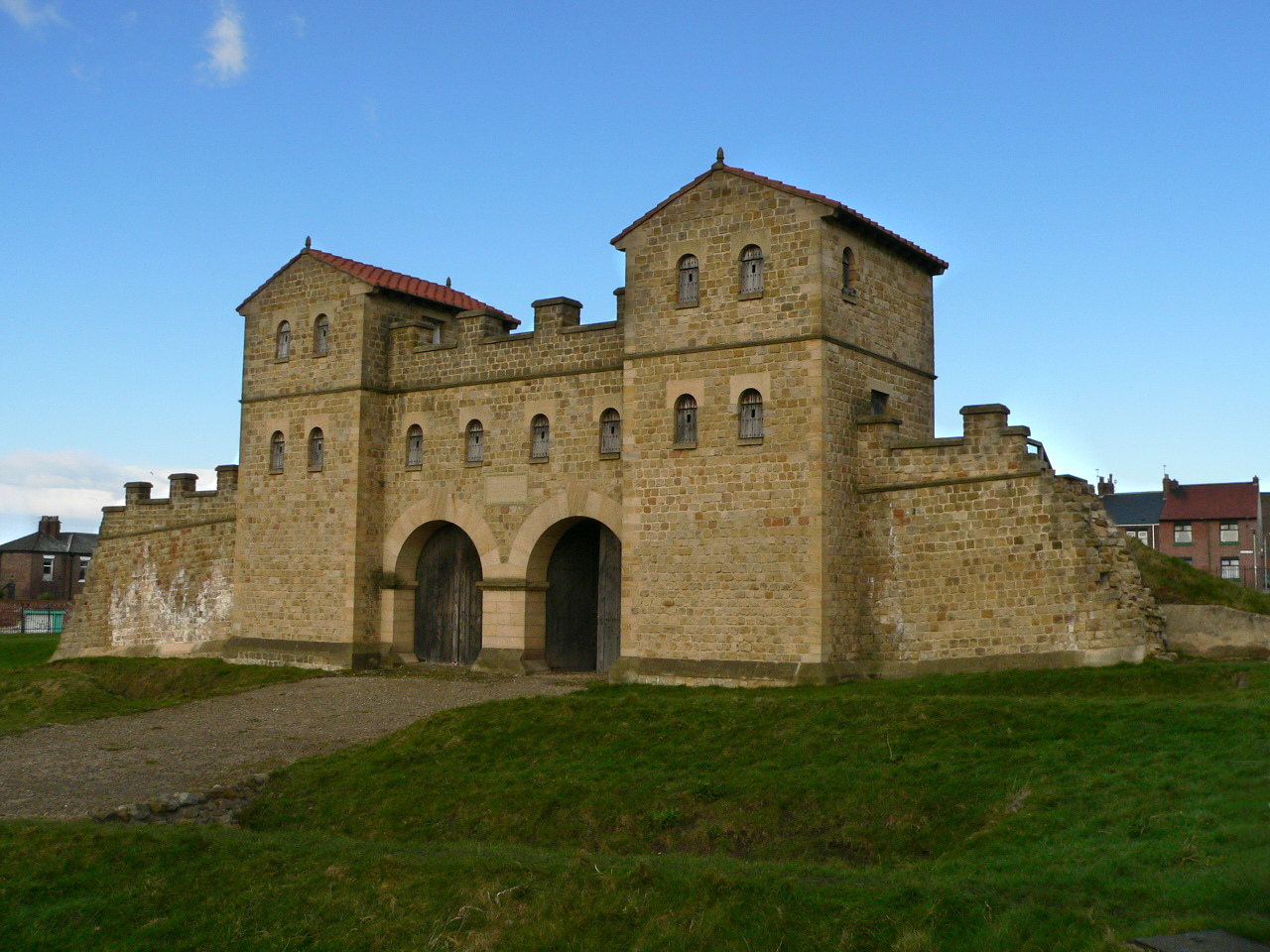
A substantial Roman fort whose excavated remains and reconstructed structures reveal the strategic importance of this garrison on Britain’s northeastern coast.
At a glance
Arbeia stands as one of England’s significant Roman military installations. The site comprises both original archaeological remains and modern reconstructions, offering visitors insight into Roman frontier life and engineering.
History
The fort was first systematically excavated in the 1870s, revealing its substantial scale and importance. By the 1970s, all modern buildings occupying the site were cleared to expose the archaeological layers beneath. Today, Arbeia is managed as a museum and heritage site by North East Museums, making the Roman fort’s story accessible to contemporary audiences.
What you see
Visitors encounter both authentic Roman remains and carefully constructed reconstructions designed to illustrate how the fort functioned. The partially rebuilt structures help convey the fort’s original layout and scale, while excavated foundations and artifacts ground the experience in genuine archaeological evidence.
Cultural significance
Arbeia represents Roman military strategy in Britain during the imperial period. As a large fort positioned on the coast, it illustrates how Rome maintained control over distant territories and secured supply routes across the North Sea.
Key facts
- Location: South Shields, Tyne & Wear, United Kingdom
- Coordinates: 55.004, -1.43
- Status: Managed by North East Museums as Arbeia, South Shields Roman Fort
- First excavated: 1870s
- Site cleared: 1970s
Practical information & getting there
The site is open to the public as a managed heritage attraction. Arbeia is located in South Shields on the Tyne & Wear coast. For current visiting hours, admission charges, and detailed directions, consult the museum’s official website or contact North East Museums directly.
Sources & resources
Find it on the map
See this place and what’s around it →📷 Become a Cultural Heritage Online photographer
Share your photos of places: they stay published under your name as the author. The more they're seen, the more you get noticed — and soon a contest will reward the most appreciated photos.
Log in or sign up free to add a photo