
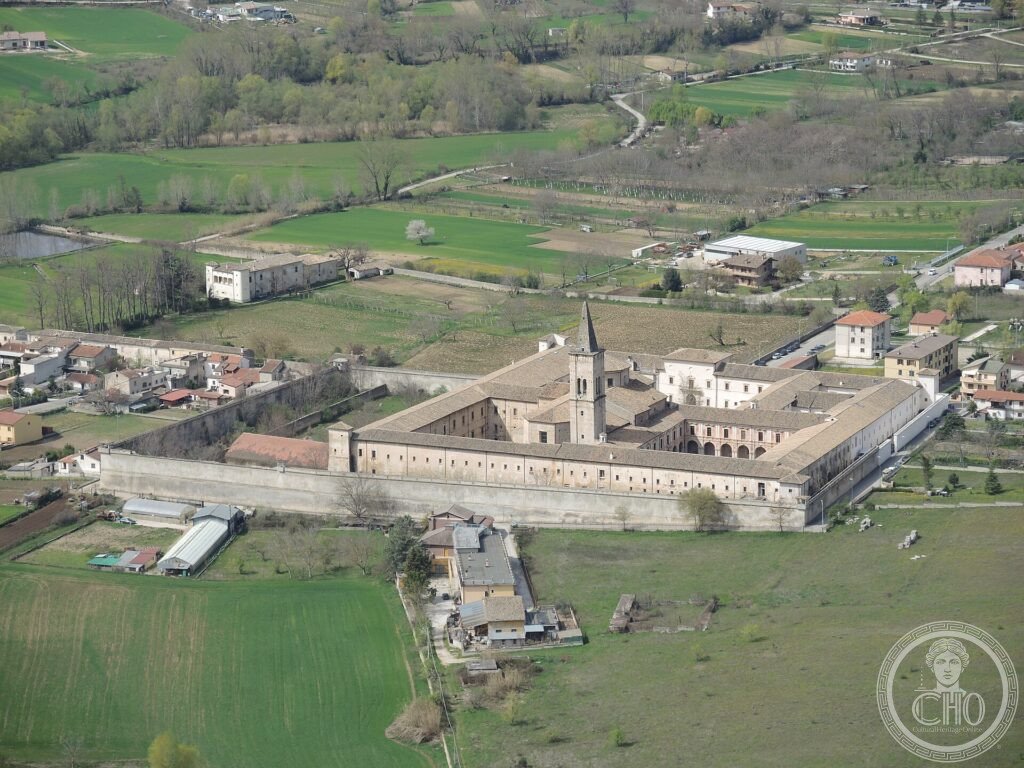
Pietro Angelerio was living as a hermit on Monte Morrone when he was elected pope under the name of Celestine V in 1294 — the pope whom Dante’s Inferno would call “he who made, through cowardice, the great refusal”. His abbey of Santo Spirito al Morrone, founded in 1263, is where he formed the Celestine order and lived the central part of his religious life.
At a glance
The Abbey of Santo Spirito al Morrone stands at the foot of Monte Morrone, immediately south of Sulmona in the province of L'Aquila, Abruzzo. It was founded in 1263 by Pietro Angelerio (c. 1215–1296), a Benedictine hermit who had spent years in the caves of Monte Morrone and Monte Maiella before acquiring this site to build a more formal monastic community. The abbey became the mother-house of the Celestines (Ordo Sancti Benedicti de Coelestinis), the monastic congregation that Pietro founded and that Urban IV formally recognised in 1263. The order was named after the founder himself when he was elected pope in 1294, taking the name Celestine V — an election he famously renounced five months later, becoming the first pope to abdicate (an act that Dante, a contemporary, placed in Hell as “the great refusal”). Pietro was canonized by Clement V in 1313 as St Peter Celestine. The abbey church, rebuilt in the 14th century and modified in the Baroque period, contains a famous Gothic portal, important fresco cycles, and a throne (cathedra) said to have been used by Celestine V himself.
Key facts
- Founded: 1263 by Pietro Angelerio (later Pope Celestine V); mother-house of the Celestine Order (Ordo Sancti Benedicti de Coelestinis).
- Celestine V: Pietro Angelerio was elected pope in 1294; took the name Celestine V; abdicated after 5 months; died 1296; canonized 1313. Dante placed him in Hell (Inf. III, 60) as “colui che fece per viltade il gran rifiuto”
- Gothic portal: 14th-century Gothic portal of the church, with fine sculptural decoration; one of the most important Gothic portals in Abruzzo.
- Frescoes: cycles in the church dating from the 14th–15th century; subjects: Life of St Benedict, Life of Celestine V, Christ in Majesty.
- Throne (Cathedra): the marble chair said to have been used by Celestine V; kept in the church.
- Today: managed by the Italian state (MiC); open as a museum and monument; free entry.
History
Pietro Angelerio was born around 1215 in Molise and entered monastic life as a Benedictine, but found the formal monastery too worldly for his ascetic temperament: he retreated first to a cave on Monte Morrone and later to an even more remote cave on Monte Maiella, living as a hermit for years and attracting disciples. The foundation of the abbey at Sulmona in 1263 was his attempt to give a formal institutional structure to the community of hermit-monks that had gathered around him. The new congregation, recognized by Urban IV in 1263, combined Benedictine monasticism with a severe ascetic discipline: members fasted on bread and water for more than half the year and were required to spend long periods in individual cells or remote hermitages.
The election of Pietro as pope in 1294, by a cardinals' conclave that had been deadlocked for two years, brought him out of his mountain hermitage at 79 years of age. Celestine V's five-month pontificate was disastrous by conventional standards: he issued privileges to his Celestine monks (who took advantage freely), could not control the curia, and was manipulated by Charles II of Naples. His abdication in December 1294 was unprecedented; his successor Boniface VIII immediately imprisoned him at the Castel Fumone, where he died in 1296. Dante's condemnation of him in Inferno III (c. 1308) has coloured his reputation ever since, though Petrarch defended him and the church canonized him in 1313.
What you see
The abbey complex, approached from Sulmona through a short street of ex-monastic buildings, is entered through a gatehouse into a forecourt. The church facade features the famous Gothic portal: a richly carved archivolted doorway with floral and figurative decoration, dated to the late 14th century. The interior is a single nave in Abruzzese Gothic style, with pointed arches and a flat timber ceiling; the frescoes on the nave walls, depicting the Life of St Benedict and the Life of Celestine V, retain their 14th-century palette (the ultramarine blues and ochres characteristic of the Abruzzo school). The cathedra — a carved marble throne — is in the apse. The cloister, entered from the south side of the nave, has round arches on simple columns; the chapter house opens off the east walk.
Practical information
- Opening hours: daily 08:30–19:30 (summer); 08:30–17:00 (winter); check MiC website for seasonal variations.
- Admission: free.
- Time needed: 45 minutes to 1 hour.
Getting there
By car or bus from Sulmona (1 km south): the abbey is at the base of Monte Morrone, immediately south of the city. By train to Sulmona (Rome–Pescara line), then 10-minute walk or taxi. GPS: 42.0486° N, 13.9271° E.
Nearby
- Sulmona — 1 km north; medieval city, birthplace of Ovid, famous for confetti (sugar-coated almonds); Celestine V piazza with equestrian statue; aquaduct-fountain.
- Eremo di Celestino V — 12 km up Monte Morrone (accessible by chairlift); the hermitage cave where Pietro Angelerio lived before being elected pope.
- Parco Nazionale della Maiella — the national park surrounding Monte Maiella; excellent hiking; wolf and Marsican brown bear habitat.
Sources
- Wikipedia — “Badia Morronese” (it.wikipedia.org/wiki/Badia_Morronese).
- Dante Alighieri, Inferno III, 60 (primary source for the “gran rifiuto” identification).
- MiC — Abbazia di Santo Spirito al Morrone official page.
Find it on the map
See this place and what’s around it →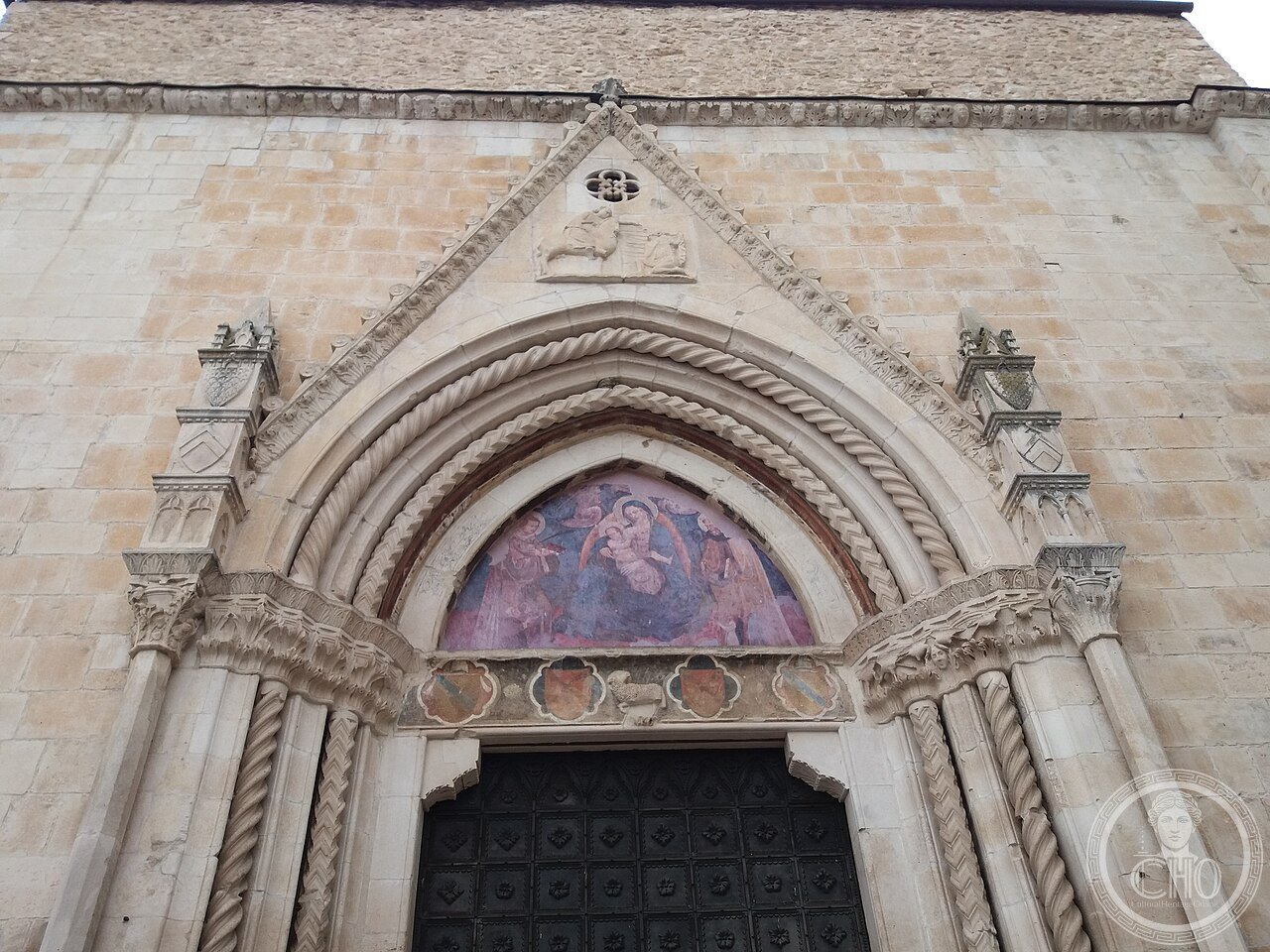
📷 Become a Cultural Heritage Online photographer
Share your photos of places: they stay published under your name as the author. The more they're seen, the more you get noticed — and soon a contest will reward the most appreciated photos.
Log in or sign up free to add a photoIs this page about you?
This page is read by travellers and heritage enthusiasts who find it on Google. Tell us how you are connected to this place and we will take it from there.