
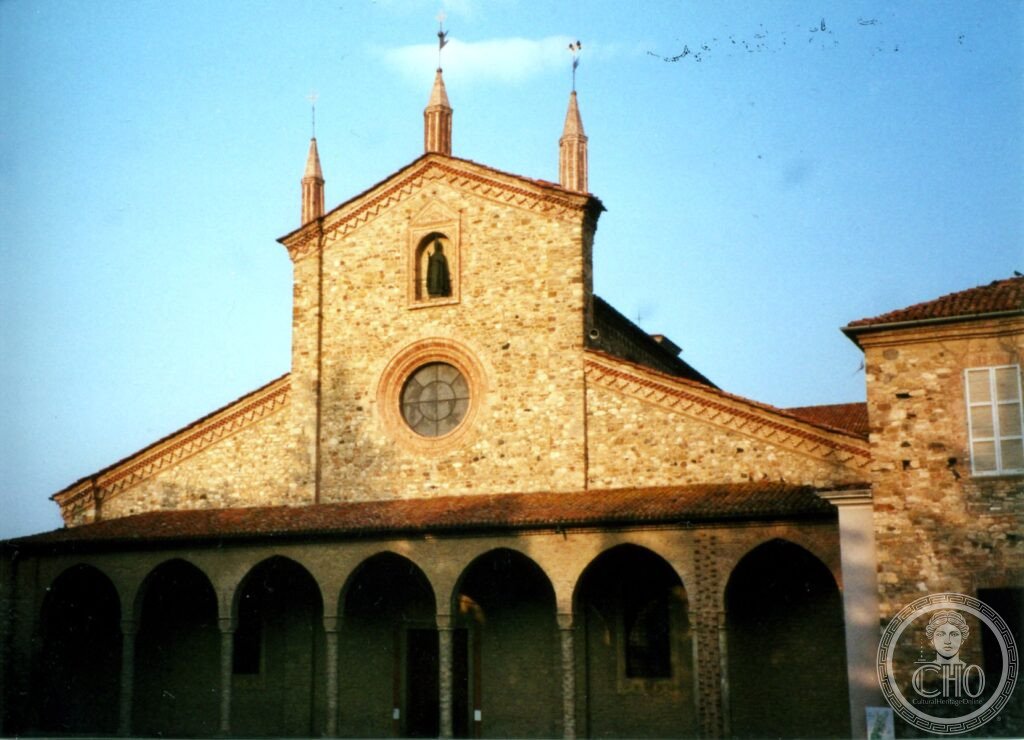
An Irish monk who had walked here from Ireland founded in 614 the monastery that would become the largest library of early medieval Italy: the scriptorium of Bobbio copied and preserved Virgil, Cicero and the Fathers of the Church while the rest of Europe was forgetting how to read Latin.
At a glance
The Abbey of San Colombano at Bobbio stands in the Trebbia valley, in the Apennines south-west of Piacenza, where the Irish monk Columban (Columbanus, c. 543–615) chose to establish his final monastery in 614, one year before his death. Columban was the most influential Irish missionary in continental Europe: he had already founded monasteries at Annegray (590), Luxeuil (590), and Bregenz (610) when, expelled by the Frankish queen Brunhild, he crossed the Alps into Lombardy and received this valley from the Lombard king Agilulf. The monastery he founded here became the largest scriptorium in early medieval Italy: by the 10th century its library held over 650 volumes, including unique or near-unique copies of classical Latin texts. The collection was dispersed after the Napoleonic suppression; the manuscripts are now divided between the Vatican Library, the Biblioteca Ambrosiana in Milan, the Biblioteca Nazionale in Turin, and other institutions. The current basilica is a 17th-century rebuilding of the medieval church, but the crypt preserves early medieval elements including the tomb of Columban himself.
Key facts
- Founded: 614 by the Irish monk Columban (Columbanus); one of the most important Hiberno-Latin monasteries in continental Europe; Columban died here in 615 and is buried in the crypt
- Library / scriptorium: by the 10th century, over 650 manuscripts — among the largest libraries in medieval Europe; included unique copies of Virgil, Cicero, Livy, and patristic texts; now dispersed between Vatican, Ambrosiana, Turin, and other libraries
- Bobbio Missal: the 8th-century Missale Bobiense (Paris, BnF lat. 13246), one of the oldest surviving liturgical manuscripts in the Ambrosian-Gallican tradition, was produced here
- Crypt: early medieval; the tomb of St Columban (d. 615) with 9th-century stone sarcophagus; one of the most important early medieval pilgrimage shrines in northern Italy
- Rule: Columban introduced the severe Hiberno-Latin Rule (Regula Monachorum) which competed with the Rule of St Benedict in the 7th–8th century; Bobbio switched to the Benedictine Rule c. 643
- Today: basilica of San Colombano (17th c.) open daily; Museo dell'Abbazia di Bobbio for manuscript facsimiles and early medieval artefacts; Ponte Gobbo (Roman bridge) next to the abbey
History
Columban arrived in northern Italy in 612 after his expulsion from Frankish territory. The Lombard king Agilulf and his queen Theodolinda (the same queen who had accepted the Nicene faith from Gregory the Great) granted him the ruined church of San Pietro in Bobbio in the Trebbia valley. Columban immediately began building a monastery and scriptorium, and attracted monks from Ireland and from his earlier foundations in Burgundy. He died in November 615, only a year after the foundation, and was buried in the crypt he had prepared. Within a generation of his death the monastery was one of the most celebrated in western Europe: it received gifts of land from Lombard kings, Frankish Carolingian emperors, and popes; its abbots were frequently bishops or archbishops; and its library grew to become the largest in Italy.
The scriptorium of Bobbio in the 8th–10th centuries copied not only biblical, patristic, and liturgical texts (the normal output of monastic scriptoria) but also classical Latin authors: Virgil, Cicero, Livy, Ovid, Lucan, and many others. This classical component was exceptional: most early medieval scriptoria ignored pagan authors. The Bobbio manuscripts are thus crucial for the transmission of classical Latin to the Renaissance, and several key texts (including Cicero's Pro Cluentio and fragments of Livy) are known only from Bobbio copies. The library was dispersed between 1600 and 1803; many manuscripts went to the Vatican Library in 1618 under Paul V.
What you see
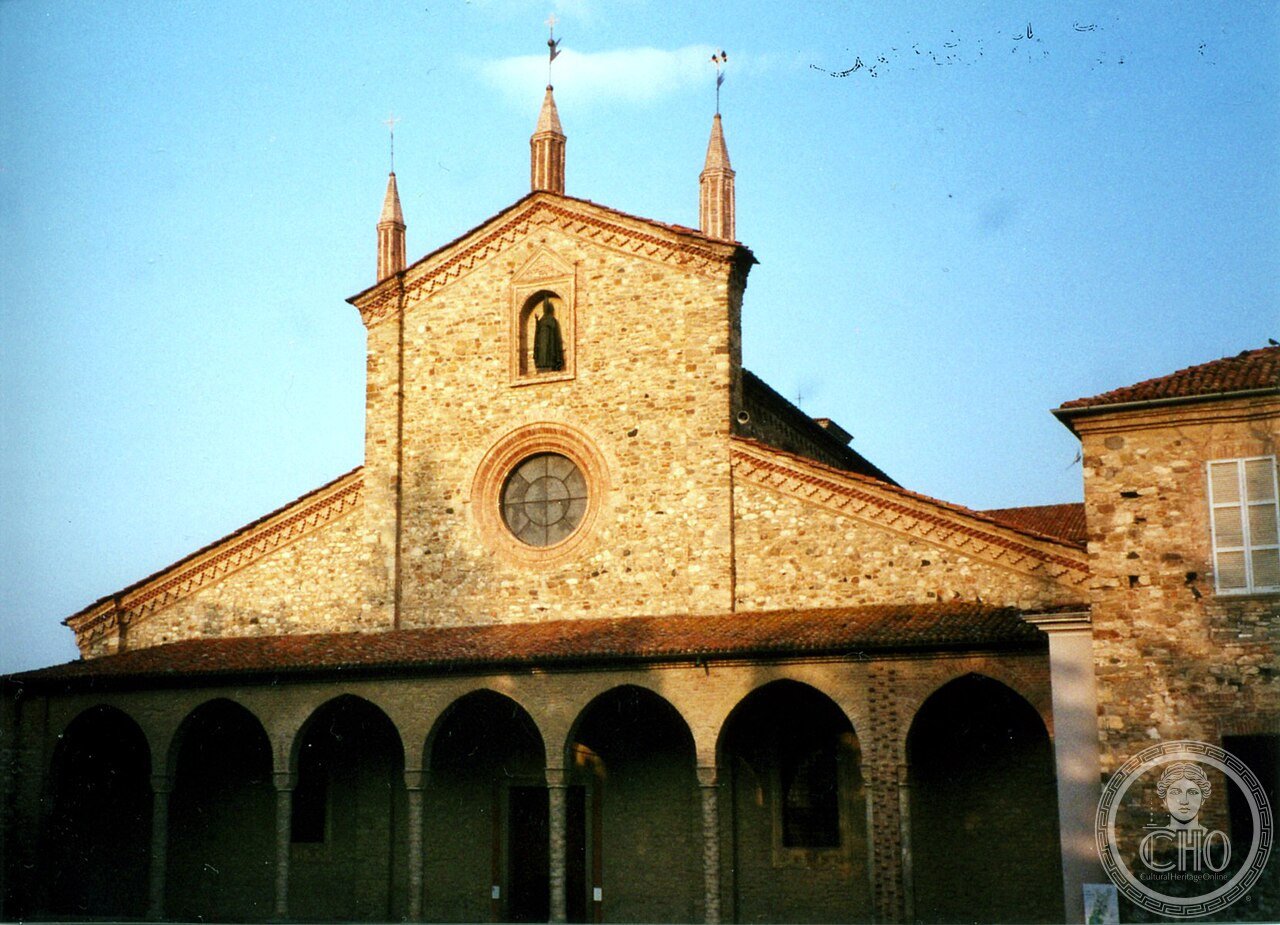
The current basilica of San Colombano is a 17th-century rebuilding of the medieval church, with a Baroque facade facing a small piazza next to the Ponte Gobbo (the Roman bridge, one of the most photographed in Emilia-Romagna). The interior is three aisles, with a raised presbytery above the crypt. The crypt is the essential stop: a low, vaulted space lit by candles, with the early medieval sarcophagus of Columban in the centre — carved with Celtic interlace patterns that make it unique among Lombard-period funerary monuments in Italy. The Museo dell'Abbazia, housed in the adjoining rooms, displays facsimiles of key Bobbio manuscripts, early medieval artifacts (including liturgical objects), and explanatory material on the monastery's cultural importance.
Practical information
- Opening hours: basilica: daily 07:00–12:00 and 15:00–19:00; museum: Tue–Sun 10:00–12:30 and 14:30–18:00
- Admission: basilica free; museum: charged
- Time needed: 45 minutes (basilica + crypt); 1.5 hours with museum
Getting there
By car from Piacenza (65 km south): SP45 up the Trebbia valley to Bobbio; scenic but winding. By car from Genoa (90 km north): A7 to Busalla, then SP165 over the Apennines. No rail connection; limited bus service from Piacenza. GPS: 44.7662° N, 9.3856° E.
Nearby
- Ponte Gobbo — 50 m from the abbey; the medieval bridge over the Trebbia, one of the most photographed sites in the province; 11 arches of varying height
- Trebbia valley — the river valley below Bobbio is among the most beautiful in Emilia-Romagna; clear water, swimming spots, Ligurian flora
- Piacenza — 65 km north; Romanesque cathedral; equestrian statues by Mochi; Palazzo Farnese
Sources
- Wikipedia — “Bobbio Abbey” (en.wikipedia.org/wiki/Bobbio_Abbey)
- Lowe, E.A., Codices Latini Antiquiores vol. III, Oxford 1938 (canonical census of Bobbio manuscripts)
- Berschin, W., Greek Letters and the Latin Middle Ages, Washington DC 1988 (Columban and the Irish tradition)
Find it on the map
See this place and what’s around it →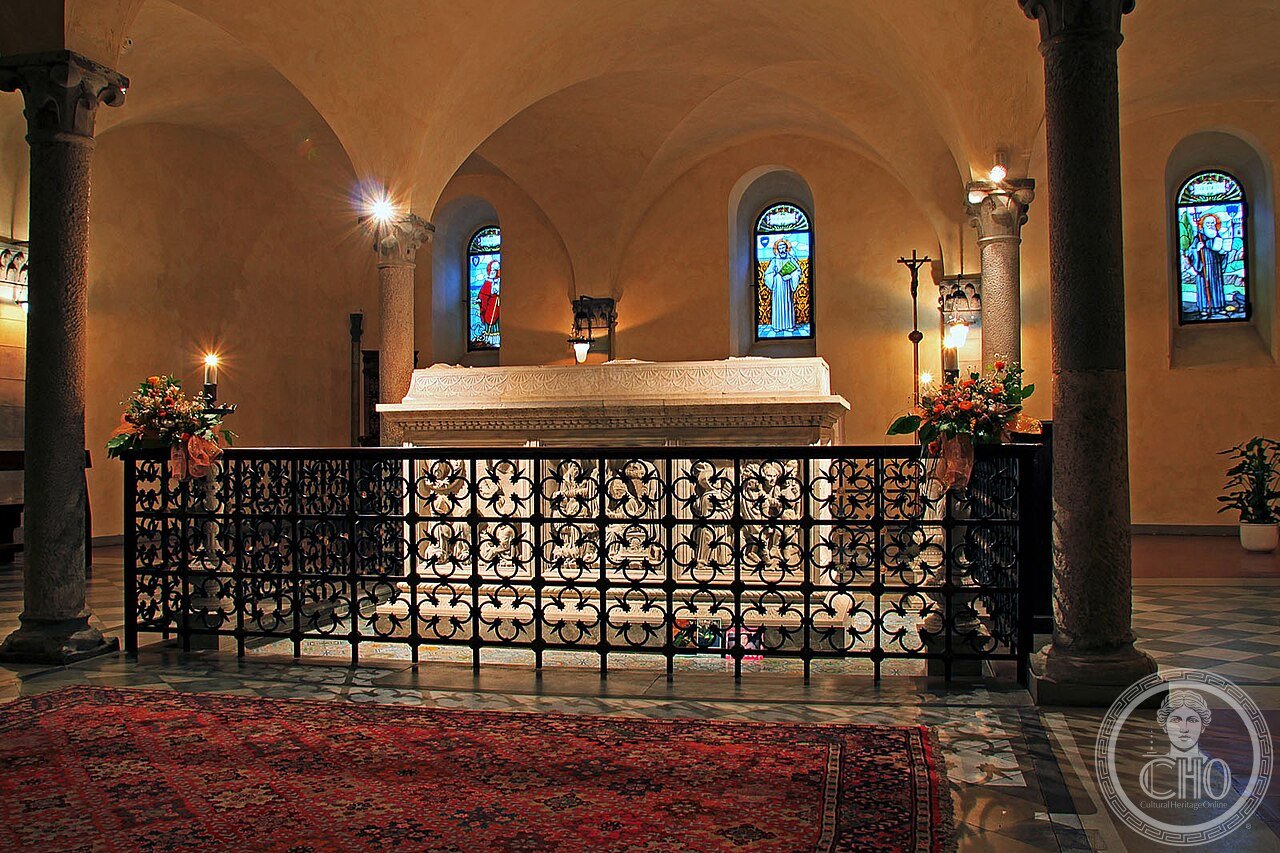
📷 Become a Cultural Heritage Online photographer
Share your photos of places: they stay published under your name as the author. The more they're seen, the more you get noticed — and soon a contest will reward the most appreciated photos.
Log in or sign up free to add a photoIs this page about you?
This page is read by travellers and heritage enthusiasts who find it on Google. Tell us how you are connected to this place and we will take it from there.