Two UNESCO World Heritage Sites lie within reach of Kolkata: the Sundarbans, the world’s largest mangrove delta and home to the Bengal tiger, and the Darjeeling Himalayan Railway, a narrow-gauge steam line climbing from the plains to 2,200 metres through sub-Himalayan tea country. Both reward travellers willing to move beyond the city. From Cultural Heritage Online.
Sundarbans National Park 100–180 km southwest — 3–5 hrs by road and boat
Where the Ganges, Brahmaputra, and Meghna rivers finally reach the Bay of Bengal, they spread into 9,630 square kilometres of interconnected tidal waterways, mudflats, and forest. This is the Sundarbans — the largest continuous stand of mangroves on Earth, and a UNESCO World Heritage Site since 1987. The Indian portion, designated Sundarbans National Park, covers the western third of the delta; the remainder lies across the border in Bangladesh.
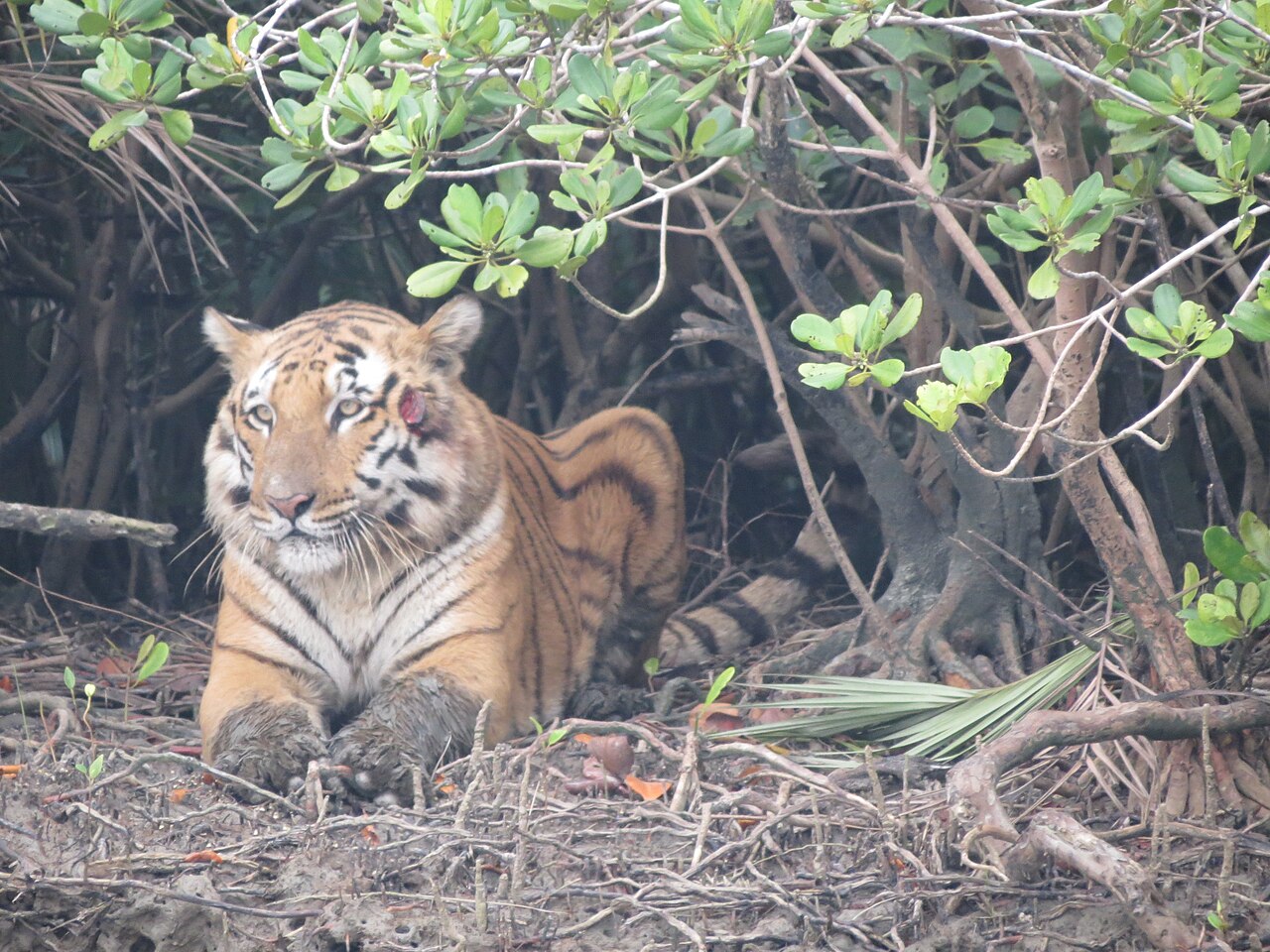
The ecosystem runs on the rhythm of the tides, which shift twice daily and dictate where animals move and where humans can land. Bengal tigers swim between islands here — a behaviour unusual enough that the population has its own ecological niche. Saltwater crocodiles rest on mudbanks; Irrawaddy dolphins surface in the channels; over 260 bird species have been recorded in the park, including the masked finfoot, rarely seen elsewhere in India. The dense prop-root tangle of the sundari tree (Heritiera fomes) gives the delta its name and its impenetrable character.
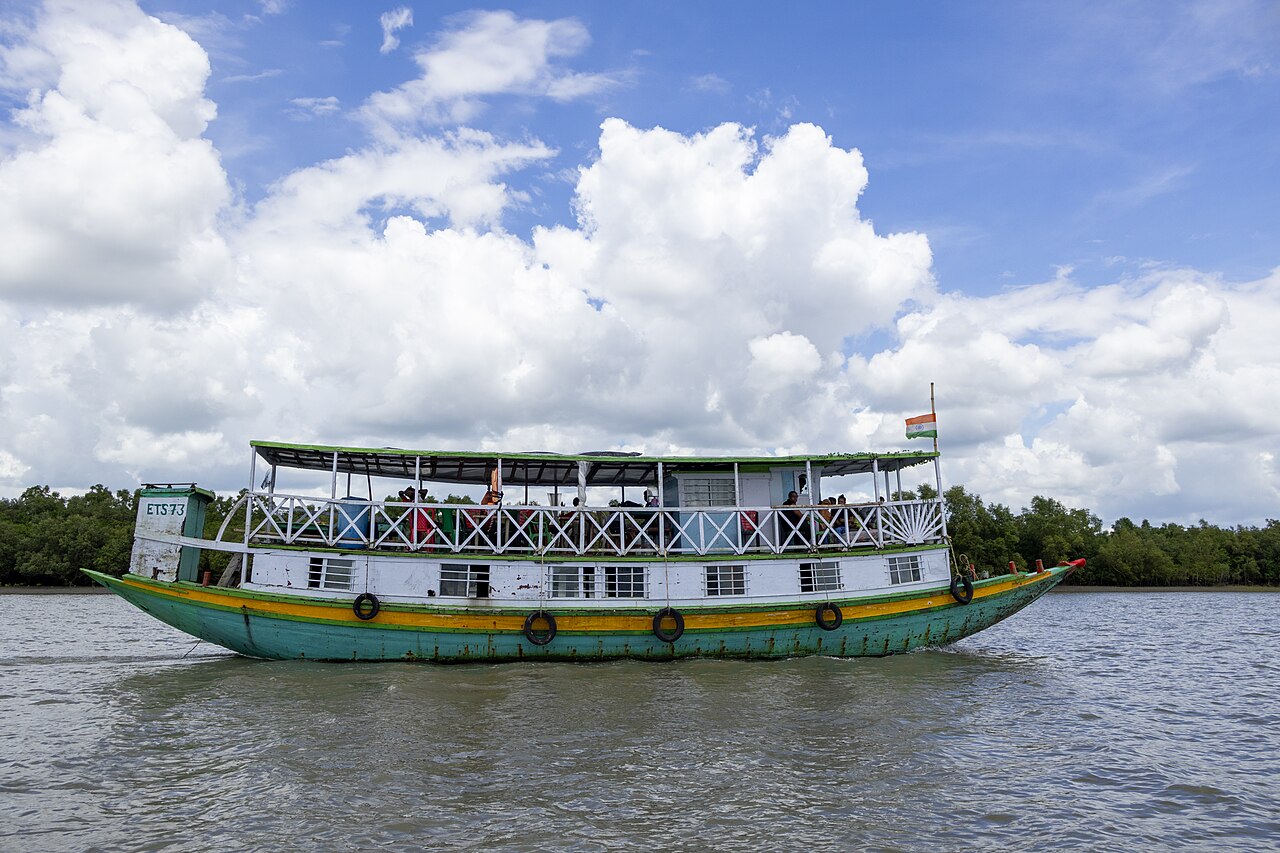
Reaching the core zone requires a boat. Most visitors join organised tours departing from Godkhali ghat, reached from Kolkata via Canning by train and then local transport. Day trips are possible but give limited time inside; one- to three-night boat tours let you anchor in the reserve after dark, when the forest shifts registers entirely — the sound of water against the hull, the calls of night herons, the occasional thrash in the channel that may or may not be a tiger.
Getting there: Train from Sealdah station (Kolkata) to Canning (~1 hr), then shared transport to Godkhali ghat (~1.5 hrs), then boat into the reserve. Alternatively, road to Sonakhali or Basanti and then boat. Entry permits required for the core zone — arranged through tour operators or the West Bengal Forest Department. Allow: Minimum 2 days; 3 nights recommended for wildlife sightings. Best for: Wildlife and nature travellers, birdwatchers, photographers with patience for low-light forest conditions.
Darjeeling Himalayan Railway 570 km north — 10 hrs by overnight train or 1 hr by flight to Bagdogra
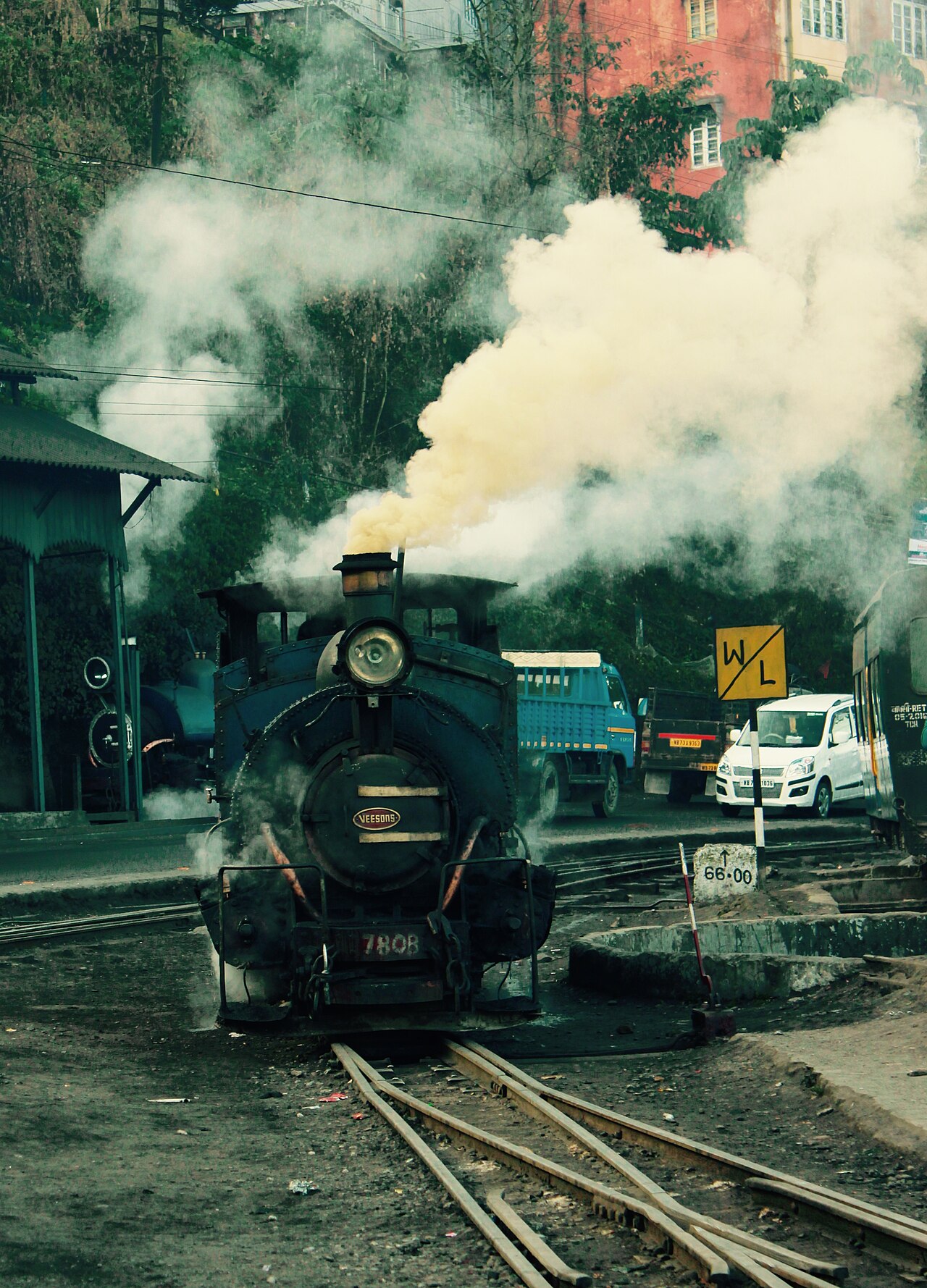
The Darjeeling Himalayan Railway — colloquially the Toy Train — was built between 1879 and 1881 to carry British administrators and their supplies from the Bengal plains to the hill station at Darjeeling. Engineers solved the problem of a 2,000-metre elevation gain over 78 kilometres with a combination of spirals, reverses, and the celebrated Batasia Loop, where the track curves 360 degrees around a war memorial so that the locomotive can gain height without exceeding gradient limits. The feat was recognised as an extension of the Mountain Railways of India UNESCO inscription in 1999, formally consolidated in 2008.
The gauge is 610 millimetres — narrow enough that the train shares street-level tracks through Darjeeling town, stopping for cows and market vendors with equal indifference. Steam locomotives still haul some services, particularly the heritage joyrides between Darjeeling and Ghum. Ghum station, at 2,258 metres, is the highest railway station in India. On a clear morning the Kanchenjunga massif is visible from the platform.
The full route from New Jalpaiguri (NJP) to Darjeeling takes five to six hours and passes through tea gardens at their most vivid between March and May, when the first and second flush harvests are underway. The air at Darjeeling smells of wood smoke and damp vegetation — a different atmosphere from the plains 2,000 metres below.
Getting there: Overnight train from Kolkata (Howrah or Sealdah) to New Jalpaiguri (~10 hrs), then DHR Toy Train to Darjeeling (5–6 hrs), or fly from Kolkata to Bagdogra (1 hr) and drive to Darjeeling (~2 hrs). Heritage steam joyrides run between Darjeeling and Ghum and can be booked at Darjeeling station. Allow: Minimum 2 days in Darjeeling; combine with the full Toy Train ride for the complete experience. Best for: Railway and industrial heritage enthusiasts, tea travellers, those seeking cool-climate contrast to the Bengal heat.
Frequently Asked Questions
How many UNESCO World Heritage Sites are near Kolkata?
Two UNESCO World Heritage Sites are reachable from Kolkata: Sundarbans National Park (inscribed 1987), the world’s largest mangrove delta in the southwestern corner of West Bengal, and the Darjeeling Himalayan Railway (inscribed as part of Mountain Railways of India 1999, extended 2008), a 610mm-gauge steam railway climbing 78 kilometres from the plains to Darjeeling at 2,200 metres.
How do you get to the Sundarbans from Kolkata?
The most common route is train from Sealdah station to Canning (approximately one hour), then shared vehicle to Godkhali ghat (roughly 90 minutes), then boat into the reserve. The entire journey takes three to five hours depending on connections. Entering the core zone of Sundarbans National Park requires a permit — independent access is not permitted, so most visitors travel with a licensed tour operator who arranges permits and a boat with a forest guide.
What is the best time of year to visit the Sundarbans and Darjeeling together?
The two sites suit different seasons. The Sundarbans are best visited between November and February, when the weather is dry and cooler and wildlife sightings are more frequent (the monsoon from June to September makes waterways dangerous and the forest impenetrable). Darjeeling is spectacular in March to May during the spring tea flush, and again in October and November when post-monsoon skies clear to reveal Kanchenjunga. A practical combined itinerary would pair the Sundarbans in November or December with Darjeeling in the same trip, using Kolkata as the base for both directions.
Why is the Darjeeling Himalayan Railway considered a World Heritage railway?
The railway was inscribed because it represents an outstanding example of bold civil engineering: built between 1879 and 1881 on a 610mm gauge through sub-Himalayan terrain that rises 2,087 metres over 78 kilometres. The Batasia Loop — where the track spirals around itself to gain elevation — was a significant feat of Victorian-era engineering. The line remains operational as a passenger service, and steam locomotives are still used on heritage services, making it one of the few World Heritage railways that continues to function as originally built rather than as a preserved museum piece.
Sources
- S1 — Chaudhuri, Sukanta, ed. Calcutta: The Living City. Oxford University Press, 1990. ISBN 978-0-19-562585-1.
- S2 — Bhandari, R. R. The Darjeeling Himalayan Railway: A Heritage Route. National Rail Museum, 2004. ISBN 978-81-7002-094-3.
Spotted an error? Write to editorial@culturalheritageonline.com and we correct it the same day.