
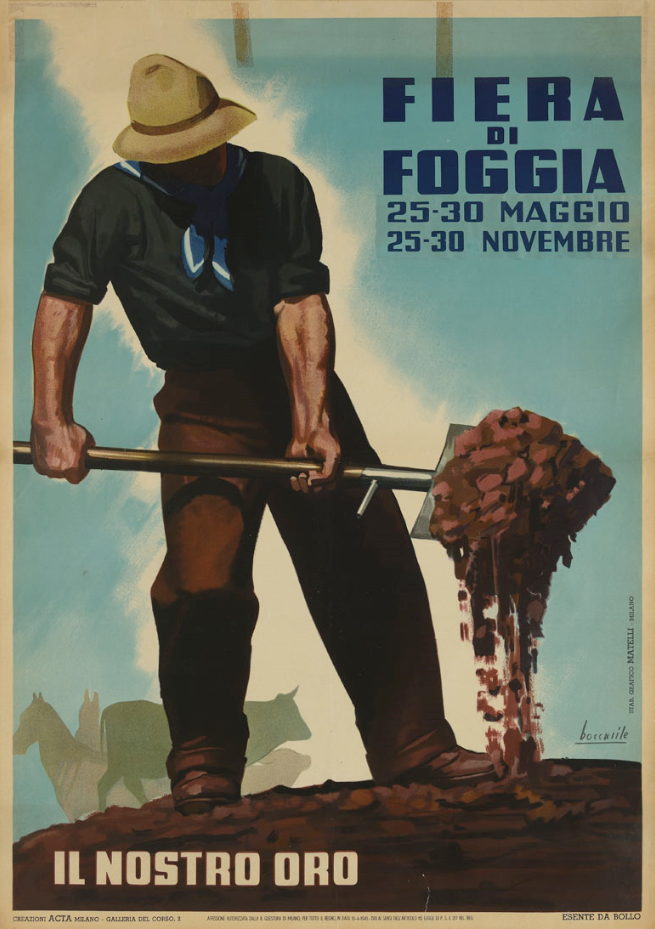
A manifesto created by Gino Boccasile in 1940. Boccasile was an Italian illustrator and graphic designer, and one of the most significant poster artists of the Fascist era.
Born in Bari in 1901, Boccasile moved to Milan after his father’s death in 1925, where he worked at the Mauzan-Morzenti Agency and developed a reputation for his distinctive renderings. He later established his own publicity agency, ACTA, in Galleria del Corso in Milan. His graphic work spanned posters, fashion magazine illustration, and commercial design throughout the 1930s and 1940s.
About Gino Boccasile
Boccasile trained at the fine art school in his native Bari and worked in major creative centers across Europe. He spent time in Buenos Aires and Paris before returning to Milan, where he became a prominent figure in Italian graphic design during the interwar period and beyond. His career extended from the 1920s until his death in 1952.
Details
- Creator: Gino Boccasile
- Year: 1940
- Medium: Poster
- Movement: Interwar graphic design
Frequently asked questions
Who was Gino Boccasile?
Gino Boccasile (1901–1952) was an Italian illustrator and graphic designer, and one of the most important poster artists of the Fascist era. Born in Bari, he moved to Milan in 1925 and became known for his distinctive commercial and poster designs.
What was Boccasile’s background?
Boccasile studied at the fine art school in Bari and worked at established design agencies in Milan before opening his own publicity agency, ACTA, in Galleria del Corso. He also worked in Buenos Aires and Paris early in his career.
What period did Boccasile work in?
Boccasile was active from the late 1920s until his death in 1952, with this manifesto created in 1940 during the height of his career in Italian graphic design.
