
Seoul holds two UNESCO World Heritage Sites within the city limits, a third 50 kilometres south in Suwon, and a fourth in Gyeongju — the ancient Silla capital — reachable in under three hours by high-speed rail. Together they span fifteen centuries of Korean civilisation: a Joseon palace whose secret garden contains trees older than the dynasty itself, the oldest surviving Confucian royal shrine in the world, an eighteenth-century fortress built in two years as an act of filial devotion, and an open-air archaeological landscape covering 2,880 hectares of royal tombs, temples, and a seventh-century astronomical tower. This guide covers transport, visit times, and the essential facts for each site, produced by Cultural Heritage Online.
Changdeokgung Palace Complex City centre — 5 min from Anguk station
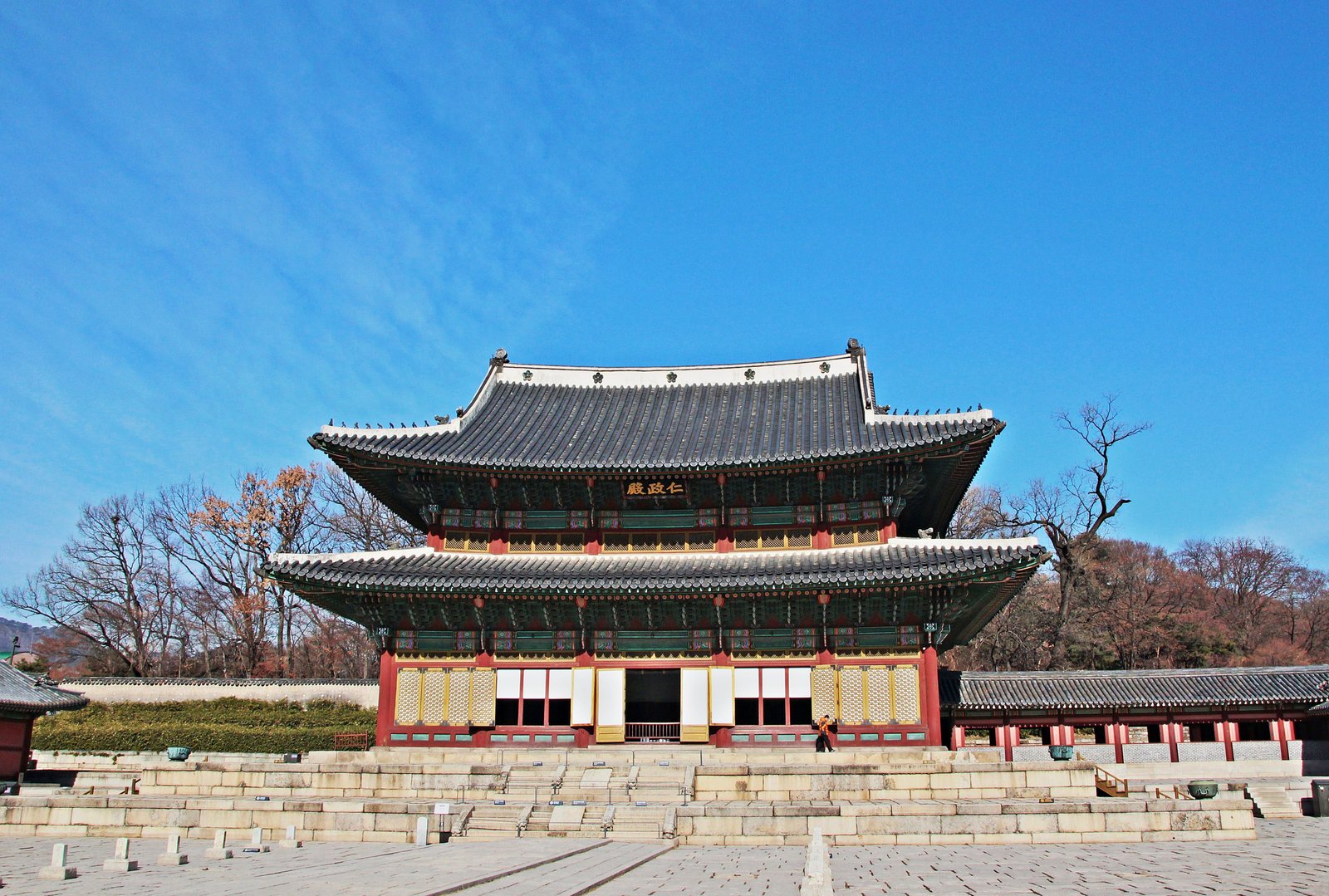
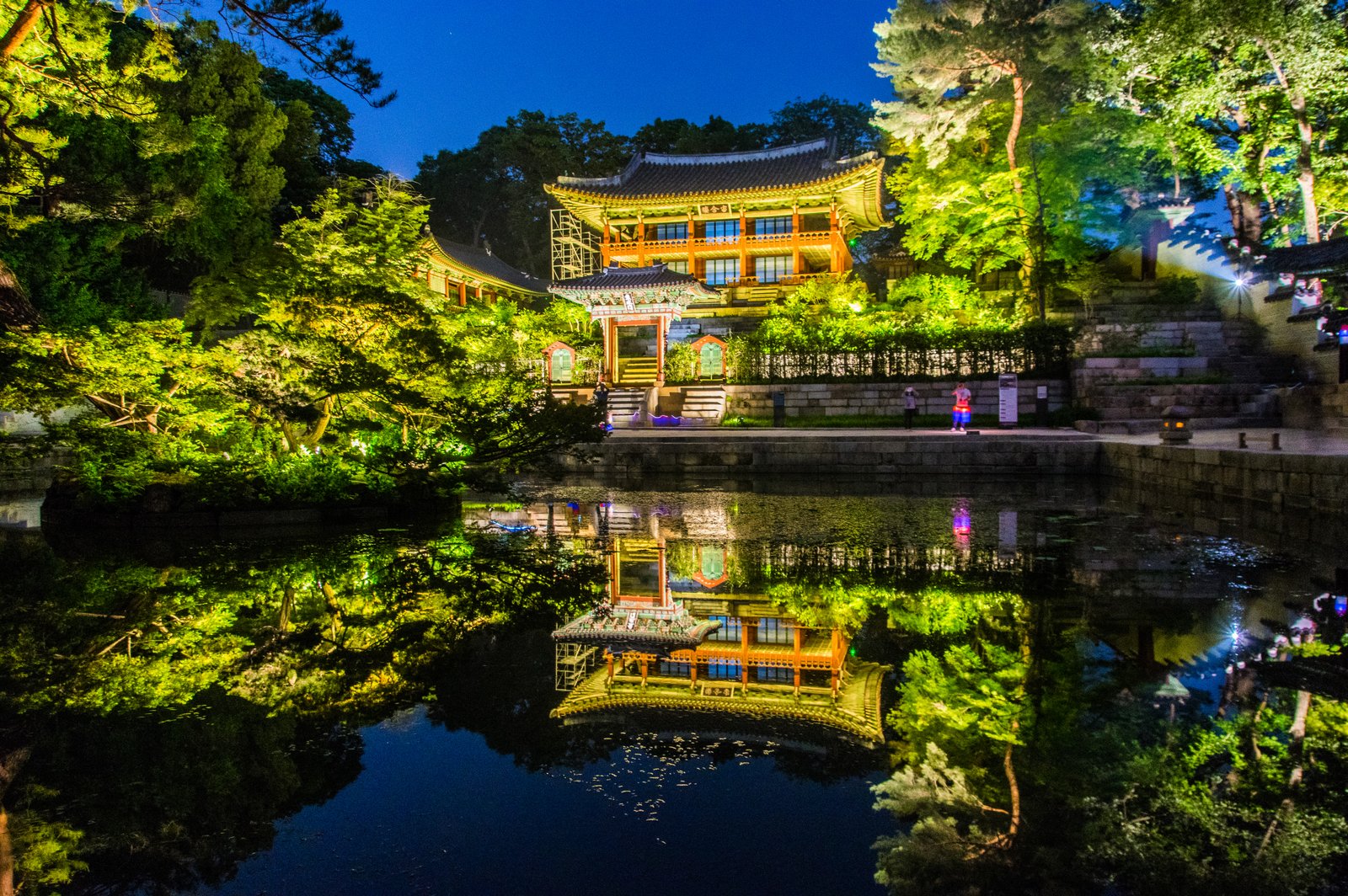
Commissioned in 1405 by King Taejong of the Joseon dynasty as a secondary palace to Gyeongbokgung, Changdeokgung became the preferred royal residence for much of the dynasty’s 500-year span — largely because its architecture followed the contours of the hillside rather than imposing a formal grid. UNESCO inscribed the 57.9-hectare complex in 1997, citing the harmony between its built structures and natural setting. The rear grounds, known as Huwon or the Secret Garden, shelter more than 160 species of trees, over 70 of which predate 1700, together with artificial ponds and open pavilions. Visitors on the guided garden tour move through a landscape where morning mist collects in the hollows between ancient pines. The formal audience hall, Injeongjeon, retains its original stone courtyard where rank stones once positioned court officials by grade.
Getting there: Metro line 3 (Orange) to Anguk station, exit 3; 5-minute walk to the main gate on Yulgok-ro. Allow: 2–3 hours for palace and Huwon garden (guided tour required for the garden; timed tickets available online). Best for: Architecture, dynastic history, and garden landscape; particularly striking in spring cherry blossom season and autumn foliage.
Jongmyo Shrine City centre — 10 min from Jongno 3-ga station
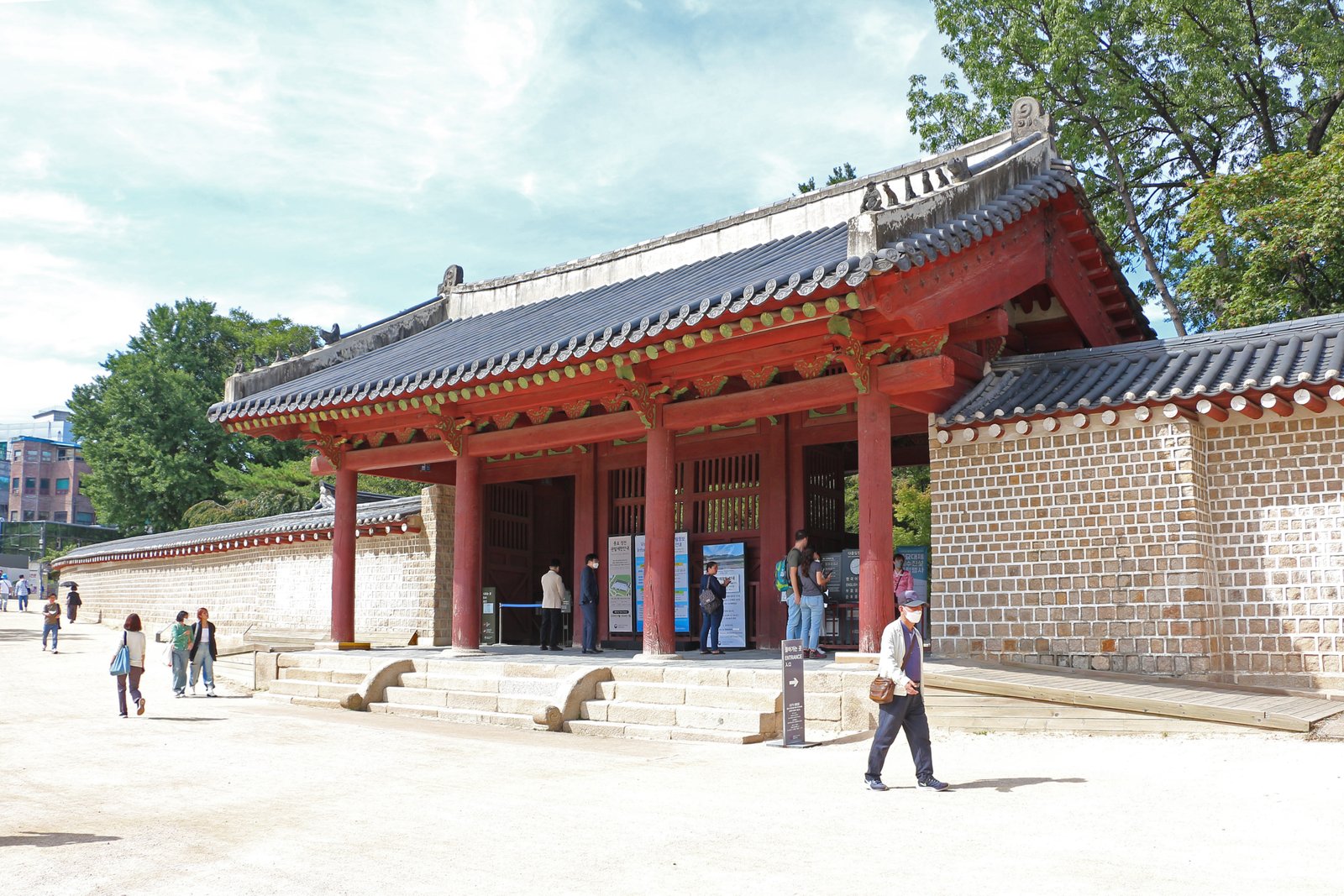
Founded in October 1394 by Taejo, the first king of the Joseon dynasty, on the very year the capital moved to Hanseong (modern Seoul), Jongmyo is the oldest royal Confucian shrine still in existence anywhere in the world. UNESCO inscribed it in 1995. The main hall, Jeongjeon, is the longest single traditional building in Korea, housing the spirit tablets of 19 kings and 30 queens; the secondary hall, Yeongnyeongjeon, enshrines a further 16 kings and 18 queens. Both buildings were destroyed during the Japanese invasions of 1592–1598 and meticulously rebuilt in the early seventeenth century. The site is quiet on most days — stone pathways through dense woodland, no vendors, no amplified commentary — but on the first Sunday of May the annual Jongmyo Jerye ritual fills the courtyards with processional music composed by King Sejong in 1447: bronze bells, stone chimes, and ceremonial dance performed in unbroken continuity with the Joseon court. Access outside the ritual period requires a guided tour; independent visits are permitted on Saturdays.
Getting there: Metro lines 1, 3, or 5 to Jongno 3-ga station; 10-minute walk to the shrine entrance on Jongno. Allow: 1–2 hours; note that the site is open to independent visitors only on Saturdays — all other days require a guided group tour at fixed times. Check the Cultural Heritage Administration website for current schedules. Best for: Confucian ritual heritage, silence, and the annual Jerye ceremony in May.
Hwaseong Fortress, Suwon 50 km south — 50 min by subway to Suwon station
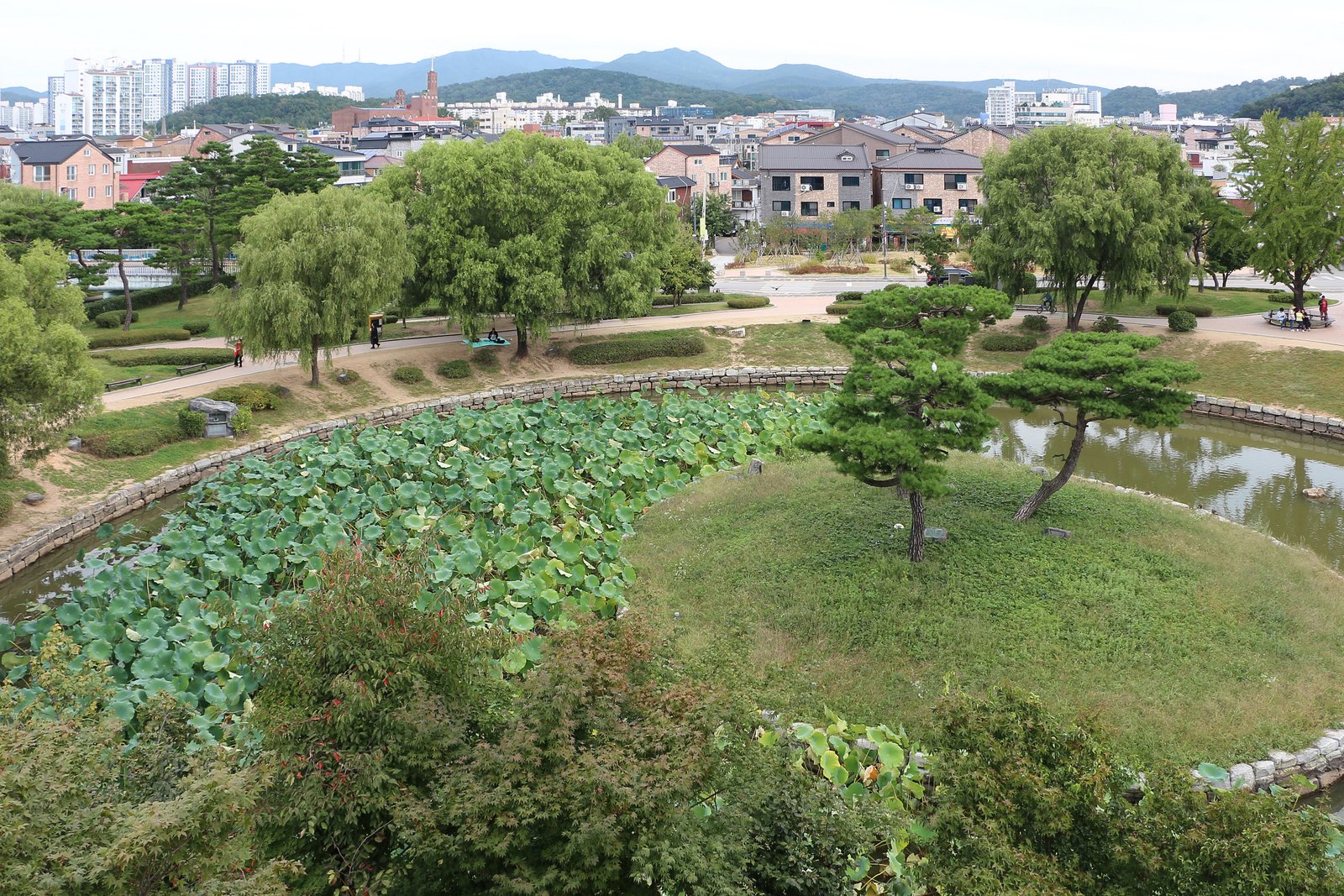
Built between 1794 and 1796 on the orders of King Jeongjo of the Joseon dynasty, Hwaseong Fortress was raised as an expression of filial grief: Jeongjo’s father, Crown Prince Sado, had been executed by royal command in 1762, and the king relocated the prince’s tomb to Suwon and constructed a new fortified city around it. The result is one of the most technically sophisticated military enclosures of its era, combining Chinese and Japanese defensive ideas with Korean innovation — the design was documented in a detailed illustrated manuscript, the Hwaseong Seongyeok Uigwe, which survived the centuries and guided a faithful twentieth-century restoration. The perimeter wall encloses four main gates, two water-control sluicegates over the Suwoncheon stream, and the royal travelling palace, Haenggung. Walking the full circuit of the battlements takes roughly two hours, with panoramic views across the city of Suwon on the eastern stretches. UNESCO inscribed the fortress in 1997.
Getting there: Metro line 1 (direct from central Seoul) to Suwon station, then 15-minute walk or short bus ride to the north gate (Janganmun). The Suin-Bundang line also connects from Gangnam. Allow: 2–3 hours for the full wall circuit; shorter inner-city loop possible in 1 hour. Best for: Military architecture, accessible heritage walking, and combining with nearby Suwon traditional market for lunch.
Gyeongju Historic Areas 330 km south-east — 2 hrs by KTX from Seoul Station
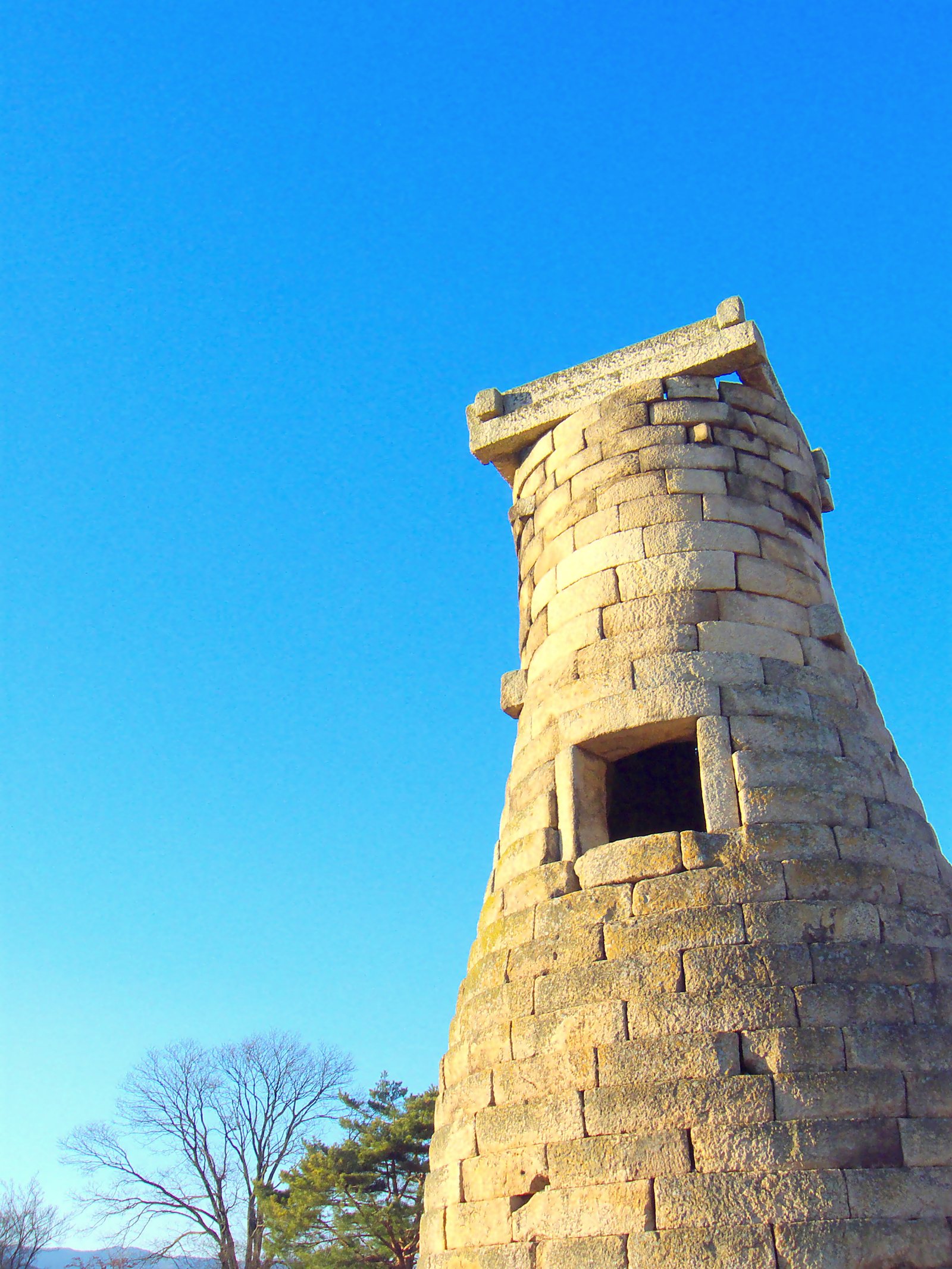
Gyeongju served as the capital of the Silla kingdom from 57 BC to 935 AD — nearly a thousand years — and the city retains an extraordinary concentration of that civilisation’s monuments across a UNESCO-inscribed area of 2,880 hectares. The designation, awarded in 2000, covers five distinct zones: a tumuli park of grass-covered royal burial mounds rising up to 23 metres above residential streets; Wolseong, the site of the Silla palace; Namsan, a granite mountain covered with carved Buddhas and rock-cut pagodas; the temple zone anchored by Bulguksa, where six National Treasures survive including the paired Dabotap and Seokgatap pagodas; and Silla-era tombs at Songpa. Standing alone in a field near the tomb mounds is Cheomseongdae, a granite tower built for Queen Seondeok of Silla around 632–647 AD — 9.17 metres tall, 362 granite blocks assembled without mortar, and still regarded as the oldest surviving astronomical observatory in Asia. A full day is needed to move meaningfully between zones, ideally with a bicycle hired near the station.
Getting there: KTX from Seoul Station to Singyeongju station (approximately 2 hours; frequent departures). Local bus or taxi from Singyeongju to the city centre, 20 minutes. Allow: Full day; an overnight stay enables Bulguksa at dawn, when the temple is near-empty. Best for: Archaeological breadth, Buddhist art, and travellers combining with the coastal city of Busan (30 min further south by KTX).
Frequently Asked Questions
How many UNESCO World Heritage Sites are there near Seoul?
There are four sites reachable from Seoul: Changdeokgung Palace Complex and Jongmyo Shrine, both within the city; Hwaseong Fortress in Suwon, 50 kilometres south; and the Gyeongju Historic Areas, approximately 330 kilometres south-east and two hours by high-speed KTX rail. All four were inscribed between 1995 and 2000 and belong to the Joseon or Silla periods of Korean history.
Which UNESCO site is closest to central Seoul?
Changdeokgung Palace Complex is the closest, sitting in the Jongno district of the city centre and reachable in a 5-minute walk from Anguk subway station on line 3. Jongmyo Shrine is a 10-minute walk from Jongno 3-ga station and can be combined with Changdeokgung in the same day, as the two sites are roughly 1 kilometre apart.
Do visitors to South Korea need a visa, and what is the best season to visit these sites?
Citizens of over 100 countries, including the United States, the United Kingdom, most EU states, Australia, and Canada, can enter South Korea visa-free for stays of up to 90 days under the K-ETA or bilateral waiver schemes — verify current requirements with the Korean embassy before travel, as conditions change. Spring (April–May) is widely considered the best period for Seoul’s palace sites, when cherry blossom and azalea are in bloom; autumn (October–November) offers vivid foliage at Changdeokgung’s Secret Garden. Gyeongju is pleasant year-round, though summer humidity can be intense.
What transport card should visitors use to get between these sites?
A T-money card — a rechargeable contactless IC card sold at convenience stores and subway station kiosks throughout Seoul — covers all subway and bus journeys in the capital and works on most city buses in Suwon, reducing fares by approximately 100 won per journey compared to single-use tickets. The card does not cover KTX rail tickets to Gyeongju, which must be booked separately through the Korail website or app; advance booking is recommended for weekend travel. T-money cards are returned for a deposit refund at designated stations on departure.
Sources
- S1 — Kim, Dong-uk. Palaces of Seoul: Tangible Heritage of the Joseon Dynasty. Hollym, 2006. ISBN 978-1-56591-224-3.
- S2 — Nelson, Sarah Milledge. The Archaeology of Korea. Cambridge University Press, 1993. ISBN 978-0-521-40783-0.
Spotted an error? Write to editorial@culturalheritageonline.com and we correct it the same day.


_front_view.jpg)


