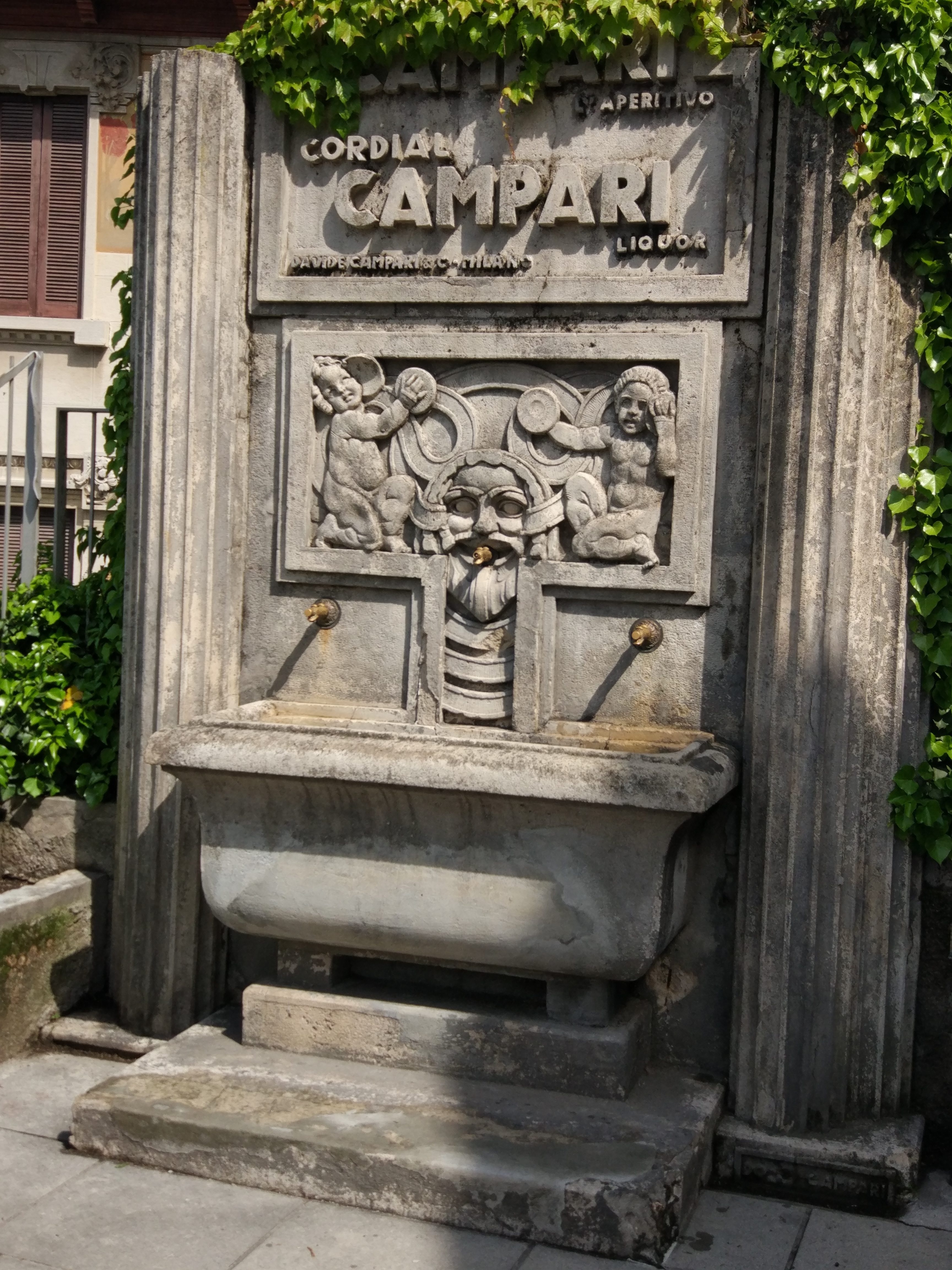
The Fontana del Campari at Chiusi della Verna, in the province of Arezzo, is a decorative fountain designed by Florentine sculptor Giuseppe Gronchi as part of a series of approximately thirty fountains commissioned to promote the Davide Campari & C. company. Executed in Art Deco style, it is one of only three such fountains remaining in Italy, with the others located at Brunate in Como and Le Piastre in Pistoia.
The fountain’s principal body features a bas-relief adorned with grotesque elements from which three separate water jets emerge. Flanking the central relief are two fluted columns, originally topped by a horizontal travertine block. The fountain draws water from a local spring that historically supplied nearby buildings.
About Giuseppe Gronchi
Giuseppe Gronchi (Florence, 1882–1944) was an Italian sculptor who trained at the Florence Academy of Fine Arts, graduating in 1911. His stylistic development reflected contemporary European influences, including the work of Rodin and Bourdelle. He became an honorary member of the Academy of Arts and Design in 1917 and gained recognition through theatrical and public commissions, notably decorative work on the Savoia Theatre in Florence, inaugurated in 1922.
Details
- Creator: Giuseppe Gronchi, Florentine sculptor (1882–1944)
- Style: Art Deco
- Location: Chiusi della Verna, province of Arezzo, Tuscany
- Function: Promotional fountain for Davide Campari & C.
- Status: One of three surviving fountains from the original campaign series
Frequently asked questions
Who designed the Fontana del Campari?
Giuseppe Gronchi, a sculptor from Florence trained at the Florence Academy of Fine Arts, designed the fountain as part of a broader promotional campaign for the Davide Campari company.
Where are the other Campari fountains located?
Two other fountains from the same series survive in Italy: one at Brunate in the province of Como, and another at Le Piastre in the province of Pistoia. The original campaign comprised approximately thirty fountains.
What is the fountain’s architectural style?
The Fontana del Campari exemplifies Art Deco design, featuring a central bas-relief with grotesque ornamental elements and flanking fluted columns that originally bore a decorative travertine superstructure.