
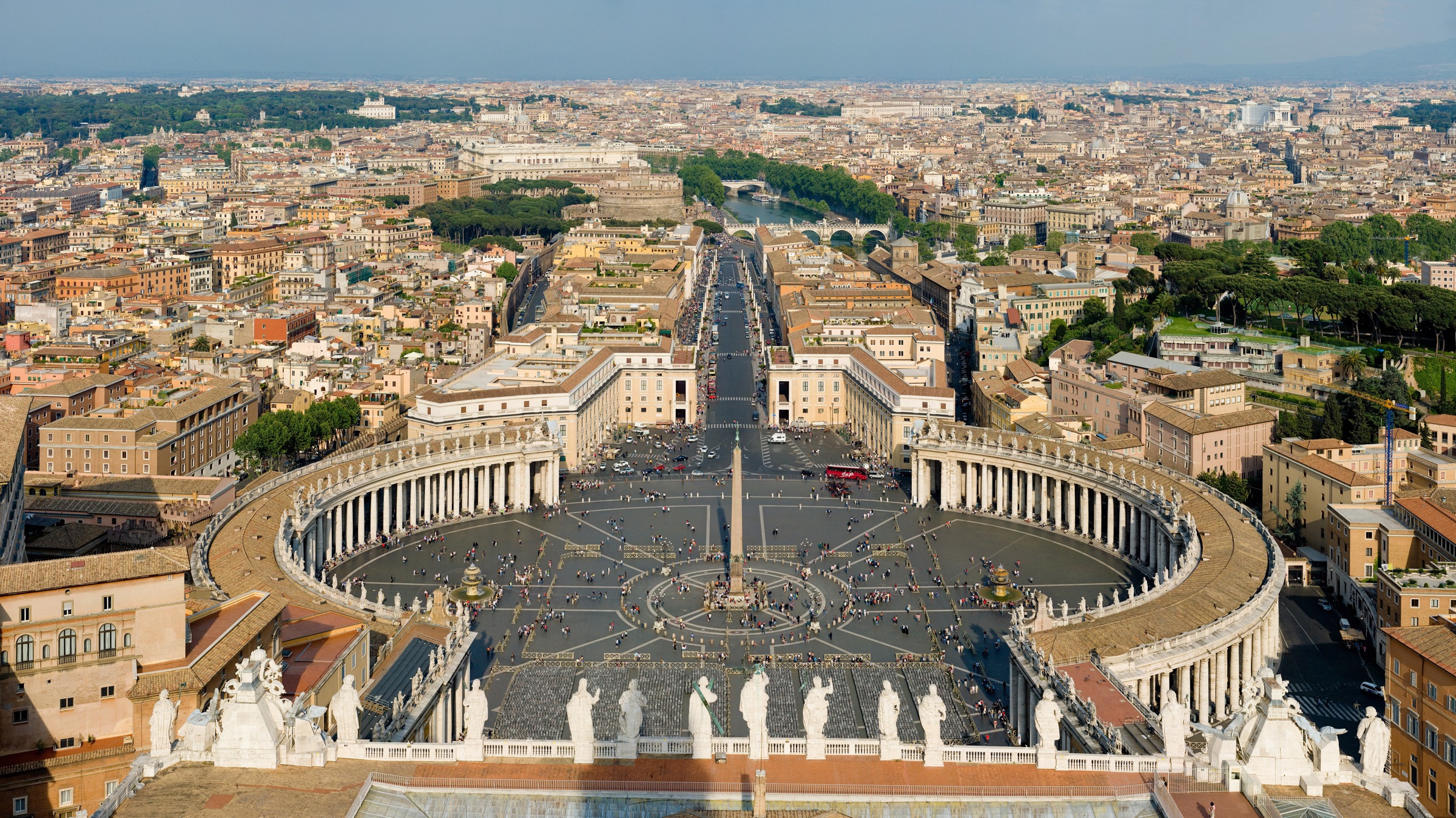
You have surveyed buildings, read the construction documentation, analyzed the details that casual visitors miss entirely. That professional knowledge belongs in the public record. Right now it does not exist there.
The Knowledge Gap Only You Can Close
Architects and urban designers occupy a rare position. You understand the spatial logic that shapes cities. You read drawings the public never sees. You know why a cornice matters, why a setback changes the street wall, why an orientation shifts the way light moves through a plaza. You have walked buildings during renovation. You have examined the craftsmanship at a scale tourists pass by in seconds.
This expertise is not recorded anywhere accessible. Wikipedia has images. Street View has perspectives. Museum databases have famous objects. But the reasoned, professional analysis — the “why” beneath the visible form — lives only in your field notes, your graduate thesis, your office archive, or in conversation with colleagues. When it stays there, it disappears. When you retire, when your firm reorganizes, when buildings change hands, that accumulated observation is lost.
CHO exists to collect and amplify exactly this kind of knowledge. We are building a global map of cultural heritage places, not as tourist attractions, but as teaching documents. The architects, historians, and specialists who know these buildings matter more to that mission than any photo or algorithm ever could.
What We Need From You, Specifically
Not a research paper. Not a formal publication. Three things, concretely: photographs you have taken that show architectural logic — a detail, a connection, a relationship that explains the design. A description of a place that contextualizes what people are seeing — not the obvious facts (the dates, the name), but the reasoning behind the form. And if you have organized a site visit, a lecture, or a guided tour for other professionals, a record of that event that helps others find community and learning opportunities.
A single high-resolution photograph of a load-bearing detail. A paragraph explaining why a facade curves where it does. A note about the craftspeople who built it, if you know their names. A calendar entry for the next architectural walking tour your firm or university is leading through a historic quarter. These modest contributions compound. Five architects document five buildings they know deeply. Fifty tourists visit the map. Twenty of them now understand something they did not before. One becomes a preservation advocate. Funding follows.
You do not need to be a published scholar. You need to have looked carefully, to remember what you saw, and to share it so that others can learn from your attentiveness.
A Specific Example: What Good Contribution Looks Like
Imagine an architect in Barcelona who has studied the Catalan Modernist work of Domènech i Montaner. She has visited Casa Lléo Morera seven times. She has analyzed the ceramic tilework, the ironwork supports, the way the interior loggia creates thermal mass and cross-ventilation. She photographs the tile detail at a shallow angle to show texture and dimension.
She visits CHO, searches for the place, and finds it documented but sparse. She uploads her photo. She writes a short paragraph: “The tilework on the loggia exterior is not ornamental alone; the unglazed clay backing acts as passive cooling, drawing humid air through the pores on summer afternoons. Modernist architects integrated material science into beauty. This is one example.” She names the photographer (herself). She proposes a related event: a summer walking tour she plans to lead on thermal design in Modernist facades.
That contribution appears on the place page, labeled with her name and profession. The next architect researching Catalan passive design finds it immediately. A student writing a thesis on climate adaptation in historic cities discovers both the photo and the event. Neither would have found that knowledge through Google. It existed; you made it legible.
Where Your Contribution Goes and Who Finds It
When you upload a photo or describe a place on CHO, it appears on the place page for that building or site. It is indexed and searchable. Architects, students, preservationists, policy makers, and curious visitors find it through the map, through keyword search, and through themed collections we curate around topics like “Thermal Design in Historic Architecture” or “Modernism in Eastern Europe.”
Your contribution is credited to you by name and, if you choose, by profession or affiliation. Other professionals can follow your profile. If you lead events, those appear in a calendar feed that reaches planning committees, educators, and heritage organizations looking for speakers and partners. Over time, your contributions become a public portfolio of your expertise — which has subtle, real value if you consult, teach, or publish.
The map grows because people like you document buildings the way you know them. That changes what the map can answer. Instead of “Where is this building?” it can answer “Who understands the load paths here? Who has noticed how the materials change? Who organized a tour?” Those questions lead to collaboration, to preservation campaigns, to education, to funding. Impact flows upstream from your act of sharing.
Three Steps to Start
Visit culturalheritageonline.com/ambassador and create a free profile. This takes five minutes. You choose what to share — your name, your firm or university, your focus (renovation, urbanism, history, craft). Nothing is mandatory; you control your presence.
Then go to culturalheritageonline.com/proponi/ and propose a place or event. The form is simple: location, a few sentences about why it matters, and a photograph if you have one. If the place already exists in our map, your photo and description are added to it; your contribution appears immediately and your name is credited. If it is new, our team verifies the location and context before publishing, usually within a few days.
Start with one building you know well. One photograph. One paragraph. That is enough to begin. The act of writing forces you to articulate what you know. The contribution becomes a seed. Other specialists find it, build on it, add their own observations. Over time, a single building page becomes a collaborative document that no individual could write alone — a teaching tool, a reference, a record.
Learn more: UNESCO’s World Heritage Convention defines standards for cultural site documentation. ICOMOS publishes guidance on heritage documentation and conservation ethics. Explore CHO’s interactive map at culturalheritageonline.com/map to see how professional knowledge shapes the places you visit.
Sources
- S1 — Curl, James Stevens. The Oxford Dictionary of Architecture. Oxford University Press, 2015. ISBN 978-0-19-967498-5.
- S2 — Frampton, Kenneth. Modern Architecture: A Critical History. Thames & Hudson, 2007. ISBN 978-0-500-20395-8.
Spotted an error? Write to editorial@culturalheritageonline.com and we correct it the same day.